Margins
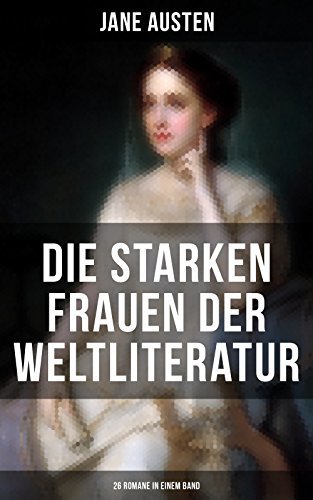
Die starken Frauen der Weltliteratur - 26 Romane in einem Band book cover
Die starken Frauen der Weltliteratur - 26 Romane in einem Band
Jane Eyre; Madame Bovary; Anna Karenina; Stolz und Vorurteil; Sturmhöhe; Die Kameliendame…
2016
First Published
4.80
Average Rating
12845
Number of Pages
Dieses eBook wurde mit einem funktionalen Layout erstellt und sorgfältig formatiert. Die Ausgabe ist mit interaktiven Inhalt und Begleitinformationen versehen, einfach zu navigieren und gut gegliedert. Stolz und Vorurteil (Jane Austen) Sturmhöhe (Emily Brontë) Jane Eyre (Charlotte Brontë) Madame Bovary (Gustave Flaubert) Anna Karenina (Leo Tolstoi) Die Kameliendame (Alexandre Dumas) Lady Hamilton (Alexandre Dumas) Der scharlachrote Buchstabe (Nathaniel Hawthorne) Amtmanns Magd (Eugenie Marlitt) Der Glöckner von Notre Dame (Victor Hugo) Die kleine Fadette (George Sand) Jahrmarkt der Eitelkeit (William Makepeace Thackeray) Effi Briest (Theodor Fontane) L'Adultera (Theodor Fontane) Klein-Dorrit (Charles Dickens) Brigitta (Adalbert Stifter) Kleopatra (Alfred Schirokauer) Die Geierwally (Wilhelmine von Hillern) Marie Antoinette (Stefan Zweig) Maria Stuart (Stefan Zweig) Ungeduld des Herzens (Stefan Zweig) Stark wie der Tod (Guy de Maupassant) Ein schwaches Herz (Fjodor Michailowitsch Dostojewski) Julie oder Die neue Heloise (Jean-Jacques Rousseau) Lucinde (Friedrich Schlegel) Frühlingsboten (Elisabeth Bürstenbinder)

Avg Rating
4.80
Number of Ratings
5
5 STARS
80%
4 STARS
20%
3 STARS
0%
2 STARS
0%
1 STARS
0%
goodreads

Authors

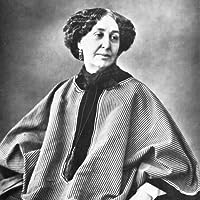
George Sand
George Sand
Author · 59 books

The novels Lélia (1833) and Consuelo (1842) among works, plays, and essays of French writer George Sand, pen name of Amandine Aurore Lucie Dupin, baroness Dudevant, concern the freedom and independence of women. People recognize this best known, most popular memoirist and journalist, more renowned in Europe in her lifetime than Victor Hugo and Honoré de Balzac in England in the 1830s and 1840s, People recognize Sand of the most notable writers of the Romantic era of Europe. People celebrated this controversial life, which oftentimes overshadowed her creative production. Known for its blend of romance and realism, her effortless spontaneity proliferated without sacrificing style and form. Sand stated the primary happiness in life in love and so focused on relationships in most of her novels as she tackled the complexities of politics, society, and gender. People best know Sand for bold statements about the rights in 19th-century society, her exploration of contemporary social and philosophical issues, and her depiction of the lives and language of provincials. Set of influences of each period of her literary career focused on specific themes. Her rustic perhaps truly represented her form as an author. Her first period reflected her rebellion against the bonds of marriage and deal largely with the relationships between men and women. English poet Lord Byron and French philosopher Jean-Jacques Rousseau clearly influenced Sand with romantic novels, full of passionate personal revolt and ardent feminism, attitudes that went against societal conventions and outraged her early British and American critics. These extremely successful early Indiana , Lelia, and Jacques (1834) established Sand as an important literary voice for her generation. Pastorals, which depict rural scenes and peasant characters, form the last phase of her career. Her love of the French countryside and her sympathy with the peasants inspired La Mare au Diable (1846) and Francis the Waif (1847–1848), set in Berry. Gentle idealism distinguished these realistic pastorals in background detail; many critics finest considered them her finest. After her pastoral period, she continued until her death, but people remember few today. Unconventional life of George Sand in numerous ways: she fondly dressed in clothing of men to gain access to those parts of Paris, not decorous for ladies to go. She smoked in public to scandalize Parisian society. Lust affairs of Sand included high-profile relationships with the composer Frédéric François Chopin, the novelist Prosper Mérimée, and the poet and playwright Louis Charles Alfred de Musset.

Stefan Zweig
Stefan Zweig
Author · 183 books

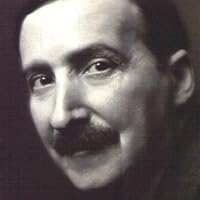
Stefan Zweig was one of the world's most famous writers during the 1920s and 1930s, especially in the U.S., South America, and Europe. He produced novels, plays, biographies, and journalist pieces. Among his most famous works are Beware of Pity, Letter from an Unknown Woman, and Mary, Queen of Scotland and the Isles. He and his second wife committed suicide in 1942. Zweig studied in Austria, France, and Germany before settling in Salzburg in 1913. In 1934, driven into exile by the Nazis, he emigrated to England and then, in 1940, to Brazil by way of New York. Finding only growing loneliness and disillusionment in their new surroundings, he and his second wife committed suicide. Zweig's interest in psychology and the teachings of Sigmund Freud led to his most characteristic work, the subtle portrayal of character. Zweig's essays include studies of Honoré de Balzac, Charles Dickens, and Fyodor Dostoevsky (Drei Meister, 1920; Three Masters) and of Friedrich Hölderlin, Heinrich von Kleist, and Friedrich Nietzsche (Der Kampf mit dem Dämon, 1925; Master Builders). He achieved popularity with Sternstunden der Menschheit (1928; The Tide of Fortune), five historical portraits in miniature. He wrote full-scale, intuitive rather than objective, biographies of the French statesman Joseph Fouché (1929), Mary Stuart (1935), and others. His stories include those in Verwirrung der Gefühle (1925; Conflicts). He also wrote a psychological novel, Ungeduld des Herzens (1938; Beware of Pity), and translated works of Charles Baudelaire, Paul Verlaine, and Emile Verhaeren. Most recently, his works provided the inspiration for 2014 film The Grand Budapest Hotel.

E. Marlitt
E. Marlitt
Author · 8 books

E. Marlitt is the pseudonym of Friederieke Henriette Christiane Eugenie John (1825 – 1887), a popular German novelist of the 19th century. She was born in Arnstadt. Her father was a portrait painter; her patroness was the Princess of Schwarzburg-Sondershausen, who adopted her in 1841 and sent her to Vienna to study music for three years on account of her fine voice. She became deaf, and returned to Sondershausen, living at court as a companion to her patroness for eleven years. Her correspondents were struck with her attractive style, and encouraged her to write novels. For this purpose, she returned to Arnstadt in 1863, and there began her career as a novelist.

Charlotte Bronte
Charlotte Bronte
Author · 94 books

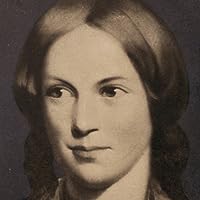
Charlotte Brontë was an English novelist, the eldest out of the three famous Brontë sisters whose novels have become standards of English literature. See also Emily Brontë and Anne Brontë. Charlotte Brontë was born in Thornton, Yorkshire, England, the third of six children, to Patrick Brontë (formerly "Patrick Brunty"), an Irish Anglican clergyman, and his wife, Maria Branwell. In April 1820 the family moved a few miles to Haworth, a remote town on the Yorkshire moors, where Patrick had been appointed Perpetual Curate. This is where the Brontë children would spend most of their lives. Maria Branwell Brontë died from what was thought to be cancer on 15 September 1821, leaving five daughters and a son to the care of her spinster sister Elizabeth Branwell, who moved to Yorkshire to help the family. In August 1824 Charlotte, along with her sisters Emily, Maria, and Elizabeth, was sent to the Clergy Daughters' School at Cowan Bridge in Lancashire, a new school for the daughters of poor clergyman (which she would describe as Lowood School in Jane Eyre). The school was a horrific experience for the girls and conditions were appalling. They were regularly deprived of food, beaten by teachers and humiliated for the slightest error. The school was unheated and the pupils slept two to a bed for warmth. Seven pupils died in a typhus epidemic that swept the school and all four of the Brontë girls became very ill - Maria and Elizabeth dying of tuberculosis in 1825. Her experiences at the school deeply affected Brontë - her health never recovered and she immortalised the cruel and brutal treatment in her novel, Jane Eyre. Following the tragedy, their father withdrew his daughters from the school. At home in Haworth Parsonage, Charlotte and the other surviving children—Branwell, Emily, and Anne—continued their ad-hoc education. In 1826 her father returned home with a box of toy soldiers for Branwell. They would prove the catalyst for the sisters' extraordinary creative development as they immediately set to creating lives and characters for the soldiers, inventing a world for them which the siblings called 'Angria'. The siblings became addicted to writing, creating stories, poetry and plays. Brontë later said that the reason for this burst of creativity was that: 'We were wholly dependent on ourselves and each other, on books and study, for the enjoyments and occupations of life. The highest stimulus, as well as the liveliest pleasure we had known from childhood upwards, lay in attempts at literary composition.' After her father began to suffer from a lung disorder, Charlotte was again sent to school to complete her education at Roe Head school in Mirfield from 1831 to 1832, where she met her lifelong friends and correspondents, Ellen Nussey and Mary Taylor. During this period (1833), she wrote her novella The Green Dwarf under the name of Wellesley. The school was extremely small with only ten pupils meaning the top floor was completely unused and believed to be supposedly haunted by the ghost of a young lady dressed in silk. This story fascinated Brontë and inspired the figure of Mrs Rochester in Jane Eyre. Brontë left the school after a few years, however she swiftly returned in 1835 to take up a position as a teacher, and used her wages to pay for Emily and Anne to be taught at the school. Teaching did not appeal to Brontë and in 1838 she left Roe Head to become a governess to the Sidgewick family—partly from a sense of adventure and a desire to see the world, and partly from financial necessity. Charlotte became pregnant soon after her wedding, but her health declined rapidly and, according to biographer Elizabeth Gaskell, she was attacked by "sensations of perpetual nausea and ever-recurring faintness." She died, with her unborn child, on 31 March 1855.

Gustave Flaubert
Gustave Flaubert
Author · 45 books

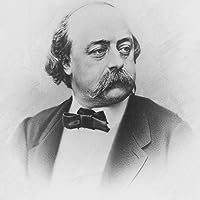
Gustave Flaubert is counted among the greatest Western novelists. He was born in Rouen, Seine-Maritime, in the Haute-Normandie Region of France. Flaubert's curious modes of composition favored and were emphasized by these peculiarities. He worked in sullen solitude, sometimes occupying a week in the completion of one page, never satisfied with what he had composed, violently tormenting his brain for the best turn of a phrase, the most absolutely final adjective. It cannot be said that his incessant labors were not rewarded. His private letters show that he was not one of those to whom easy and correct language is naturally given; he gained his extraordinary perfection with the unceasing sweat of his brow. One of the most severe of academic critics admits that in all his works, and in every page of his works, Flaubert may be considered a model of style. That he was one of the greatest writers who ever lived in France is now commonly admitted, and his greatness principally depends upon the extraordinary vigour and exactitude of his style. Less perhaps than any other writer, not of France, but of modern Europe, Flaubert yields admission to the inexact, the abstract, the vaguely inapt expression which is the bane of ordinary methods of composition. He never allowed a cliché to pass him, never indulgently or wearily went on, leaving behind him a phrase which almost expressed his meaning. Being, as he is, a mixture in almost equal parts of the romanticist and the realist, the marvellous propriety of his style has been helpful to later writers of both schools, of every school. The absolute exactitude with which he adapts his expression to his purpose is seen in all parts of his work, but particularly in the portraits he draws of the figures in his principal romances. The degree and manner in which, since his death, the fame of Flaubert has extended, form an interesting chapter of literary history. The publication of Madame Bovary in 1857 had been followed by more scandal than admiration; it was not understood at first that this novel was the beginning of something new, the scrupulously truthful portraiture of life. Gradually this aspect of his genius was accepted, and began to crowd out all others. At the time of his death he was famous as a realist, pure and simple. Under this aspect Flaubert exercised an extraordinary influence over Émile de Goncourt, Alphonse Daudet and Zola. But even after the decline of the realistic school Flaubert did not lose prestige; other facets of his genius caught the light. It has been perceived that he was not merely realistic, but real; that his clairvoyance was almost boundless; that he saw certain phenomena more clearly than the best of observers had done. Flaubert is a writer who must always appeal more to other authors than to the world at large, because the art of writing, the indefatigable pursuit of perfect expression, were always before him, and because he hated the lax felicities of improvisation as a disloyalty to the most sacred procedures of the literary artist. He can be said to have made cynicism into an art-form, as evinced by this observation from 1846: To be stupid, and selfish, and to have good health are the three requirements for happiness; though if stupidity is lacking, the others are useless. His Oeuvres Complètes (8 vols., 1885) were printed from the original manuscripts, and included, besides the works mentioned already, the two plays, Le Candidat and Le Château des avurs. Another edition (10 vols.) appeared in 1873–1885. Flaubert's correspondence with George Sand was published in 1884 with an introduction by Guy de Maupassant. He has been admired or written about by almost every major literary personality of the 20th century, including philosophers such as Pierre Bourdieu. Georges Perec named Sentimental Education as one of his favou

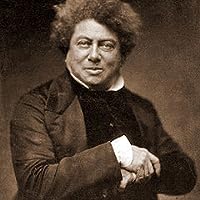
Alexandre Dumas
Alexandre Dumas
Author · 279 books

This note regards Alexandre Dumas, père, the father of Alexandre Dumas, fils (son). For the son, see Alexandre Dumas fils. Alexandre Dumas, père (French for "father", akin to Senior in English), born Dumas Davy de la Pailleterie, was a French writer, best known for his numerous historical novels of high adventure which have made him one of the most widely read French authors in the world. Many of his novels, including The Count of Monte Cristo, The Three Musketeers, The Man in the Iron Mask, and The Vicomte de Bragelonne were serialized. Dumas also wrote plays and magazine articles, and was a prolific correspondent. Dumas was of Haitian descent and mixed-race. His father, General Thomas-Alexandre Dumas Davy de la Pailleterie, was born in the French colony of Saint-Domingue (present-day Haiti) to Alexandre Antoine Davy de la Pailleterie, a French nobleman, and Marie-Cessette Dumas, a black slave. At age 14 Thomas-Alexandre was taken by his father to France, where he was educated in a military academy and entered the military for what became an illustrious career. Dumas' father's aristocratic rank helped young Alexandre Dumas acquire work with Louis-Philippe, Duke of Orléans, then as a writer, finding early success. He became one of the leading authors of the French Romantic Movement, in Paris. Excerpted from Wikipedia.

Friedrich Schlegel
Friedrich Schlegel
Author · 6 books

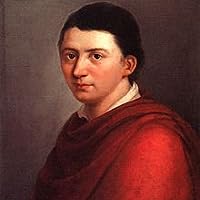
August Wilhelm von Schlegel also edited a literary magazine with Friedrich Schlegel, his brother, a philosopher, poet, and critic, whose essays formed the intellectual basis of German romanticism. This scholar critically led. https://en.wikipedia.org/wiki/Friedri...

Emily Bronte
Emily Bronte
Author · 66 books

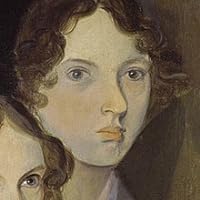
Emily Jane Brontë was an English novelist and poet, now best remembered for her only novel Wuthering Heights, a classic of English literature. Emily was the second eldest of the three surviving Brontë sisters, being younger than Charlotte Brontë and older than Anne Brontë. She published under the masculine pen name Ellis Bell. Emily was born in Thornton, near Bradford in Yorkshire to Patrick Brontë and Maria Branwell. She was the younger sister of Charlotte Brontë and the fifth of six children. In 1824, the family moved to Haworth, where Emily's father was perpetual curate, and it was in these surroundings that their literary oddities flourished. In childhood, after the death of their mother, the three sisters and their brother Patrick Branwell Brontë created imaginary lands (Angria, Gondal, Gaaldine, Oceania), which were featured in stories they wrote. Little of Emily's work from this period survived, except for poems spoken by characters (The Brontës' Web of Childhood, Fannie Ratchford, 1941). In 1842, Emily commenced work as a governess at Miss Patchett's Ladies Academy at Law Hill School, near Halifax, leaving after about six months due to homesickness. Later, with her sister Charlotte, she attended a private school in Brussels. They later tried to open up a school at their home, but had no pupils. It was the discovery of Emily's poetic talent by Charlotte that led her and her sisters, Charlotte and Anne, to publish a joint collection of their poetry in 1846, Poems by Currer, Ellis, and Acton Bell. To evade contemporary prejudice against female writers, the Brontë sisters adopted androgynous first names. All three retained the first letter of their first names: Charlotte became Currer Bell, Anne became Acton Bell, and Emily became Ellis Bell. In 1847, she published her only novel, Wuthering Heights, as two volumes of a three volume set (the last volume being Agnes Grey by her sister Anne). Its innovative structure somewhat puzzled critics. Although it received mixed reviews when it first came out, the book subsequently became an English literary classic. In 1850, Charlotte edited and published Wuthering Heights as a stand-alone novel and under Emily's real name. Like her sisters, Emily's health had been weakened by the harsh local climate at home and at school. She caught a chill during the funeral of her brother in September, and, having refused all medical help, died on December 19, 1848 of tuberculosis, possibly caught from nursing her brother. She was interred in the Church of St. Michael and All Angels family capsule, Haworth, West Yorkshire, England.

Guy de Maupassant
Guy de Maupassant
Author · 246 books
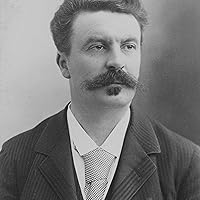
Henri René Albert Guy de Maupassant was a popular 19th-century French writer. He is one of the fathers of the modern short story. A protege of Flaubert, Maupassant's short stories are characterized by their economy of style and their efficient effortless dénouement. He also wrote six short novels. A number of his stories often denote the futility of war and the innocent civilians who get crushed in it - many are set during the Franco-Prussian War of the 1870s.
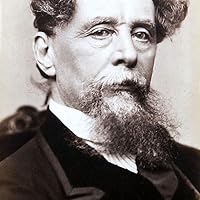
Charles Dickens
Charles Dickens
Author · 366 books

Charles John Huffam Dickens (1812-1870) was a writer and social critic who created some of the world's best-known fictional characters and is regarded as the greatest novelist of the Victorian era. His works enjoyed unprecedented popularity during his lifetime, and by the twentieth century critics and scholars had recognised him as a literary genius. His novels and short stories enjoy lasting popularity. Dickens left school to work in a factory when his father was incarcerated in a debtors' prison. Despite his lack of formal education, he edited a weekly journal for 20 years, wrote 15 novels, five novellas, hundreds of short stories and non-fiction articles, lectured and performed extensively, was an indefatigable letter writer, and campaigned vigorously for children's rights, education, and other social reforms. Dickens was regarded as the literary colossus of his age. His 1843 novella, A Christmas Carol, remains popular and continues to inspire adaptations in every artistic genre. Oliver Twist and Great Expectations are also frequently adapted, and, like many of his novels, evoke images of early Victorian London. His 1859 novel, A Tale of Two Cities, set in London and Paris, is his best-known work of historical fiction. Dickens' creative genius has been praised by fellow writers—from Leo Tolstoy to George Orwell and G. K. Chesterton—for its realism, comedy, prose style, unique characterisations, and social criticism. On the other hand, Oscar Wilde, Henry James, and Virginia Woolf complained of a lack of psychological depth, loose writing, and a vein of saccharine sentimentalism. The term Dickensian is used to describe something that is reminiscent of Dickens and his writings, such as poor social conditions or comically repulsive characters. On 8 June 1870, Dickens suffered another stroke at his home after a full day's work on Edwin Drood. He never regained consciousness, and the next day he died at Gad's Hill Place. Contrary to his wish to be buried at Rochester Cathedral "in an inexpensive, unostentatious, and strictly private manner," he was laid to rest in the Poets' Corner of Westminster Abbey. A printed epitaph circulated at the time of the funeral reads: "To the Memory of Charles Dickens (England's most popular author) who died at his residence, Higham, near Rochester, Kent, 9 June 1870, aged 58 years. He was a sympathiser with the poor, the suffering, and the oppressed; and by his death, one of England's greatest writers is lost to the world." His last words were: "On the ground", in response to his sister-in-law Georgina's request that he lie down. (from Wikipedia)

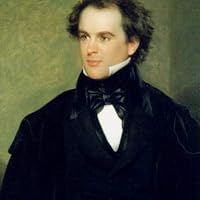
Nathaniel Hawthorne
Nathaniel Hawthorne
Author · 167 books

Nathaniel Hawthorne was a 19th century American novelist and short story writer. He is seen as a key figure in the development of American literature for his tales of the nation's colonial history. Shortly after graduating from Bowdoin College, Hathorne changed his name to Hawthorne. Hawthorne anonymously published his first work, a novel titled Fanshawe, in 1828. In 1837, he published Twice-Told Tales and became engaged to painter and illustrator Sophia Peabody the next year. He worked at a Custom House and joined a Transcendentalist Utopian community, before marrying Peabody in 1842. The couple moved to The Old Manse in Concord, Massachusetts, later moving to Salem, the Berkshires, then to The Wayside in Concord. The Scarlet Letter was published in 1850, followed by a succession of other novels. A political appointment took Hawthorne and family to Europe before returning to The Wayside in 1860. Hawthorne died on May 19, 1864, leaving behind his wife and their three children. Much of Hawthorne's writing centers around New England and many feature moral allegories with a Puritan inspiration. His work is considered part of the Romantic movement and includes novels, short stories, and a biography of his friend, the United States President Franklin Pierce.

Jean-Jacques Rousseau
Author · 58 books

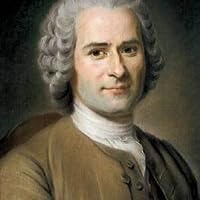
Swiss philosopher and writer Jean Jacques Rousseau held that society usually corrupts the essentially good individual; his works include The Social Contract and Émile (both 1762). This important figure in the history contributed to political and moral psychology and influenced later thinkers. Own firmly negative view saw the post-hoc rationalizers of self-interest, apologists for various forms of tyranny, as playing a role in the modern alienation from natural impulse of humanity to compassion. The concern to find a way of preserving human freedom in a world of increasingly dependence for the satisfaction of their needs dominates work. This concerns a material dimension and a more important psychological dimensions. Rousseau a fact that in the modern world, humans come to derive their very sense of self from the opinions as corrosive of freedom and destructive of authenticity. In maturity, he principally explores the first political route, aimed at constructing institutions that allow for the co-existence of equal sovereign citizens in a community; the second route to achieving and protecting freedom, a project for child development and education, fosters autonomy and avoids the development of the most destructive forms of self-interest. Rousseau thinks or the possible co-existence of humans in relations of equality and freedom despite his consistent and overwhelming pessimism that humanity will escape from a dystopia of alienation, oppression, and unfreedom. In addition to contributions, Rousseau acted as a composer, a music theorist, the pioneer of modern autobiography, a novelist, and a botanist. Appreciation of the wonders of nature and his stress on the importance of emotion made Rousseau an influence on and anticipator of the romantic movement. To a very large extent, the interests and concerns that mark his work also inform these other activities, and contributions of Rousseau in ostensibly other fields often serve to illuminate his commitments and arguments.

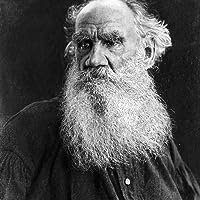
Leo Tolstoy
Leo Tolstoy
Author · 321 books

Lev Nikolayevich Tolstoy (Russian: Лев Николаевич Толстой; most appropriately used Liev Tolstoy; commonly Leo Tolstoy in Anglophone countries) was a Russian writer who primarily wrote novels and short stories. Later in life, he also wrote plays and essays. His two most famous works, the novels War and Peace and Anna Karenina, are acknowledged as two of the greatest novels of all time and a pinnacle of realist fiction. Many consider Tolstoy to have been one of the world's greatest novelists. Tolstoy is equally known for his complicated and paradoxical persona and for his extreme moralistic and ascetic views, which he adopted after a moral crisis and spiritual awakening in the 1870s, after which he also became noted as a moral thinker and social reformer. His literal interpretation of the ethical teachings of Jesus, centering on the Sermon on the Mount, caused him in later life to become a fervent Christian anarchist and anarcho-pacifist. His ideas on nonviolent resistance, expressed in such works as The Kingdom of God Is Within You, were to have a profound impact on such pivotal twentieth-century figures as Mohandas Gandhi and Martin Luther King, Jr.

Fyodor Dostoevsky
Fyodor Dostoevsky
Author · 231 books

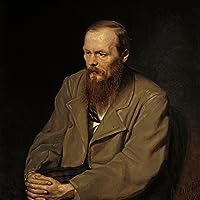
Fyodor Mikhailovich Dostoevsky was a Russian novelist, short story writer, essayist, and journalist. His literary works explore human psychology in the troubled political, social, and spiritual atmospheres of 19th-century Russia, and engage with a variety of philosophical and religious themes. His most acclaimed novels include Crime and Punishment (1866), The Idiot (1869), Demons (1872), and The Brothers Karamazov (1880). Many literary critics rate him as one of the greatest novelists in all of world literature, as multiple of his works are considered highly influential masterpieces. His 1864 novella Notes from Underground is considered to be one of the first works of existentialist literature. As such, he is also looked upon as a philosopher and theologian as well. (Russian: Фёдор Михайлович Достоевский) (see also Fiodor Dostoïevski)

Elisabeth Bürstenbinder
Author · 1 book
Elisabeth Bürstenbinder (1838 - 1918) was a German novelist. She published under the pseudonym E. Werner.
Alfred Schirokauer
Alfred Schirokauer
Author · 1 book

Alfred Schirokauer (1880–1934) was a German novelist and screenwriter. He also directed three films during the silent era. Many films were based on his novels. After the rise of the Nazi Party to power in 1933, Schirokauer emigrated to Amsterdam and then to Austria where he died the following year.

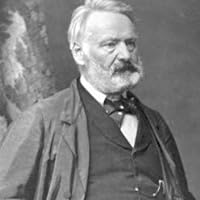
Victor Hugo
Victor Hugo
Author · 128 books

After Napoleon III seized power in 1851, French writer Victor Marie Hugo went into exile and in 1870 returned to France; his novels include The Hunchback of Notre Dame (1831) and Les Misérables (1862). This poet, playwright, novelist, dramatist, essayist, visual artist, statesman, and perhaps the most influential, important exponent of the Romantic movement in France, campaigned for human rights. People in France regard him as one of greatest poets of that country and know him better abroad.

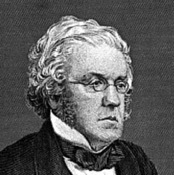
William Makepeace Thackeray
Author · 21 books

William Makepeace Thackeray was an English novelist, satirist, and journalist, best known for his keen social commentary and his novel Vanity Fair (1847–1848). His works often explored themes of ambition, hypocrisy, and the moral failings of British society, making him one of the most significant literary figures of the Victorian era. Born in Calcutta, British India, he was sent to England for his education after his father’s death. He attended Charterhouse School, where he developed a distaste for the rigid school system, and later enrolled at Trinity College, Cambridge. However, he left without earning a degree, instead traveling in Europe and pursuing artistic ambitions. After losing much of his inheritance due to bad investments, Thackeray turned to writing for a living. He contributed satirical sketches, essays, and stories to periodicals such as Fraser’s Magazine and Punch, gradually building a reputation for his sharp wit and keen observational skills. His breakthrough came with Vanity Fair, a panoramic satire of English society that introduced the enduring character of Becky Sharp, a resourceful and amoral social climber. Thackeray’s later novels, including Pendennis (1848–1850), The History of Henry Esmond (1852), and The Newcomes (1853–1855), continued to explore the lives of the English upper and middle classes, often focusing on the contrast between personal virtue and social ambition. His historical novel Henry Esmond was particularly praised for its detailed 18th-century setting and complex characterization. In addition to his fiction, Thackeray was a noted public speaker and essayist, delivering lectures on the English humorists of the 18th century and on The Four Georges, a critical look at the British monarchy. Despite his literary success, he lived with personal struggles, including the mental illness of his wife, Isabella, which deeply affected him. He remained devoted to his two daughters and was known for his kindness and generosity among his friends and colleagues. His works remain widely read, appreciated for their incisive humor, rich characterizations, and unflinching critique of social pretensions.

548 Market St PMB 65688, San Francisco California 94104-5401 USA
© 2025 Paratext Inc. All rights reserved