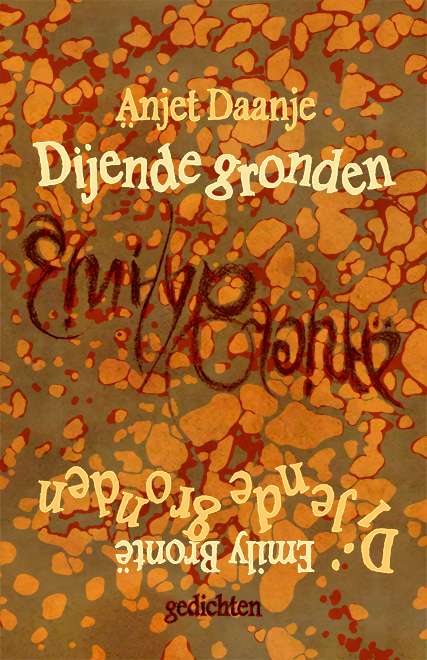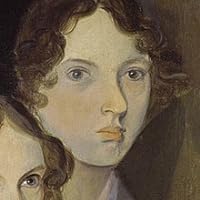



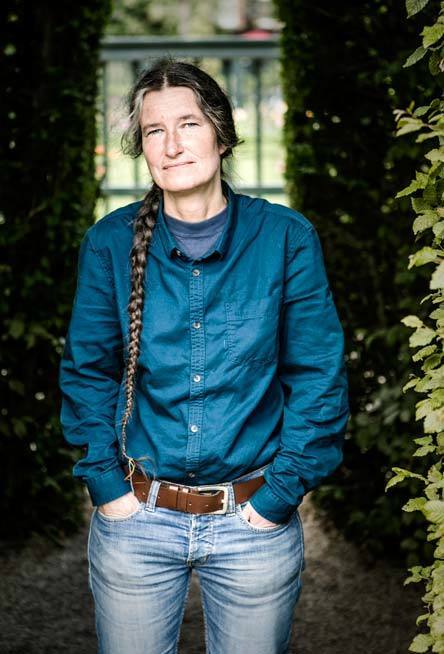
Anjet Daanjes roman "Het lied van ooievaar en dromedaris" en de bijbehorende dichtbundel "Dijende gronden" komen beide voort uit een jarenlange studie van het leven en werk van de negentiende-eeuwse schrijfster Emily Brontë en haar zusters, Charlotte en Anne. Emily Brontë werd beroemd door haar roman "Wuthering Heights", maar ze schreef ook bijna tweehonderd gedichten, die net als haar roman, opmerkelijk modern waren voor hun tijd. Charlotte, de auteur van "Jane Eyre", schreef over de gedichten van haar zus: ‘I know—no woman that ever lived—ever wrote such poetry before […] The pieces are short, but they are very genuine: they stirred my heart like the sound of a trumpet.’ Voor "Dijende gronden" koos Anjet Daanje Emily Brontës mooiste gedichten uit. Ze vertaalde ze in het Nederlands, en liet zich er daarnaast door inspireren tot het schrijven van eigen gedichten. In haar gedichten hield Emily Brontë zich vooral bezig met de verbeelding en de dood, thema’s waartussen zij een nauw verband zag. Anderhalve eeuw later ontkom je bij het lezen van haar gedichten er niet aan ze op haar eigen vroegtijdige dood te betrekken. Dertig jaar oud was ze nog maar toen ze stierf aan tbc, een jaar na de publicatie van haar enige roman. In "Dijende gronden" zijn daarom ook twee gedichten opgenomen van Charlotte, die ze enkele dagen na Emily’s begrafenis schreef, in een poging haar grote verdriet te verwoorden. De bundel eindigt met een gedichtencyclus van Anjet Daanje rond de dood van Emily Brontë, afwisselend gezien vanuit het perspectief van Emily en dat van Charlotte. De dichtbundel "Dijende gronden" is te beschouwen als een bijlage bij Anjet Daanjes roman "Het lied van ooievaar en dromedaris".
Authors


Emily Jane Brontë was an English novelist and poet, now best remembered for her only novel Wuthering Heights, a classic of English literature. Emily was the second eldest of the three surviving Brontë sisters, being younger than Charlotte Brontë and older than Anne Brontë. She published under the masculine pen name Ellis Bell. Emily was born in Thornton, near Bradford in Yorkshire to Patrick Brontë and Maria Branwell. She was the younger sister of Charlotte Brontë and the fifth of six children. In 1824, the family moved to Haworth, where Emily's father was perpetual curate, and it was in these surroundings that their literary oddities flourished. In childhood, after the death of their mother, the three sisters and their brother Patrick Branwell Brontë created imaginary lands (Angria, Gondal, Gaaldine, Oceania), which were featured in stories they wrote. Little of Emily's work from this period survived, except for poems spoken by characters (The Brontës' Web of Childhood, Fannie Ratchford, 1941). In 1842, Emily commenced work as a governess at Miss Patchett's Ladies Academy at Law Hill School, near Halifax, leaving after about six months due to homesickness. Later, with her sister Charlotte, she attended a private school in Brussels. They later tried to open up a school at their home, but had no pupils. It was the discovery of Emily's poetic talent by Charlotte that led her and her sisters, Charlotte and Anne, to publish a joint collection of their poetry in 1846, Poems by Currer, Ellis, and Acton Bell. To evade contemporary prejudice against female writers, the Brontë sisters adopted androgynous first names. All three retained the first letter of their first names: Charlotte became Currer Bell, Anne became Acton Bell, and Emily became Ellis Bell. In 1847, she published her only novel, Wuthering Heights, as two volumes of a three volume set (the last volume being Agnes Grey by her sister Anne). Its innovative structure somewhat puzzled critics. Although it received mixed reviews when it first came out, the book subsequently became an English literary classic. In 1850, Charlotte edited and published Wuthering Heights as a stand-alone novel and under Emily's real name. Like her sisters, Emily's health had been weakened by the harsh local climate at home and at school. She caught a chill during the funeral of her brother in September, and, having refused all medical help, died on December 19, 1848 of tuberculosis, possibly caught from nursing her brother. She was interred in the Church of St. Michael and All Angels family capsule, Haworth, West Yorkshire, England.