Diplomats and Diplomacy
Series · 6 books · 1998-2018
Books in series

#3
American Ambassadors
A Guide for Aspiring Diplomats and Foreign Service Officers
2014
If you ever wondered who becomes an American ambassador and why, this is the book for you. It describes how Foreign Service officers become ambassadors by rising up through the ranks, and why they typically make up about 70 percent of the total number of ambassadors. It also covers where the other 30 percent come from - the political appointees who get the job because they helped elect the president by supporting him as a campaign contributor, a political ally, or a personal friend. It explains why, despite being illegal and a threat to national security, selling the title of ambassador remains a common practice that is also unique to the United States. It considers why some suggestions for reform are misguided, what might be done, and why who the president is matters so much in determining how well the United States will be represented abroad.
This updated and revised edition of Jett’s classic book not only provides a timely overview of American ambassadorship for Foreign Service Officers, aspiring diplomats, and interested citizens, but also calls for much-needed reform, describing the dire implications of failing to change our ambassadorial appointments process for the future of American diplomatic practice and foreign policy.
PLEASE When you purchase this title, the accompanying PDF will be available in your Audible Library along with the audio.

#22
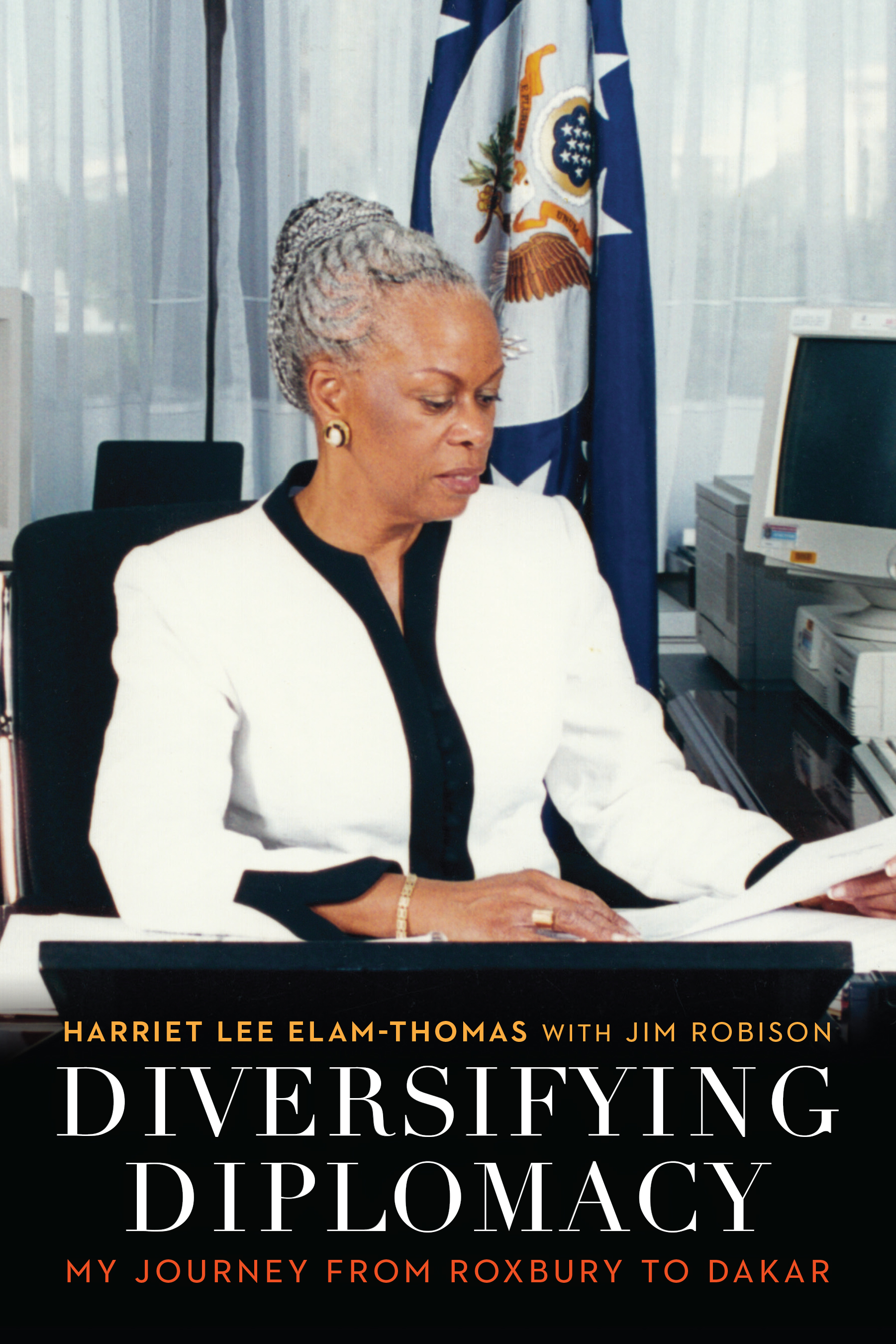
Diversifying Diplomacy
My Journey from Roxbury to Dakar
2017
"Diversifying Diplomacy tells the story of Harriet Lee Elam-Thomas, a young black woman who beat the odds and challenged the status quo. Inspired by the strong women in her life, she followed in the footsteps of the few women who had gone before her in her effort to make the Foreign Service reflect the diverse faces of the United States. The youngest child of parents who left the segregated Old South to raise their family in Massachusetts, Elam-Thomas distinguished herself with a diplomatic career at a time when few colleagues looked like her.
Elam-Thomas’ memoir is a firsthand account of her decades-long career in the US Department of State’s Foreign Service, recounting her experiences of making US foreign policy, culture, and values understood abroad. Elam-Thomas served as a United States ambassador to Senegal (2000-2002) and retired with the rank of career minister after 42 years as a diplomat. Diversifying Diplomacy presents the journey of this successful woman, who not only found herself confronted by some of the world’s heftier problems but also helped ensure that new shepherds of honesty and authenticity would follow in her international footsteps for generations to come.
The book is published by University of Nebraska Press. The audiobook is published by University Press Audiobooks.
""An informative, behind-the-scenes look at one black woman's rise through the ranks of the Foreign Service when few others like her were serving as diplomats."" (Kirkus)
“Essential for any student of America’s international affairs over the past five decades.” (Robert L. Dilenschneider, chairman and founder of the Dilenschneider Group, Inc.)
“This captivating, inspiring memoir breathes life into the American dream.” (Ambassador Ruth A. Davis)
"

#32
In Those Days
A Diplomat Remembers
1998
In Those Days is the candid, often funny, autobiography of a twentieth-century American diplomat who spent most of his life in high-level diplomacy in Asia and Africa. The story takes James Spain form an Irish Catholic childhood in gangster-era Chicago through military service as Douglas MacArthur’s photographer in occupied Japan and university life at Chicago and a Ph.D. from Columbia. His Foreign Service career brought postings in Islamabad, Istanbul, and Ankara and four ambassadorships—in Tanzania, Turkey, the United Nations (as deputy permanent representative), and Sri Lanka.
Spain’s memoir offers readers a firsthand account of U.S. diplomacy and of a family that tied its experiences to the events of contemporary history. He writes of personal triumphs and family tragedies and speculates on the meaning of it all, including the joys and tribulations of retirement in Sri Lanka.
Published in cooperation with the ADST-DACOR Diplomats and Diplomacy Series.

#34
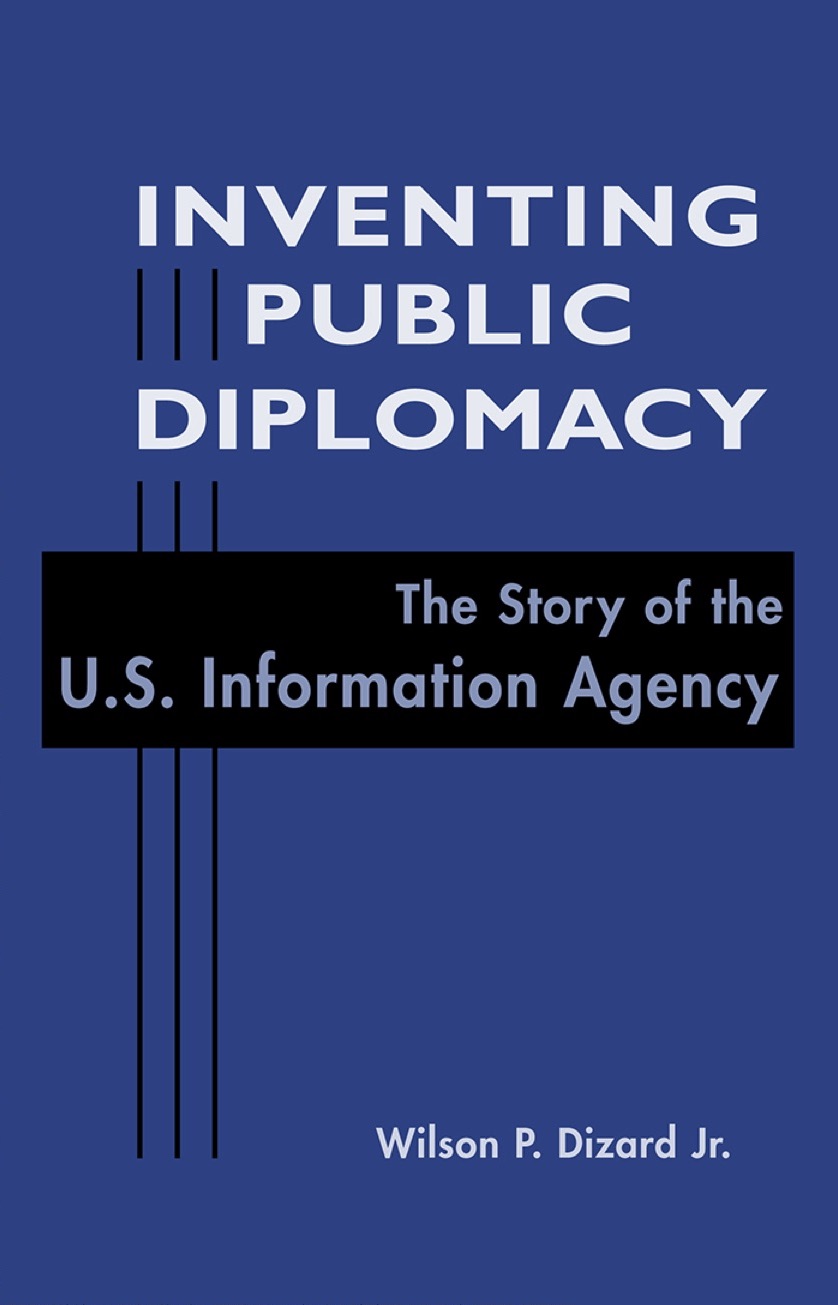
Inventing Public Diplomacy
The Story of the U.S. Information Agency
2004
Public diplomacy - the uncertain art of winning public support abroad for one's government and its foreign policies - constitutes a critical instrument of U.S. policy in the wake of the Bush administration's recent military interventions and its renunciation of widely accepted international accords. Wilson Dizard Jr. offers the first comprehensive account of public diplomacy's evolution within the U.S. foreign policy establishment, ranging from World War II to the present. Dizard focuses on the U.S. Information Agency and its precursor, the Office of War Information. Tracing the political ups and downs determining the agency's trajectory, he highlights its instrumental role in creating the policy and programs underpinning today's public diplomacy, as well as the people involved. The USIA was shut down in 1999, but it left an important legacy of what works and what doesn't in presenting U.S. policies and values to the rest of the world. Inventing Public Diplomacy is an unparalleled history of U.S. efforts at organized international propaganda.

#38
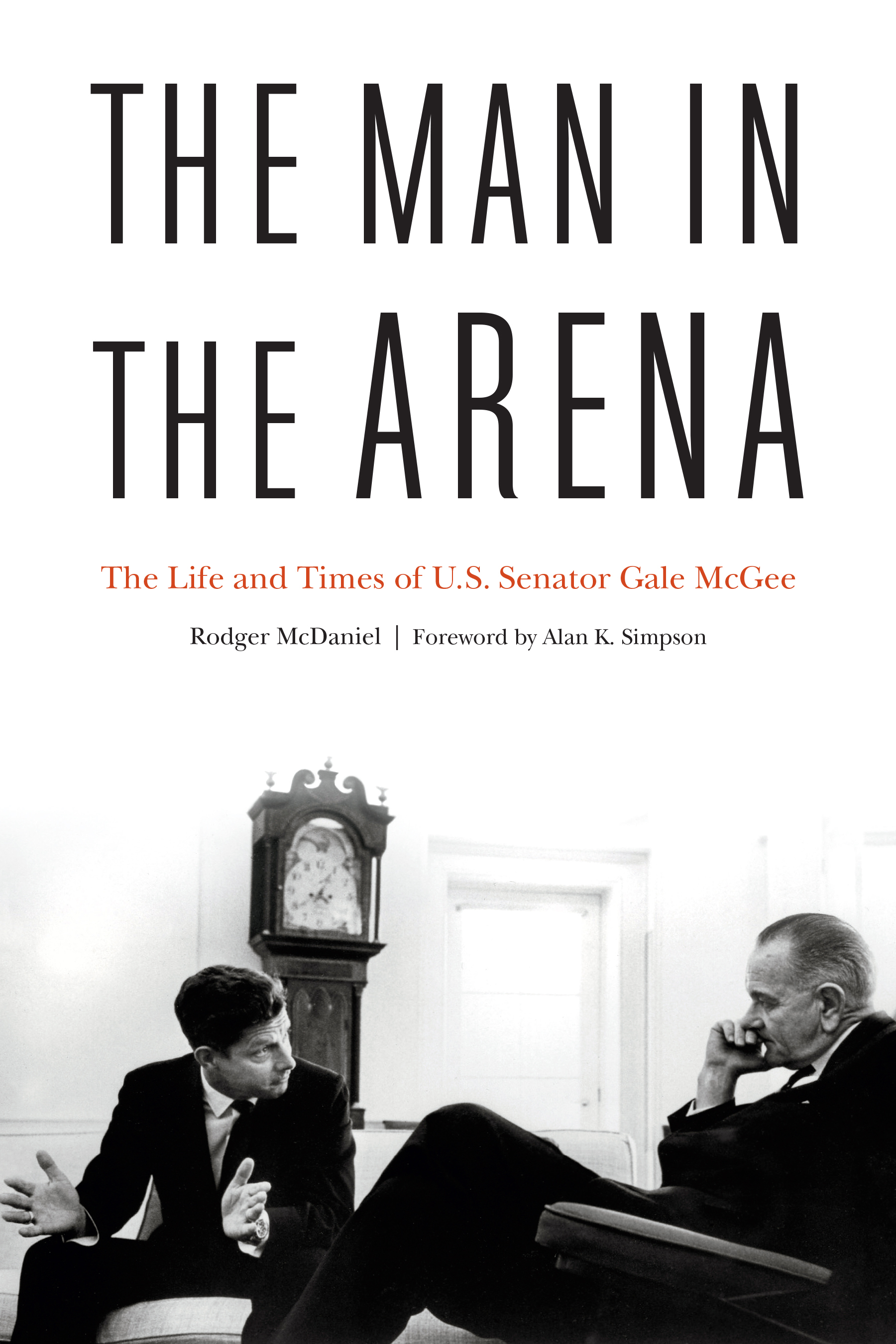
The Man in the Arena
The Life and Times of U.S. Senator Gale McGee
2018
Best Nonfiction Book of the Year from the Wyoming State Historical Society
There was a time when Wyoming and other Rocky Mountain and midwestern states were as likely to elect a liberal Democrat to Congress as they were a conservative Republican. Gale McGee (1915–92) was elected to the U.S. Senate in 1958, at the height of American liberalism. He typified what Teddy Roosevelt called “the man in the arena” and was a major player in the development of America’s post–World War II foreign policy and almost every legislative milestone in U.S. history from the 1950s to 1980. McGee’s careers as an academic, a senator, and an ambassador spanned World War II, the Red Scare, the Korean and Vietnam Wars, and the activist Congress of the 1960s. This elegantly conceived biography of a liberal from the conservative rural state of Wyoming offers readers a glimpse into formative political shifts of the twentieth century.
The national liberal consensus of the 1960s, in which McGee played a major role, gave the nation Social Security, Medicare, Medicaid, the minimum wage, and the right to collective bargaining, as well as landmark civil rights and environmental reforms. That consensus had ended by the mid-1970s as McGee’s liberalism would no longer be welcome to represent the Equality State.
Moving beyond biography, Rodger McDaniel addresses the significant shift in government and details how the attribution “liberal” became a candidate’s epitaph, as widespread distrust of government cast a shadow on the many benefits acquired through the old liberal consensus. McDaniel’s insights into the past as well as McGee’s experiences in the arena shed unexpected light on the present state of U.S. politics and government.


#45
The Other War
Winning and Losing in Afghanistan
2009
As the bloodshed in Iraq intensified in 2005, Afghanistan quickly faded from the nation’s front pages to become the “other war,” supposedly going well and largely ignored. In fact, the insurgency in Afghanistan was about to break out with renewed force, the drug problem was worsening, and international coordination was losing focus. That July, Ronald Neumann arrived in Kabul from Baghdad as the U.S. ambassador, bringing the experience of a career diplomat whose professional lifetime had been spent in the greater Middle East, beginning thirty-eight years earlier in the same country in which it ended—Afghanistan.
Neumann’s account of how the war in Afghanistan unfolded over the next two years is rich with heretofore unexamined details of operations, tensions, and policy decisions. He demonstrates why the United States was slow to recognize the challenge it faced and why it failed to make the requisite commitment of economic, military, and civilian resources. His account provides a new understanding of the problems of alliance warfare in conducting simultaneous nation building and counterinsurgency. Honest in recounting failures as well as successes, the book is must reading as much for students of international affairs who want to understand the reality of diplomatic policymaking and implementation in the field as for those who want to understand the nation’s complex “other war.”