Margins
[(Don Quixote)] [ By (author) Miguel de Cervantes, Translated by Tom Lathrop ] [October, 2014] book cover
[(Don Quixote)] [ By (author) Miguel de Cervantes, Translated by Tom Lathrop ] [October, 2014]
2007
First Published
4.83
Average Rating
611
Number of Pages
Originally conceived as a comic satire against the chivalric romances then in literary vogue, it describes realistically what befalls an elderly knight (Don Quixote) who, his head bemused by reading romances, sets out on his old horse Rosinante, with his pragmatic squire Sancho Panza, to seek adventure. Don Quixote has read himself into madness by reading too many books of chivalry, and so sets out to emulate the knights of old, first by getting himself some armour (out of pasteboard) and a steed (a broken-down nag), and then by getting himself knighted. He goes to an inn, which he thinks a castle, meets prostitutes whom he thinks high-born ladies, addresses them and the innkeeper, who is a thief, in language so literary that they cannot understand it, and then seeks to get himself knighted by standing vigil all night over his armour. The ludicrous transformation of the sacred rituals of knighthood into their ad hoc material equivalents parallels a similar desacralizing going on Europe at the time.

Avg Rating
4.83
Number of Ratings
6
5 STARS
83%
4 STARS
17%
3 STARS
0%
2 STARS
0%
1 STARS
0%
goodreads

Author

Miguel de Cervantes Saavedra
Author · 57 books

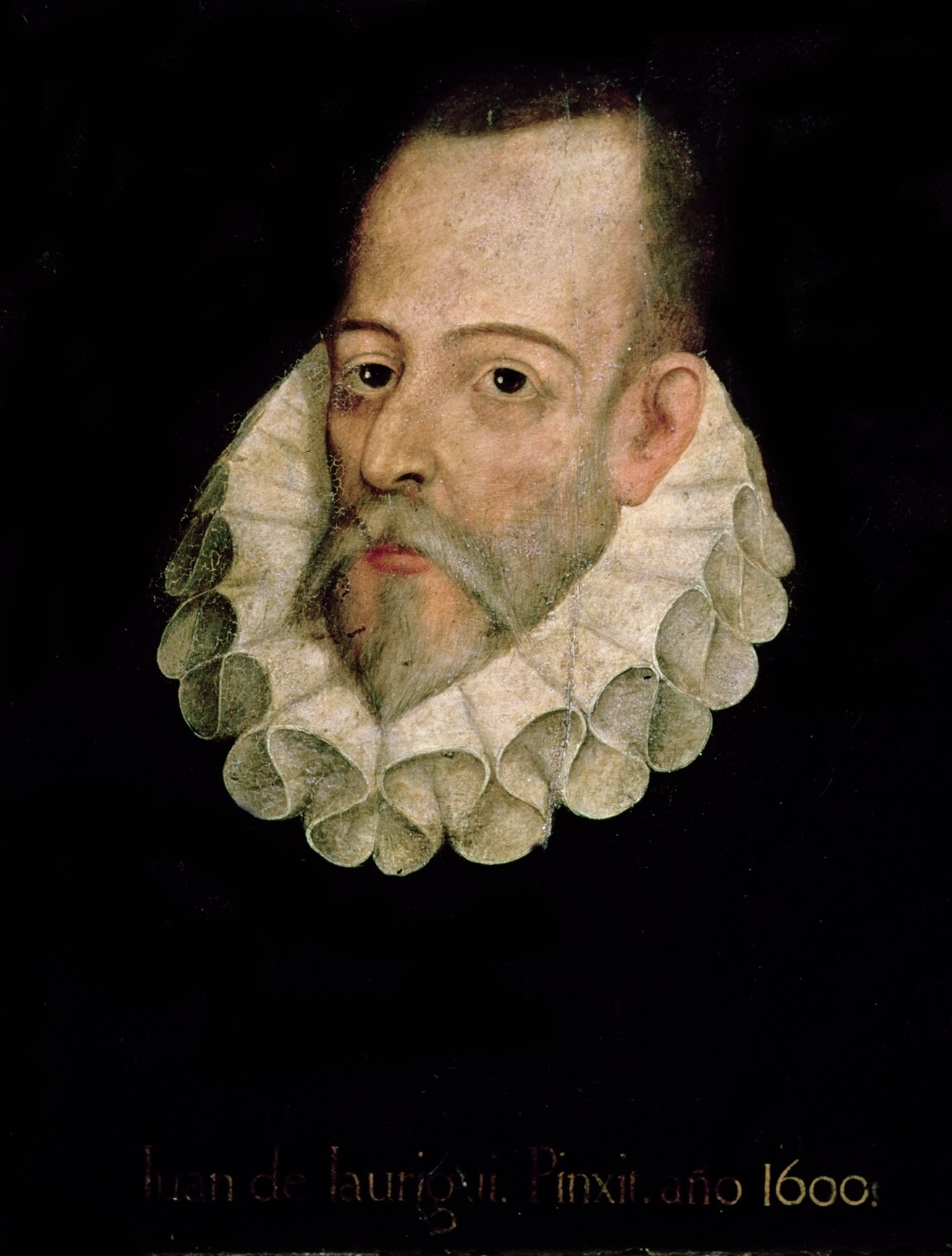
Miguel de Cervantes y Cortinas, later Saavedra was a Spanish novelist, poet, and playwright. His novel Don Quixote is often considered his magnum opus, as well as the first modern novel. It is assumed that Miguel de Cervantes was born in Alcalá de Henares. His father was Rodrigo de Cervantes, a surgeon of cordoban descent. Little is known of his mother Leonor de Cortinas, except that she was a native of Arganda del Rey. In 1569, Cervantes moved to Italy, where he served as a valet to Giulio Acquaviva, a wealthy priest who was elevated to cardinal the next year. By then, Cervantes had enlisted as a soldier in a Spanish Navy infantry regiment and continued his military life until 1575, when he was captured by Algerian corsairs. He was then released on ransom from his captors by his parents and the Trinitarians, a Catholic religious order. He subsequently returned to his family in Madrid. In Esquivias (Province of Toledo), on 12 December 1584, he married the much younger Catalina de Salazar y Palacios (Toledo, Esquivias –, 31 October 1626), daughter of Fernando de Salazar y Vozmediano and Catalina de Palacios. Her uncle Alonso de Quesada y Salazar is said to have inspired the character of Don Quixote. During the next 20 years Cervantes led a nomadic existence, working as a purchasing agent for the Spanish Armada and as a tax collector. He suffered a bankruptcy and was imprisoned at least twice (1597 and 1602) for irregularities in his accounts. Between 1596 and 1600, he lived primarily in Seville. In 1606, Cervantes settled in Madrid, where he remained for the rest of his life. Cervantes died in Madrid on April 23, 1616. -Copied from Wikipedia

548 Market St PMB 65688, San Francisco California 94104-5401 USA
© 2026 Paratext Inc. All rights reserved