Margins
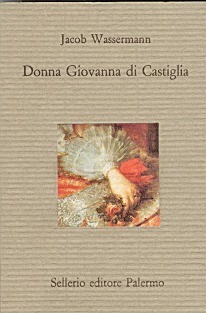
Donna Giovanna di Castiglia book cover
Donna Giovanna di Castiglia
1906
First Published
3.62
Average Rating
160
Number of Pages
La vicenda di Giovanna di Castiglia - su cui indaga in questo racconto lo scrittore di grovigli storici e psicologici Jacob Wassermann - è stata definita un «enigma della storia» da Karl Hillebrand, lo studioso che per primo cercò di illuminarla. Nata nel 1479 da Ferdinando di Castiglia («tra le urla di cento eretici agonizzanti» nota puntualmente Wassermann), madre di Carlo V imperatore, regina sotto reggenza, morì nel 1555 sigillata nel castello di Tordesillas perché pazza. E come «Giovanna la pazza» è passata alla storia: sebbene a prova della sua follia siano solo le lettere faziose del padre; sebbene la causa scatenante, la morte del marito amato, Filippo il Bello, nel 1506, sia stata forse un avvelenamento; sebbene Giovanna fosse disagevole incrocio di immani intrighi, con al centro l'Inquisizione trionfante che lei intendeva osteggiare.

Avg Rating
3.62
Number of Ratings
29
5 STARS
14%
4 STARS
52%
3 STARS
17%
2 STARS
17%
1 STARS
0%
goodreads

Author

Jakob Wassermann
Jakob Wassermann
Author · 11 books

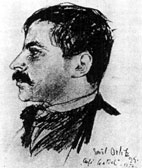
Jakob Wassermann (1873 – 1934) was a German writer and novelist of Jewish descent. Born in Fürth, he was the son of a shopkeeper and lost his mother at an early age. He showed literary interest early and published various pieces in small newspapers. Because his father was reluctant to support his literary ambitions, he began a short-lived apprenticeship with a businessman in Vienna after graduation. He completed his military service in Nuremberg. Afterward, he stayed in southern Germany and in Switzerland. In 1894 he moved to Munich. Here he worked as a secretary and later as a copy editor at the paper Simplicissimus. Around this time he also became acquainted with other writers Rainer Maria Rilke, Hugo von Hofmannsthal, and Thomas Mann. In 1896 he released his first novel, Melusine. Interestingly, his last name (Wassermann) means "water-man" in German; a "Melusine" (or "Melusina") is a figure of European legends and folklore, a feminine spirit of fresh waters in sacred springs and rivers. From 1898 he was a theater critic in Vienna. In 1901 he married Julie Speyer, whom he divorced in 1915. Three years later he was married again to Marta Karlweis. After 1906, he lived alternatively in Vienna or at Altaussee in der Steiermark where he died in 1934 after a severe illness. In 1926, he was elected to the Prussian Academy of Art. He resigned in 1933, narrowly avoiding an expulsion by the Nazis. In the same year, his books were banned in Germany owing to his Jewish ancestry. Wassermann's work includes poetry, essays, novels, and short stories. His most important works are considered the novel Der Fall Maurizius (1928) and the autobiography, My Life as German and Jew (Mein Weg als Deutscher und Jude) (1921), in which he discussed the tense relationship between his German and Jewish identities.

548 Market St PMB 65688, San Francisco California 94104-5401 USA
© 2026 Paratext Inc. All rights reserved