


Margins
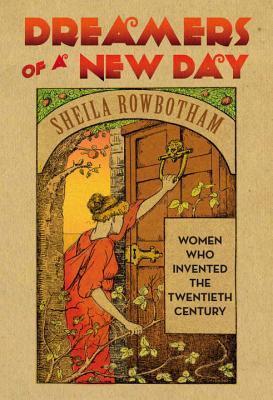
Dreamers of a New Day book cover
Dreamers of a New Day
Women Who Invented the Twentieth Century
2010
First Published
3.92
Average Rating
320
Number of Pages

Amid the growth of globalized trade, mass production, immigration and urban slums that dominated the period from the 1880s to the onset of the First World War, an awakening was taking place among American and British women. Across the Atlantic and across political boundaries—anarchists to liberals, feminists and non-feminists—female pioneers shared a sense that social change was possible, and acted upon that belief. Dreamers of a New Day explores a period, from the belle époque to the roaring twenties, when women overturned social norms and assumptions as they struggled to define themselves as individuals. Forming broad coalitions and movements, they transformed the conditions of their own lives, decades before the intellectuals of the 1960s conceptualized “everyday life” as an arena for radical activity. Drawing on a wealth of original research, Sheila Rowbotham has written a groundbreaking new history examining how women came to be modern. Challenging existing conceptions of citizenship and culture, from ethical living to consumerism, sexuality to democracy, these dreamers shaped many of the issues that remain at the forefront of twenty-first-century life.
Avg Rating
3.92
Number of Ratings
83
5 STARS
23%
4 STARS
48%
3 STARS
27%
2 STARS
2%
1 STARS
0%
goodreads

Author

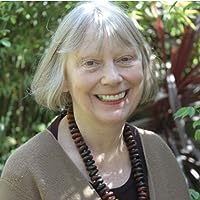
Sheila Rowbotham
Sheila Rowbotham
Author · 12 books

Sheila Rowbotham is a British socialist feminist theorist and writer. Rowbotham was born in Leeds (in present-day West Yorkshire), the daughter of a salesman for an engineering company and an office clerk. From an early age, she was deeply interested in history. She has written that traditional political history "left her cold", but she credited Olga Wilkinson, one of her teachers, with encouraging her interest in social history by showing that history "belonged to the present, not to the history textbooks". Rowbotham attended St Hilda's College at Oxford and then the University of London. She began her working life as a teacher in comprehensive schools and institutes of higher or Adult education. While attending St. Hilda's College, Rowbotham found her syllabus with its heavy focus on political history to be of no interest to her. Through her involvement in the Campaign for Nuclear Disarmament, and various socialist circles including the Labour Party's youth wing, the Young Socialists, Rowbotham was introduced to Karl Marx's ideas. Already on the left, Rowbotham was converted to Marxism. Soon disenchanted with the direction of party politics she immersed herself in a variety of left-wing campaigns, including writing for the radical political newspaper Black Dwarf. In the 1960s, Rowbotham was one of the founders and leaders of the History Workshop movement associated with Ruskin College. Towards the end of the 1960s she had become involved in the growing Women’s Liberation Movement (also known as Second-wave feminism) and, in 1969, published her influential pamphlet "Women's Liberation and the New Politics", which argued that Socialist theory needed to consider the oppression of women in cultural as well as economic terms. She was heavily involved in the conference Beyond the Fragments (eventually a book), which attempted to draw together democratic socialist and socialist feminist currents in Britain. Between 1983 and 1986, Rowbotham served as the editor of Jobs for Change, the newspaper of the Greater London Council. (from Wikipedia)

548 Market St PMB 65688, San Francisco California 94104-5401 USA
© 2026 Paratext Inc. All rights reserved