


Margins
2018
First Published
4.25
Average Rating
73
Number of Pages

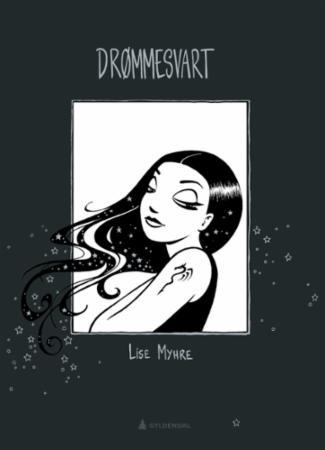
Drømmesvart - en vakker diktantologi illustrert av Lise Myhre. Drømmesvart er en mørk og nydelig bok som for første gang samler diktene Lise Myhre har illustrert i tegneserieform. Skrevet av storheter som André Bjerke, Inger Hagerup, Tarjei Vesaas og mange fler, håndplukket, tolket og illustrert av Lise Myhre. "Selv om det meste i denne boken er skrevet av noen andre enn meg selv, føles det som noe av det mest personlige jeg har laget." -Lise Myhre Innhold: Lars Saabye Christensen: Det barn du var skal du aldri bli Tor Jonsson: Eg er sorg og glede Jens Bjørneboe: Utdrag fra Ballade om kunstnerens liv Walt Whitman: Full av liv, nå Josef Victor Widman: Følgesvennen Halldis Moren Vesaas: Einsamflygar Edgar Allan Poe: Alene Tarjei Vesaas: Det ror og ror André Bjerke: Den lille skjevhet André Bjerke: Okkult intermesso André Bjerke: Bittelill og Ilsebill André Bjerke: Liten og stor 1 André Bjerke: Berceuse 2 André Bjerke: Møte 3 André Bjerke: Til gjenmæle 4 André Bjerke: Natten 5 André Bjerke: Mesteren 6 André Bjerke: Erindret barndom 7 Inger Hagerup: Eventyr 8 Inger Hagerup: Jeg er det dikt 9 Inger Hagerup: Eventyr
Avg Rating
4.25
Number of Ratings
61
5 STARS
44%
4 STARS
41%
3 STARS
10%
2 STARS
5%
1 STARS
0%
goodreads

Authors

Jens Bjørneboe
Jens Bjørneboe
Author · 20 books

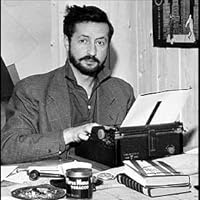
Jens Ingvald Bjørneboe was a Norwegian writer whose work spanned a number of literary formats. He was also a painter and a waldorf school teacher. Bjørneboe was a harsh and eloquent critic of Norwegian society and Western civilization on the whole. He led a turbulent life and his uncompromising humanity would cost him both an obscenity conviction as well as long periods of heavy drinking and bouts of depression, which in the end led to his suicide. Jens Bjørneboe's first published work was Poems (Dikt) in 1951. He is widely considered to be one of Norway's most important post-war authors. Bjørneboe identified himself, among other self-definitions, as an anarcho-nihilist. During the Norwegian language struggle, Bjørneboe was a notable proponent of the Riksmål language, together with his equally famous cousin André Bjerke. Jens Bjørneboe was born in 1920, in Kristiansand to Ingvald and Anna Marie Bjørneboe. He grew up in a wealthy family, his father a shipping magnate and a consul for Belgium. The Bjørneboe family originally immigrated from Germany in the 17th century and later adopted their Norwegian name. Coming from a long line of marine officers, Bjørneboe also went to sea as a young man. Bjørneboe had a troubled childhood with sickness and depressions. He was bedbound for several years following severe pneumonia. At thirteen he attempted suicide by hanging himself. He began drinking when he was twelve, and he would often consume large amounts of wine when his parents were away. It is also rumored that he drank his father's aftershave on several occasions. In 1943 Bjørneboe fled to Sweden to avoid forced labor under the Nazi occupation. During this exile, he met the German Jewish painter Lisel Funk, who later became his first wife. Lisel Funk introduced him to many aspects of German culture, especially German literature and the arts. Bjørneboe's early work was poetry, and his first book was Poems (Dikt, 1951), consisting mainly of deeply religious poetry. Bjørneboe wrote a number of socially critical novels. Among those were Ere the Cock Crows (Før Hanen Galer, 1952), Jonas (1955) and The Evil Shepherd (Den Onde Hyrde, 1960). Ere the Cock Crows is a critique of what Bjørneboe saw as the harsh treatment, after the Second World War, of people suspected of having associated in any way with the Nazis (among them the Norwegian writer and Nobel Prize in Literature winner Knut Hamsun). Jonas deals with injustices and shortcomings of the school system and The Evil Shepherd with the Norwegian prison system. His most significant work is generally considered to be the trilogy The History of Bestiality, consisting of the novels Moment of Freedom (Frihetens Øyeblikk, 1966), Powderhouse (Kruttårnet, 1969) and The Silence (Stillheten, 1973). Bjørneboe also wrote a number of plays, among them The Bird Lovers (Fugleelskerne, 1966), Semmelweis (1968) and Amputation (Amputasjon, 1970), a collaboration with Eugenio Barba and the Danish theatre ensemble Odin Teatret. In 1967, he was convicted for publishing a novel deemed pornographic, Without a Stitch (Uten en tråd, 1966), which was confiscated and banned in Norway. The trial, however, made the book a huge success in foreign editions, and Bjørneboe's financial problems were (for a period) solved. His last major work was the novel The Sharks (Haiene, 1974). After having struggled with depression and alcoholism for a long time, he committed suicide by hanging on May 9, 1976.[2] In his obituary in Aftenposten, Bjørneboe's life and legacy were described as follows: "For 25 years Jens Bjørneboe was a center of unrest in Norwegian cultural life: Passionately concerned with contemporary problems in nearly all their aspects, controversial and with the courage to be so, with a conscious will to carry things to extremes. He was not to be pigeonholed. "

Inger Hagerup
Inger Hagerup
Author · 4 books

Inger Hagerup (1905-1985) debuterte i 1939 med "Jeg gikk meg vill i skogene". Den ble siden fulgt av en rekke fine samlinger, som "Videre" (1945) og "Strofe med vinden" (1958). Hennes dikt for barn er klassikere i vår barnelitteratur. Inger Hagerup har skrevet hørespill og gjendiktet Shakespeare og Goethe. Hennes erindringer "Det kommer en pike gående", "Hva skal du her nede", "Ut og søke tjeneste" ble utgitt i 1960-årene. Inger Hagerup er framfor alt kjærlighetens poet. Men hun er også dødens dikter, for mange av hennes beste dikt kretser om dette motivet. Et tredje karakteristisk trekk er hennes opprørske engasjement, som har fått brennende intense uttrykk. Barnediktene hører med til den litteratur som alle barn i vårt land har fått et nært forhold til.

Andre Bjerke
Andre Bjerke
Author · 7 books
Jarl André Bjerke was a Norwegian writer and poet. His debut was in 1940 with a collection of poems, Syngende Jord (Singing Earth). He has written a wide range of material: poems (both for children and adults), mystery novels (four of them under the pseudonym Bernhard Borge), essays, and articles. He was known as a master translator, and translated works by Shakespeare, Molière, Goethe, Racine, etc. into elegant Norwegian. A central theme in Bjerke's works, especially his poems, is the longing for childhood.
Tor Jonsson
Tor Jonsson
Author · 2 books
Dei voldsomme spenningane i dikt og artiklar, er hos Tor Jonsson (1916-1951) knytte til hans dramatiske og tragiske liv. I dikta står livslyst mot dødslengt, medan han som journalist sto fram som ein sosialt engasjert skribent med kvsse åtak på urett og undertrykking, og ofte med brodd mot idyllisering av bygdesamfunnet.
Lars Saabye Christensen
Author · 41 books

Lars Saabye Christensen is a gifted storyteller, a narrator who is imaginative, but equally down to earth. His realism alternates between poetic image and ingenious incident, conveyed in supple metropolitan language and slang that never smacks of the artificial or forced. His heroes possess a good deal of self-irony. Indeed, critics have drawn parallels with the black humour of Woody Allen. But beneath the liveliness of his portrayal melancholy always lurks in the books. Since his début in 1976 Saabye Christensen has written ten collections of poetry, five collections of short stories and twelve novels. His great break through came with the novel Beatles in 1984. The book store sale of over 200,000 copies of the Norwegian edition has made this one of the greatest commercial successes in Norway, and it was voted the best novel of the last 25 years by Dagbladet's readers in 2006.

Halldis Moren Vesaas
Author · 3 books

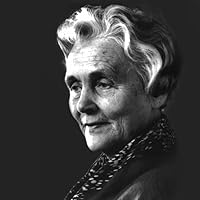
Halldis Moren Vesaas (1907-1995) voks opp i Trysil og debuterte 22 år gammal med diktsamlinga "Harpe og dolk". Ho og ektemannen, forfattaren Tarjei Vesaas, busette seg i Vinje i Telemark, og dei reiste mykje, i Norden og Europa for øvrig, og knytte verdfulle kontaktar med andre diktarar slik at heimen deira, Midtbø, vart litt av eit nordisk kultursentrum. Halldis Moren Vesaas kom med tre diktbøker før krigen, men dei mest kjende dikta står i samlingane "Tung tids tale" (1945), "Treet" (1947) og "I ein annan skog" (1955). Ho har òg gitt ut mange andre slags bøker - barnebøker, ein roman, noveller i "Så nært deg" (1987), og dessutan biografiske bøker om Sven Moren og Tarjei Vesaas, artiklar og essays og diktantologien "Vandre med vers" (1990). Mykje av si arbeidskraft brukte ho på gjendikting av klassisk drama, av Racine og Molière, av Shakespeare og Brecht. I det siste leveåret sitt gjorde ho ferdig manuskriptet til den siste diktsamlinga, "Livshus" (1995), ein av dei største suksessane nokon lyrikar har oppnådd her i landet.

Tarjei Vesaas
Tarjei Vesaas
Author · 15 books
Tarjei Vesaas was a Norwegian poet and novelist. Written in Nynorsk, his work is characterized by simple, terse, and symbolic prose. His stories often cover simple rural people that undergo a severe psychological drama and who according to critics are described with immense psychological insight. Commonly dealing with themes such as death, guilt, angst, and other deep and intractable human emotions, the Norwegian natural landscape is a prevalent feature in his works. His debut was in 1923 with Children of Humans (Menneskebonn), but he had his breakthrough in 1934 with The Great Cycle (Det store spelet). His mastery of the nynorsk language, landsmål (see Norwegian language), has contributed to its acceptance as a medium of world class literature.
Walt Whitman
Walt Whitman
Author · 112 books

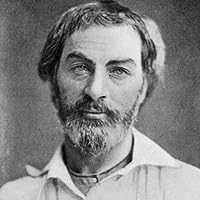
Walter Whitman (1819-1892) was an American poet, essayist, journalist, and humanist. He was a part of the transition between Transcendentalism and realism, incorporating both views in his works. Whitman is among the most influential poets in the American canon, often called the father of free verse. Born on Long Island, Whitman worked as a journalist, a teacher, a government clerk, and a volunteer nurse during the American Civil War in addition to publishing his poetry. Early in his career, he also produced a temperance novel, Franklin Evans (1842). After working as clerk, teacher, journalist and laborer, Whitman wrote his masterpiece, Leaves of Grass, pioneering free verse poetry in a humanistic celebration of humanity, in 1855. Emerson, whom Whitman revered, said of Leaves of Grass that it held "incomparable things incomparably said." During the Civil War, Whitman worked as an army nurse, later writing Drum Taps (1865) and Memoranda During the War (1867). His health compromised by the experience, he was given work at the Treasury Department in Washington, D.C. After a stroke in 1873, which left him partially paralyzed, Whitman lived his next 20 years with his brother, writing mainly prose, such as Democratic Vistas (1870). Leaves of Grass was published in nine editions, with Whitman elaborating on it in each successive edition. In 1881, the book had the compliment of being banned by the commonwealth of Massachusetts on charges of immorality. A good friend of Robert Ingersoll, Whitman was at most a Deist who scorned religion. D. 1892. More: http://www.whitmanarchive.org/ http://philosopedia.org/index.php/Wal... http://www.poets.org/poet.php/prmPID/126 http://www.poetryfoundation.org/bio/w... http://en.wikipedia.org/wiki/Walt\_Whi... http://www.poemhunter.com/walt-whitman/

548 Market St PMB 65688, San Francisco California 94104-5401 USA
© 2026 Paratext Inc. All rights reserved