Just as she did with North Korea, award-winning journalist Barbara Demick explores one of the most hidden corners of the world. She tells the story of a Tibetan town perched eleven thousand feet above sea level that is one of the most difficult places in all of China for foreigners to visit. Ngaba was one of the first places where the Tibetans and the Chinese Communists encountered one another. In the 1930s, Mao Zedong’s Red Army fled into the Tibetan plateau to escape their adversaries in the Chinese Civil War. By the time the soldiers reached Ngaba, they were so hungry that they looted monasteries and ate religious statues made of flour and butter—to Tibetans, it was as if they were eating the Buddha. Their experiences would make Ngaba one of the engines of Tibetan resistance for decades to come, culminating in shocking acts of self-immolation. Eat the Buddha spans decades of modern Tibetan and Chinese history, as told through the private lives of Demick’s subjects, among them a princess whose family is wiped out during the Cultural Revolution, a young Tibetan nomad who becomes radicalized in the storied monastery of Kirti, an upwardly mobile entrepreneur who falls in love with a Chinese woman, a poet and intellectual who risks everything to voice his resistance, and a Tibetan schoolgirl forced to choose at an early age between her family and the elusive lure of Chinese money. All of them face the same dilemma: Do they resist the Chinese, or do they join them? Do they adhere to Buddhist teachings of compassion and nonviolence, or do they fight? Illuminating a culture that has long been romanticized by Westerners as deeply spiritual and peaceful, Demick reveals what it is really like to be a Tibetan in the twenty-first century, trying to preserve one’s culture, faith, and language against the depredations of a seemingly unstoppable, technologically all-seeing superpower. Her depiction is nuanced, unvarnished, and at times shocking.
Author
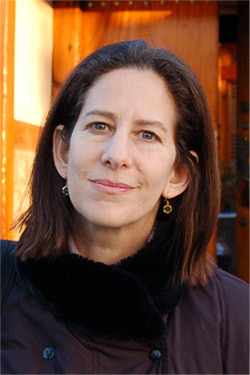
Barbara Demick is an American journalist. She is the author of Logavina Street: Life and Death in a Sarajevo Neighborhood (Andrews & McMeel, 1996). Her next book, Nothing to Envy: Ordinary Lives in North Korea, was published by Spiegel & Grau/Random House in December 2009 and Granta Books in 2010. Demick was correspondent for the Philadelphia Inquirer in Eastern Europe from 1993 to 1997. Along with photographer John Costello, she produced a series of articles that ran 1994-1996 following life on one Sarajevo street over the course of the war in Bosnia. The series won the George Polk Award for international reporting, the Robert F. Kennedy Journalism Award for international reporting and was a finalist for the Pulitzer in the features category. She was stationed in the Middle East for the newspaper between 1997 and 2001. In 2001, Demick moved to the Los Angeles Times and became the newspaper's first bureau chief in Korea. Demick reported extensively on human rights in North Korea, interviewing large numbers of refugees in China and South Korea. She focused on economic and social changes inside North Korea and on the situation of North Korean women sold into marriages in China. She wrote an extensive series of articles about life inside the North Korean city of Chongjin. In 2005, Demick was a co-winner of the American Academy of Diplomacy's Arthur Ross Award for Distinguished Reporting & Analysis on Foreign Affairs. In 2006, her reports about North Korea won the Overseas Press Club's Joe and Laurie Dine Award for Human Rights Reporting and the Asia Society's Osborn Elliott Prize for Excellence in Asian Journalism. That same year, Demick was also named print journalist of the year by the Los Angeles Press Club. In 2010, she won the Samuel Johnson Prize for Non-Fiction for her work, Nothing to Envy: Ordinary Lives in North Korea. The book was also nominated for the U.S.'s most prestigious literary prize, the National Book Award. Demick was a visiting professor at Princeton University in 2006-2007 teaching Coverage of Repressive Regimes through the Ferris Fellowship at the Council of the Humanities. She moved to Beijing for the Los Angeles Times in 2007 and became Beijing bureau chief in early 2009. Demick was one of the subjects of a 2005 documentary Press Pass to the World by McCourry Films.