Margins




548 Market St PMB 65688, San Francisco California 94104-5401 USA
© 2026 Paratext Inc. All rights reserved
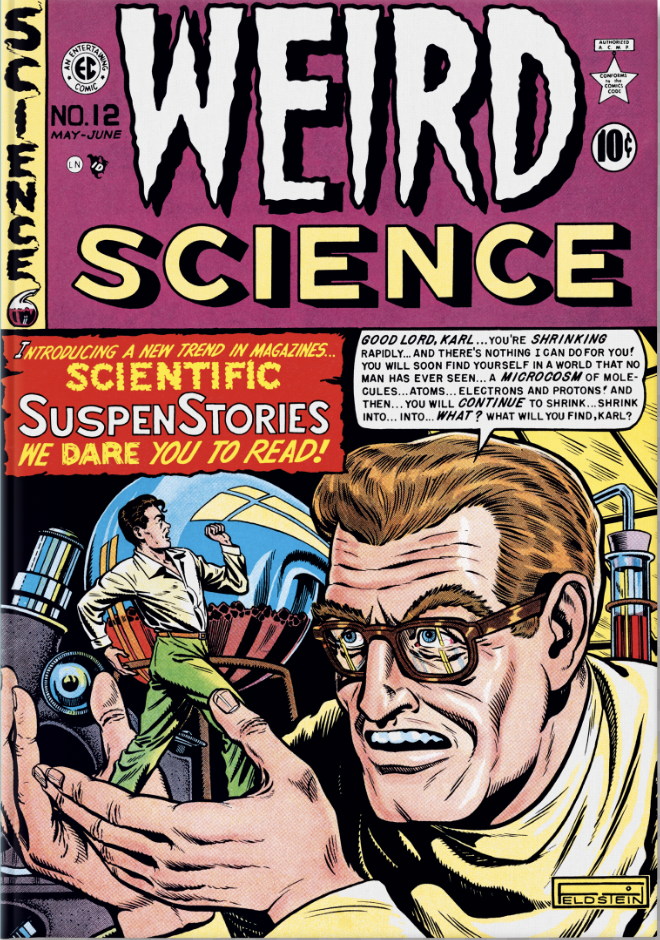
When Bill Gaines inherited EC Comics from his father, the legendary publisher M. C. Gaines, at just 25 years old, no one could predict the impact he would have—not only on comics, but on global pop culture at large. Inspired by the pulp sci-fi stories and weird fiction of their youth, Bill Gaines and artist Al Feldstein drafted the initial issues of what would become the first true serialized science fiction magazine, delivering stories, creatures, and worlds unlike anything readers had ever seen. Far from the simplistic space adventures of Flash Gordon and Buck Rogers, the high-concept, morally ambiguous, and often-chilling tales of Weird Science resonated deeply with readers growing up in the Atomic Age under the shadow of the mushroom cloud. Nuclear threats, the ravages of science unshackled from ethics, and the creeping authority of world governments locked in a Cold War had begun seeping into the fabric of American life. The first issue of Weird Science appeared on newsstands in the spring of 1950, its cover boldly daring readers to pick it up. Subsequent bimonthly releases pulled audiences into an ever-changing kaleidoscope of “Scientific SuspenStories,” featuring Martian invasions, murderous androids, time travel gone awry, planets inhabited entirely by women, and more. Bolstered by a growing stable of soon-to-be comic art legends like Harvey Kurtzman, Wally Wood, and Joe Orlando, Weird Science shaped the collective imagination of a generation. Gaines and Feldstein boldly tackled themes that were rarely addressed in serialized comics, while visionary artists like Wood went on to define the aesthetic and societal impact of the genre, depicting futuristic vistas and impossible technology with a level of detail as if not merely imagining them, but glimpsing into the very future itself. In Volume 1, TASCHEN presents the first eleven issues of Weird Science, meticulously recreating the comics in their original glory. Rather than recolor the artwork, this edition works with super-high-resolution photographs of each page as it was printed more than half a century ago, using modern retouching techniques to correct problems with the era’s inexpensive, imperfect printing. The result is a pristine product, keeping the character and feel of the classic pulp comic magazines, but freshly printed by a world-class press, produced without the economic or time constraints of the past. Complete with an introductory essay by EC authority Grant Geissman, which illustrates the historical, cultural, and artistic context of the stories and their creators, this collection is a must-have for fans of the weird, the strange, and the fantastical.