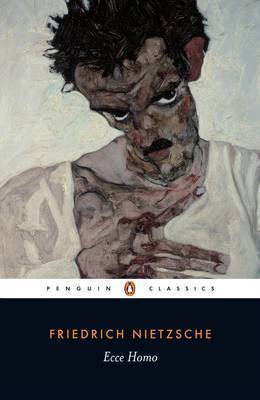
Ecce Homo
1908
First Published
3.81
Average Rating
134
Number of Pages
In late 1888, only weeks before his final collapse into madness, Nietzsche (1844-1900) set out to compose his autobiography, and Ecce Homo remains one of the most intriguing yet bizarre examples of the genre ever written. In this extraordinary work Nietzsche traces his life, work and development as a philosopher, examines the heroes he has identified with, struggled against and then overcome - Schopenhauer, Wagner, Socrates, Christ - and predicts the cataclysmic impact of his 'forthcoming revelation of all values'. Both self-celebrating and self-mocking, penetrating and strange, Ecce Homo gives the final, definitive expression to Nietzsche's main beliefs and is in every way his last testament.

Avg Rating
3.81
Number of Ratings
19,612
5 STARS
29%
4 STARS
36%
3 STARS
26%
2 STARS
7%
1 STARS
2%
goodreads
Author

Friedrich Nietzsche
Author · 110 books
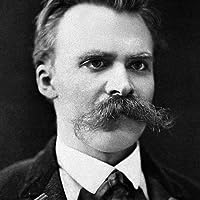
Friedrich Wilhelm Nietzsche (Ph.D., Philology, Leipzig University, 1869) was a German philosopher of the late 19th century who challenged the foundations of Christianity and traditional morality. He was interested in the enhancement of individual and cultural health, and believed in life, creativity, power, and the realities of the world we live in, rather than those situated in a world beyond. Central to his philosophy is the idea of “life-affirmation,” which involves a questioning of all doctrines that drain life's expansive energies, however socially prevalent those views might be. Often referred to as one of the first existentialist philosophers along with Søren Kierkegaard (1813–1855). From the Stanford Encyclopedia of Philosophy