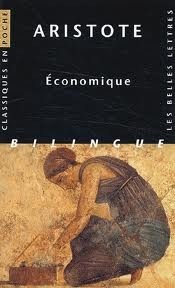



— A Classic—Includes Active Table of Contents—Includes Religious Illustrations The title of this work means “household management” and is derived from the Greek word, οἶκος, oikos” meaning “house/household.” The term includes household finance as it is commonly known today and also defines the roles members of the household should have. In a broad sense the household is the beginning to economics as a whole. The natural, everyday activities of maintaining a house are essential to the beginnings of economy. From farming, cleaning, and cooking to hiring workers and guarding your property, the household can be offer a model for a modern understanding of society. The two books that comprise this treatise explore the meaning of economics while showing that it has many different aspects. Aeterna Press
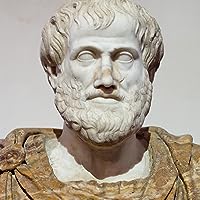
Author

384 BC–322 BC Greek philosopher Aristotle, a pupil of Plato and the tutor of Alexander the Great, authored works on ethics, natural sciences, politics, and poetics that profoundly influenced western thought; empirical observation precedes theory, and the syllogism bases logic, the essential method of rational inquiry in his system, which led him to see and to criticize metaphysical excesses. German religious philosopher Saint Albertus Magnus later sought to apply his methods to current scientific questions. Philosophy of Saint Thomas Aquinas, the most influential thinker of the medieval period, combined doctrine of Aristotle within a context of Christianity. Aristotle numbers among the greatest of all time. Almost peerless, he shaped centuries from late antiquity through the Renaissance, and people even today continue to study him with keen, non-antiquarian interest. This prodigious researcher and writer left a great body, perhaps numbering as many as two hundred treatises, from which 31 survive. His extant writings span a wide range of disciplines from mind through aesthetics and rhetoric and into such primary fields as biology; he excelled at detailed plant and animal taxonomy. In all these topics, he provided illumination, met with resistance, sparked debate, and generally stimulated the sustained interest of an abiding readership. Wide range and its remoteness in time defies easy encapsulation. The long history of interpretation and appropriation of texts and themes, spanning over two millennia within a variety of religious and secular traditions, rendered controversial even basic points of interpretation.