Margins
Margins
Sign in
Margins
Subscribe to our newsletter
548 Market St PMB 65688, San Francisco California 94104-5401 USA
hello@margins.app
·
+1 (650) 223-5283
Privacy Policy
·
Terms of Use
© 2026 Paratext Inc. All rights reserved
🌲 Ecosystems
🌲
Ecosystems
Rewilding
The Radical New Science of Ecological Recovery
Paul Jepson
Nature conservation in the 21st century has taken a radical new turn. Instead of conserving particular species in nature reserves as 'museum pieces', frozen in time, the thinking now is that we should allow landscape-sized areas to 'rewild' according to their own self-determined processes. By fencing off large areas and introducing large herbivores, along with apex predators such as wolves, dynamic new habitats are already being created. These 'self-willed' areas will develop in ways that cannot always be predicted, and they may not conform to our traditional ideas of wildlife habitats, but they will form a robust and rich ecology which will be strong enough to withstand future climate changes and species shifts. In this highly topical book, the first popular account of rewilding, practising ecologists Paul Jepson and Cain Blythe explore the ongoing scientific discoveries that are emerging from this fascinating field.
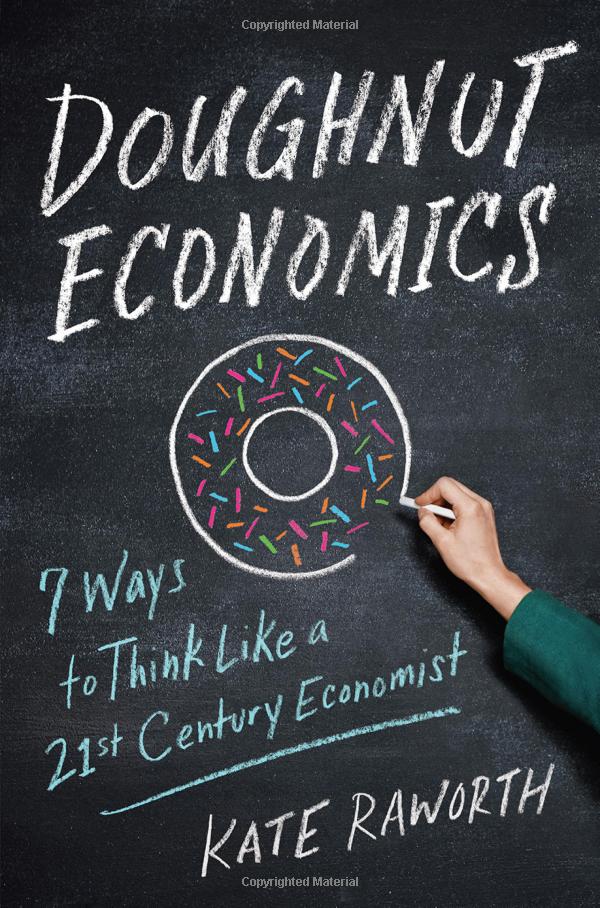
Doughnut Economics
Seven Ways to Think Like a 21st-Century Economist
Kate Raworth
Economics is broken. It has failed to predict, let alone prevent, financial crises that have shaken the foundations of our societies. Its outdated theories have permitted a world in which extreme poverty persists while the wealth of the super-rich grows year on year. And its blind spots have led to policies that are degrading the living world on a scale that threatens all of our futures. Can it be fixed? In Doughnut Economics, Oxford academic Kate Raworth identifies seven critical ways in which mainstream economics has led us astray, and sets out a roadmap for bringing humanity into a sweet spot that meets the needs of all within the means of the planet. En route, she deconstructs the character of ‘rational economic man’ and explains what really makes us tick. She reveals how an obsession with equilibrium has left economists helpless when facing the boom and bust of the real-world economy. She highlights the dangers of ignoring the role of energy and nature’s resources – and the far-reaching implications for economic growth when we take them into account. And in the process, she creates a new, cutting-edge economic model that is fit for the 21st century – one in which a doughnut-shaped compass points the way to human progress. Ambitious, radical and rigorously argued, Doughnut Economics promises to reframe and redraw the future of economics for a new generation.