


Margins
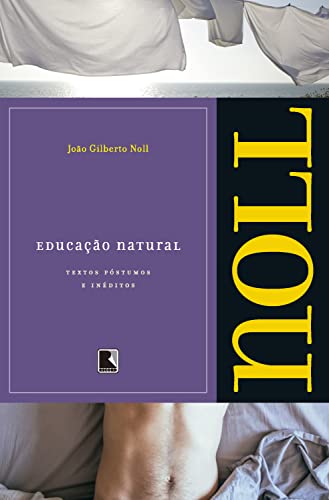
Educação Natural book cover
Educação Natural
textos póstumos e inéditos
2022
First Published
4.67
Average Rating
203
Number of Pages

Com contos inéditos e o fragmento de um romance inacabado, os textos de Educação natural tratam de temas caros ao autor, como o aspecto trágico da existência, as possibilidades de transfiguração do corpo e as questõs de gênero. Educação natural, de João Gilberto Noll, é composto por textos inéditos do autor, falecido em 2017, encontrados em um arquivo de 26 contos e o fragmento de um romance inacabado. Os textos trazem situações bem caras à literatura de Noll, como o aspecto trágico da vida e as possibilidades de transfiguração do corpo, retratando de maneira poética personagens que estão sempre à deriva, desgarrados, esquecidos ou ansiosos por esquecer. Em uma das narrativas, um homem entra na casa de uma mulher no meio da noite para reaver a memória de um amigo desaparecido; em outra, um homem atormentado agoniza no chão sujo de um banheiro público, enquanto rememora sua glória indesejada. Nestes textos póstumos, organizados por Edson Migracielo, tudo parece estar por um triz, entre o delírio e o prazer, entre a vida e a extinção. Sobre a obra de Noll, Migracielo "não serão, precisamente, aquelas disposições—bizarras, vitais e insubmissas—as que devêm revolucionárias, as que despertam na cultura criações e produções que apontam para o que o mundo ainda não foi e desencadeiam, no mundo, o seu ainda? Este volume, que reúne material inédito, mas conservado e organizado com primor para publicação, assim como a emersão de um romance infelizmente inacabado, supõe o exultante reencontro, talvez o último, com a literatura de um autor imprescindível e um pioneiro no trato das questões de gênero na literatura brasileira.
Avg Rating
4.67
Number of Ratings
3
5 STARS
67%
4 STARS
33%
3 STARS
0%
2 STARS
0%
1 STARS
0%
goodreads

Author

Joao Gilberto Noll
Joao Gilberto Noll
Author · 12 books

João Gilberto Noll was a Brazilian writer born in Porto Alegre, in the southern Brazilian state of Rio Grande do Sul. His early years were spent studying at the Catholic Colégio São Pedro. In 1967 he began university coursework in literature at the UFRGS-Federal University of Rio Grande do Sul, but in 1969 he interrupted his studies to pursue a career as a journalist in Rio de Janeiro, working for the newspapers Folha da Manhã and Última Hora. In 1970 Noll spent a year in São Paulo working as a copyeditor at the publishing house Editora Nacional, but a year later he moved back to Rio and resumed both his work in journalism at Última Hora, writing on literature, theater and music, and his university studies in literature, first at the Faculdade Notre Dame and then at the PUC-Rio, where he received his degree in 1979. Noll published his first short story as part of a 1970 Porto Alegre anthology entitled Roda de Fogo, but his more formal literary debut came in 1980 when his first book of short stories O cego e a dançarina (English title: The blind man and the dancer) was released, for which he received three literary prizes. One of Noll's short stories from O cego e a dançarina, Alguma coisa urgentemente (Something urgent), was the basis for the film Nunca fomos tão felizes (English title: We've Never Been So Happy) in 1983, directed by Murilo Salles and starring the actor Claudio Marzo. Noll received early international attention as a participant in the Writer's Program at the University of Iowa in 1982, and when his work appeared in an anthology of new Brazilian writers published in Germany in 1983. After a short visit to the University of California, Berkeley in 1996, he was invited to teach Brazilian literature there in 1997. He was an invited scholar for a Rockefeller Foundation seminar in Bellagio, Italy, was the recipient of a Guggenheim Fellowship in 2002, and spent a two-month writing residency at the Centre for the Study of Brazilian Culture & Society at King's College London in 2004. All of these experiences were to shape the subject matter of later works. His first collection of stories was followed by the novels A fúria do corpo (1981), Bandoleiros (1985) and Rastros do Verão (1986). Two of his subsequent and perhaps best-known works, the novels Hotel Atlantico (1989) and Harmada (1993), later came out in a 1997 English edition, translated by David Treece and published by Boulevard Books in London. Another novel, entitled O quieto animal da esquina, appeared in 1991. From 1998 to 2001 Noll published a twice-weekly series of short stories in the major São Paulo daily Folha de São Paulo, and in 2004 he began to publish longer stories every two weeks in the daily Correio Braziliense published in the federal capital Brasília.

548 Market St PMB 65688, San Francisco California 94104-5401 USA
© 2026 Paratext Inc. All rights reserved