


Margins
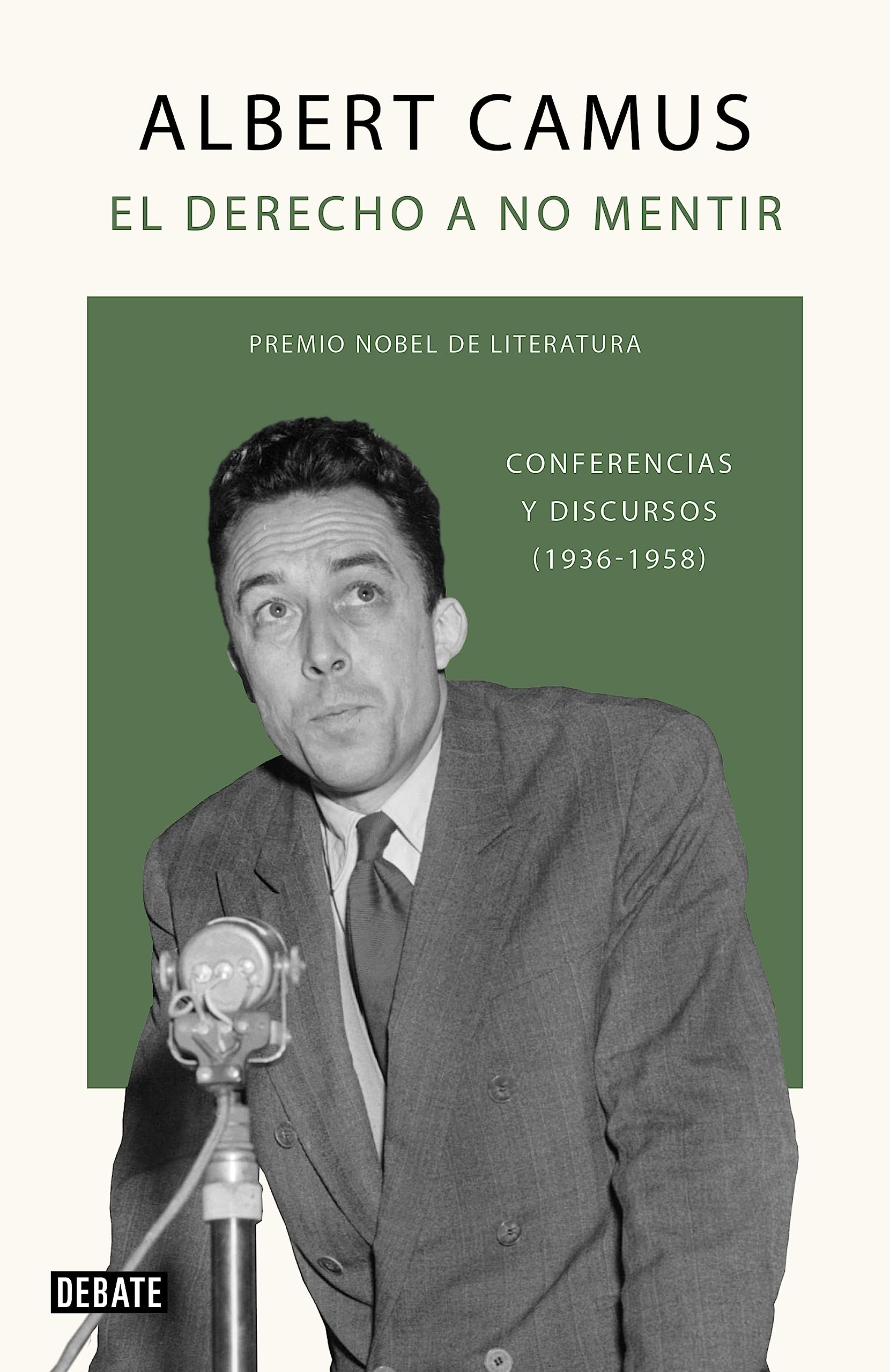
El derecho a no mentir book cover
El derecho a no mentir
Conferencias y discursos
2023
First Published
4.14
Average Rating
288
Number of Pages

Camus toma la palabra. Todos sus discursos y conferencias (1936 y 1958), en su mayoría inéditos en castellano. «La libertad que debemos conquistar es el derecho a no mentir. Solo con esta condición tendremos razones para vivir y morir». Esta es la edición definitiva de los treinta y cuatro discursos públicos y conferencias que pronunció Albert Camus entre 1936 y 1958, en su gran mayoría inéditos en castellano hasta hoy. Pese a que él afirmó no sentirse un conferenciante ni se creía legitimado para iluminar a una audiencia sobre ningún tema, estos textos son de vital importancia e interés para la historia del pensamiento europeo. El derecho a no mentir recoge desde un discurso sobre la cultura mediterránea que dio cuando solo tenía veintitrés años hasta sus últimas y apasionadas charlas, entre ellas la de aceptación del Premio Nobel y su emocionante «Lo que le debo a España». En plena guerra y en los años posteriores, Camus tomó la palabra en medio de lo que él llamó la «Crisis del Hombre», movido por su compromiso humanista y preocupado por el destino común. Este libro es una maravillosa muestra de la claridad y la sutileza de Camus y de su defensa irrevocable de la libertad individual, la justicia social y la no violencia. La crítica ha «Como Camus demostró, podemos luchar por decir la verdad. Camus es una referencia para nuestra profesión porque siempre dijo y escribió lo que pensaba. Era un intelectual con ideas, pero nunca permitió que su concepción del mundo alterara la observación de los acontecimientos». Pedro García Cuartango, El Mundo «Basta leerlo de verdad para que cobre voz e irrumpa en el presente, con la misma entonación apasionada que si lo que leemos acabara de escribirse, con una claridad que ha resistido limpiamente el paso del tiempo. Ser claro, para Camus, igual que para Orwell, era una exigencia a la vez estética y política». Antonio Muñoz Molina, El País «Cincuenta años después de su muerte, sus conferencias siguen siendo, a diferencia de tantos otros, modelos de claridad y perspicacia. Su bello estiloencierra su nervio humanista. Camus es un hombre que, políticamente, no cometió errores». Philippe Lançon, Libération
Avg Rating
4.14
Number of Ratings
21
5 STARS
38%
4 STARS
43%
3 STARS
14%
2 STARS
5%
1 STARS
0%
goodreads

Author

Albert Camus
Albert Camus
Author · 135 books

Works, such as the novels The Stranger (1942) and The Plague (1947), of Algerian-born French writer and philosopher Albert Camus concern the absurdity of the human condition; he won the Nobel Prize of 1957 for literature. Origin and his experiences of this representative of non-metropolitan literature in the 1930s dominated influences in his thought and work. He also adapted plays of Pedro Calderón de la Barca, Lope de Vega, Dino Buzzati, and Requiem for a Nun of William Faulkner. One may trace his enjoyment of the theater back to his membership in l'Equipe, an Algerian group, whose "collective creation" Révolte dans les Asturies (1934) was banned for political reasons. Of semi-proletarian parents, early attached to intellectual circles of strongly revolutionary tendencies, with a deep interest, he came at the age of 25 years in 1938; only chance prevented him from pursuing a university career in that field. The man and the times met: Camus joined the resistance movement during the occupation and after the liberation served as a columnist for the newspaper Combat. The essay Le Mythe de Sisyphe (The Myth of Sisyphus), 1942, expounds notion of acceptance of the absurd of Camus with "the total absence of hope, which has nothing to do with despair, a continual refusal, which must not be confused with renouncement - and a conscious dissatisfaction." Meursault, central character of L'Étranger (The Stranger), 1942, illustrates much of this essay: man as the nauseated victim of the absurd orthodoxy of habit, later - when the young killer faces execution - tempted by despair, hope, and salvation. Besides his fiction and essays, Camus very actively produced plays in the theater (e.g., Caligula, 1944). The time demanded his response, chiefly in his activities, but in 1947, Camus retired from political journalism. Doctor Rieux of La Peste (The Plague), 1947, who tirelessly attends the plague-stricken citizens of Oran, enacts the revolt against a world of the absurd and of injustice, and confirms words: "We refuse to despair of mankind. Without having the unreasonable ambition to save men, we still want to serve them." People also well know La Chute (The Fall), work of Camus in 1956. Camus authored L'Exil et le royaume (Exile and the Kingdom) in 1957. His austere search for moral order found its aesthetic correlative in the classicism of his art. He styled of great purity, intense concentration, and rationality. Camus died at the age of 46 years in a car accident near Sens in le Grand Fossard in the small town of Villeblevin. Chinese 阿尔贝·加缪

548 Market St PMB 65688, San Francisco California 94104-5401 USA
© 2026 Paratext Inc. All rights reserved