


Margins
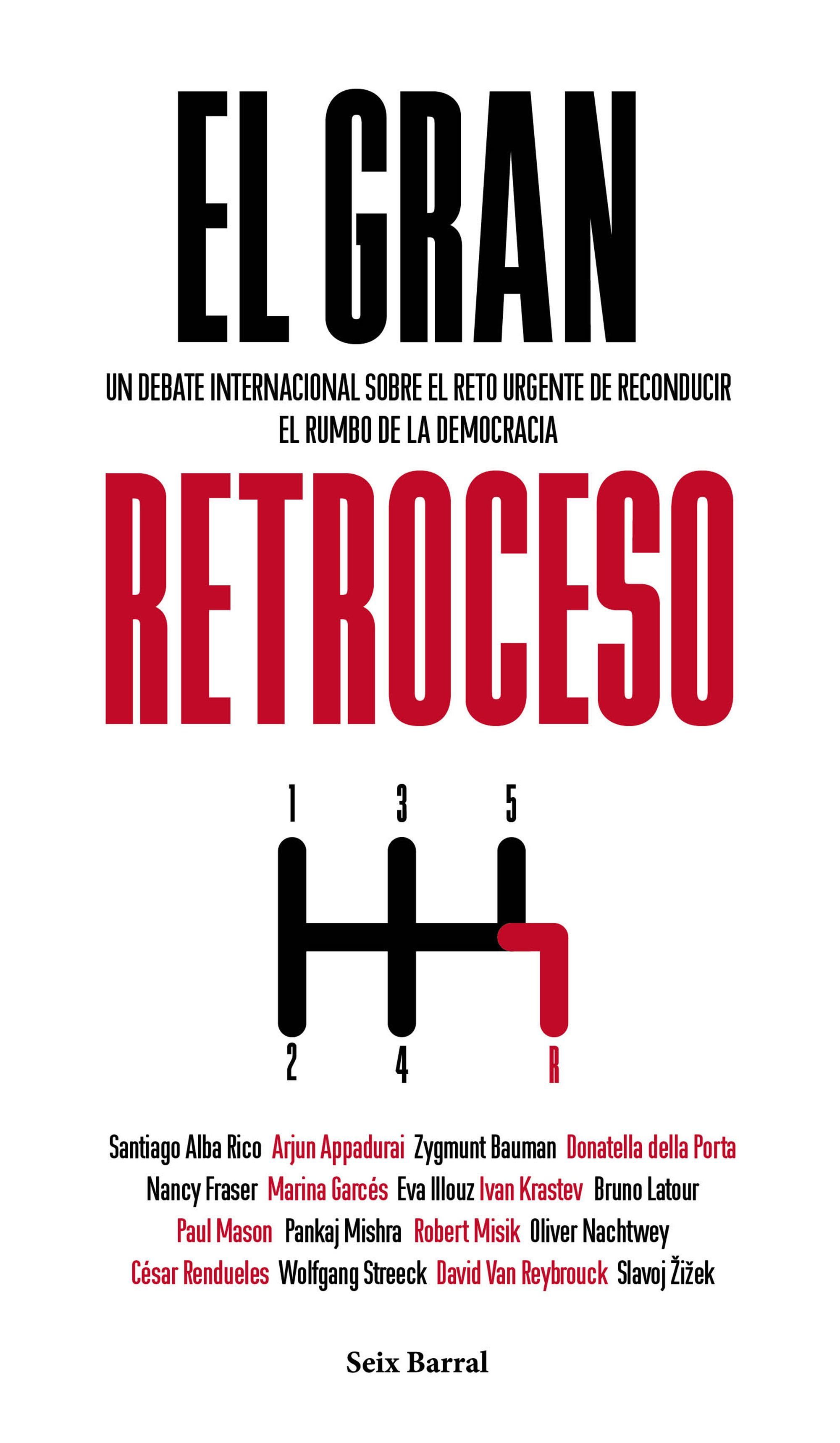
El gran retroceso book cover
El gran retroceso
2017
First Published
3.44
Average Rating
352
Number of Pages

A raíz de la crisis financiera y la creciente migración a la UE nos encontramos frente a acontecimientos acelerados y preocupantes: el ascenso de los partidos nacionalistas, ejemplificado por el Frente Nacional francés; la demagogia encarnada por Donald Trump; las tendencias autoritarias en Europa Central y Europa del Este; una nueva ola de xenofobia y crímenes de odio; una brutalización del discurso público; llamadas a la construcción de muros y la vuelta a una desglobalización. Este libro analiza las razones de esta «Gran Regresión» o «Gran Retroceso», las pone en un contexto histórico, reflexiona sobre posibles escenarios para los próximos años y discute estrategias para contrarrestar estas tendencias. Una antología que quiere ser un foro para que académicos e intelectuales de numerosos países y diferentes disciplinas ofrezcan su punto de vista e iniciar así un debate internacional, a la vez que sirva como herramienta para los lectores de todas las edades y condiciones.
Avg Rating
3.44
Number of Ratings
16
5 STARS
19%
4 STARS
25%
3 STARS
44%
2 STARS
6%
1 STARS
6%
goodreads

Authors

Slavoj Zizek
Slavoj Zizek
Author · 106 books

Slavoj Žižek is a Slovene sociologist, philosopher, and cultural critic. He was born in Ljubljana, Slovenia (then part of SFR Yugoslavia). He received a Doctor of Arts in Philosophy from the University of Ljubljana and studied psychoanalysis at the University of Paris VIII with Jacques-Alain Miller and François Regnault. In 1990 he was a candidate with the party Liberal Democracy of Slovenia for Presidency of the Republic of Slovenia (an auxiliary institution, abolished in 1992). Since 2005, Žižek has been a member of the Slovenian Academy of Sciences and Arts. Žižek is well known for his use of the works of 20th century French psychoanalyst Jacques Lacan in a new reading of popular culture. He writes on many topics including the Iraq War, fundamentalism, capitalism, tolerance, political correctness, globalization, subjectivity, human rights, Lenin, myth, cyberspace, postmodernism, multiculturalism, post-marxism, David Lynch, and Alfred Hitchcock. In an interview with the Spanish newspaper El País he jokingly described himself as an "orthodox Lacanian Stalinist". In an interview with Amy Goodman on Democracy Now! he described himself as a "Marxist" and a "Communist."

Bruno Latour
Bruno Latour
Author · 29 books
Bruno Latour, a philosopher and anthropologist, is the author of Reassembling the Social: An Introduction to Actor-Network Theory, Our Modern Cult of the Factish Gods, An Inquiry into Modes of Existence, and many other books. He curated the ZKM exhibits ICONOCLASH and Making Things Public and coedited the accompanying catalogs, both published by the MIT Press.
Zygmunt Bauman
Zygmunt Bauman
Author · 66 books
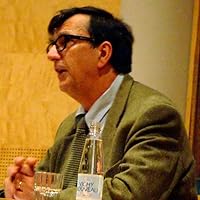
Zygmunt Bauman was a world-renowned Polish sociologist and philosopher, and Emeritus Professor of Sociology at the University of Leeds. He was one of the world's most eminent social theorists, writing on issues as diverse as modernity and the Holocaust, postmodern consumerism and liquid modernity and one of the creators of the concept of “postmodernism”.
Nancy Fraser
Nancy Fraser
Author · 20 books

Nancy Fraser is an American critical theorist, currently the Henry A. and Louise Loeb Professor of Political and Social Science and professor of philosophy at The New School in New York City. Fraser earned her PhD in philosophy from the CUNY Graduate Center and taught in the philosophy department at Northwestern University for many years before moving to the New School. Librarian Note: There is more than one author with this name in the Goodreads database.

Pankaj Mishra
Pankaj Mishra
Author · 12 books

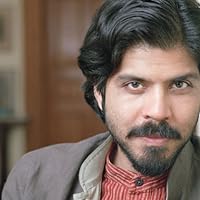
Pankaj Mishra (पंकज मिश्रा) is a noted Indian essayist and novelist. In 1992, Mishra moved to Mashobra, a Himalayan village, where he began to contribute literary essays and reviews to The Indian Review of Books, The India Magazine, and the newspaper The Pioneer. His first book, Butter Chicken in Ludhiana: Travels in Small Town India (1995), was a travelogue that described the social and cultural changes in India in the context of globalization. His novel The Romantics (2000), an ironic tale of people longing for fulfillment in cultures other than their own, was published in 11 European languages and won the Los Angeles Times Art Seidenbaum award for first fiction. His book An End to Suffering: The Buddha in the World (2004) mixes memoir, history, and philosophy while attempting to explore the Buddha's relevance to contemporary times. Temptations of the West: How to be Modern in India, Pakistan and Beyond (2006), describes Mishra's travels through Kashmir, Bollywood, Afghanistan, Tibet, Nepal, and other parts of South and Central Asia.

Ivan Krastev
Ivan Krastev
Author · 6 books

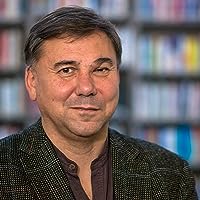
Ivan Krastev (Bulgarian: Иван Кръстев, born 1965 in Lukovit, Bulgaria), is a political scientist, the chairman of the Centre for Liberal Strategies in Sofia, permanent fellow at the IWM (Institute of Human Sciences) in Vienna, and 2013-14-17 Richard von Weizsäcker fellow at the Robert Bosch Stiftung in Berlin. He is a founding board member of the European Council on Foreign Relations, a member of the board of trustees of the International Crisis Group and is a contributing opinion writer for The New York Times. From 2004 to 2006 Krastev was executive director of the International Commission on the Balkans chaired by the former Italian Prime Minister Giuliano Amato. He was Editor-in-Chief of the Bulgarian Edition of Foreign Policy and was a member of the Council of the International Institute for Strategic Studies, London (2005-2011). His books in English include "After Europe" (UPenn Press, 2017), "Democracy Disrupted. The Global Politics on Protest" (UPenn Press, May 2014), "In Mistrust We Trust: Can Democracy Survive When We Don't Trust Our Leaders", (TED Books, 2013); "The Anti-American Century", co-edited with Alan McPherson, (CEU Press, 2007) and "Shifting Obsessions: Three Essays on the Politics of Anticorruption" (CEU Press, 2004). He is a co-author with Stephen Holmes of a forthcoming book on Russian politics.

David Van Reybrouck
David Van Reybrouck
Author · 17 books

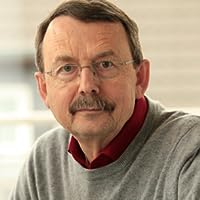
David Grégoire Van Reybrouck is a Belgian cultural historian, archaeologist and author. He writes historical fiction, literary non-fiction, novels, poetry, plays and academic texts. Moreover, he is the founder of the G1000 project in Belgium, a platform for democratic innovation and inclusive participatory politics. He was born into a family of florists, bookbinders and artists. His father, a farmer's son, spent five years in the Democratic Republic of the Congo as a railway engineer immediately after independence. He studied archaeology and philosophy at the University of Leuven (KU Leuven) and obtained a Master's degree in World Archaeology from the University of Cambridge. He also holds a doctorate from Leiden University. —————————————————————————— David Grégoire Van Reybrouck is een Vlaamse cultuurhistoricus, archeoloog en schrijver. David Van Reybrouck in de Nederlandstalige Wikipedia David Van Reybrouck in de Digitale Bibliotheek voor de Nederlandse Letteren David Van Reybrouck bij "Schrijversgewijs"

Arjun Appadurai
Arjun Appadurai
Author · 8 books
Arjun Appadurai is an Indian-American anthropologist recognized as a major theorist in globalization studies. In his anthropological work, he discusses the importance of the modernity of nation states and globalization
Eva Illouz
Eva Illouz
Author · 16 books

Eva Illouz (Hebrew: אווה אילוז‎‎) (born April 30, 1961 in Fes, Morocco) is a professor of sociology at the Hebrew University in Jerusalem. Since October 2012 she has been President of Bezalel Academy of Art and Design. She is Bezalel's first woman president. Since 2015, Illouz has been a professor at Paris' School for Advanced Studies in the Social Sciences (École des hautes études en sciences sociales). The research developed by Illouz from her dissertation onward focuses on a number of themes at the junction of the study of emotions, culture and communication: The ways in which capitalism has transformed emotional patterns One dominant theme concerns the ways in which capitalism has transformed emotional patterns, in the realms of both consumption and production. Consuming the Romantic Utopia Illouz's first book addresses a dual process: the commodification of romance and the romanticization of commodities. Looking at a wide sample of movies and advertising images in women’s magazines of the 1930s, Illouz finds that advertising and cinematic culture presented commodities as the vector for emotional experiences and particularly the experience of romance. Commodities of many kinds – soaps, refrigerators, vacation packages, watches, diamonds, cereals, cosmetics, and many others – were presented as enabling the experience of love and romance. The second process was that of the commodification of romance, the process by which the 19th-century practice of calling on a woman, that is going to her home, was replaced by dating: going out and consuming the increasingly powerful industries of leisure. Romantic encounters moved from the home to the sphere of consumer leisure with the result that the search for romantic love was made into a vector for the consumption of leisure goods produced by expanding industries of leisure. Cold Intimacies and Saving the Modern Soul In Cold Intimacies and Saving the Modern Soul Illouz examines how emotions figure in the realm of economic production: in the American corporation, from the 1920s onward emotions became a conscious object of knowledge and construction and became closely connected to the language and techniques of economic efficiency. Psychologists were hired by American corporations to help increase productivity and better manage the workforce and bridged the emotional and the economic realms, intertwining emotions with the realm of economic action in the form of a radically new way of conceiving of the production process. So whether in the realm of production or that of consumption, emotions have been actively mobilized, solicited and shaped by economic forces, thus making modern people simultaneously emotional and economic actors. The role of popular clinical psychology in shaping modern identity Illouz argues that psychology is absolutely central to the constitution of modern identity and to modern emotional life: from the 1920s to the 1960s clinical psychologists became an extraordinarily dominant social group as they entered the army, the corporation, the school, the state, social services, the media, child rearing, sexuality, marriage, church pastoral care. In all of these realms, psychology established itself as the ultimate authority in matters of human distress by offering techniques to transform and overcome that distress. Psychologists of all persuasions have provided the main narrative of self-development for the 20th century. The psychological persuasion has transformed what was classified as a moral problem into a disease and may thus be understood as part and parcel of the broader phenomenon of the medicalization of social life. What is common to theme 1 and theme 2 is that both love and psychological health constitute utopias of happiness for the modern self, that both are mediated through consumption and that both constitute horizons to which the modern self aspires. In that sense, one overarching theme of her work can be called

548 Market St PMB 65688, San Francisco California 94104-5401 USA
© 2026 Paratext Inc. All rights reserved