Margins
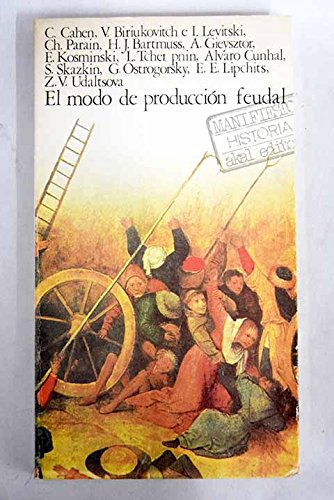
El Modo de Producción Feudal book cover
El Modo de Producción Feudal
1976
First Published
266
Number of Pages
Spanish, French, Russian (translation)

Authors

Aleksander Gieysztor
Author · 2 books

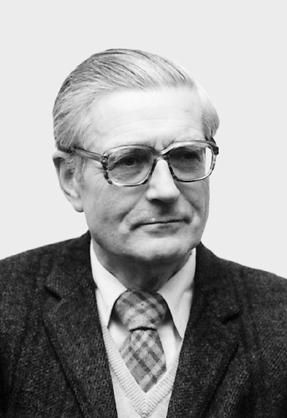
Aleksander Gieysztor was a Polish medievalist historian. He was born in Moscow to a Polish family. He lived in Warsaw since the age of five. He graduated in history from Warsaw University in 1937. He was married to Irena Gieysztorowa, a fellow historian. The Aleksander Gieysztor Prize of the Kronenberg Foundation and the Aleksander Gieysztor Academy of Humanities are named after him.

E. A. Kosminsky
E. A. Kosminsky
Author · 1 book
Eugene Alekseyevich Kosminsky (Russian: Евгений Алексеевич Косминский) was a Soviet historian and medievalist, Academician of the Academy of Sciences of the Soviet Union (since 1946). He was a professor at the Lomonosov Moscow State University (since 1919), first Head of the Department of History of the Middle Ages at MSU Faculty of History from 1934 to 1949. Laureate of the 1942 Stalin Prize.
George Ostrogorsky
George Ostrogorsky
Author · 2 books

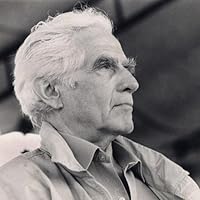
Ostrogorsky was born at Saint Petersburg, Russia, the son of a secondary school principal and a writer on pedagogical subjects. He completed his secondary education in a St. Petersburg classical gymnasium and thus acquired knowledge of Greek early in life. He began his university studies in Heidelberg, Germany (1921), where he devoted himself initially to philosophy, economics, and sociology, though he also took classes in classical archeology. His teachers included Karl Jaspers, Heinrich Rickert, Alfred Weber and Ludwig Curtius. His interest in history, especially Byzantine history, was awakened by a young Dozent by the name of Percy Ernst Schramm. After studying various aspects of Byzantinology in Paris (1924–1925), Ostrogorsky received his doctorate from the University of Heidelberg (1925) with a dissertation in which he combined his interests in economics and Byzantine history. He then taught as Privatdozent in Breslau from 1928 and moved to Belgrade in 1933. Ostrogorsky taught at the University of Belgrade's Faculty of Philosophy, where he was the Chair for Byzantinology. Ostrogorsky made the Kingdom of Yugoslavia his permanent home and taught at Belgrade for 40 years until his retirement in 1973, leaving the Chair for Byzantinology to Božidar Ferjančić. He was made a corresponding Member of the Serbian Academy of Sciences and Arts in 1946 and a Regular Member two years later. An Institute of Byzantinology was created within the Academy in 1948 with himself as director, a post he held until his death. He was chief editor of the Institute's house organ, the Zbornik Radova Vizantološkog Instituta, through its 16th volume which appeared in 1975. He also supervised the monograph series of the Institute of which the choice items were his own study Pronija (1951) and the multivolume collection of Byzantine Sources for the History of the Nations of Yugoslavia. Ostrogorsky repaid in more than one way the hospitality he met with in his new country; he created a new generation of Yugoslav Byzantinists, broadened the horizons of Yugoslav historians by the example of his personal research, and provided for them closer contacts with the world scholarly community. Under his guidance the Belgrade Institute became, along with Munich, Paris, and Dumbarton Oaks, a leading center of research in the field of Byzantinology. Ostrogorsky remained faithful to Belgrade to the very end, although over the years suggestions were made that he take up residence in an American or Soviet center of Byzantine studies. His best known work was the standard History of the Byzantine State (German: Geschichte des byzantinischen Staates), a work which saw 3 German editions (1940, 1952, 1963) and 2 English editions (1957, 1968) and translations into more than 10 other languages. Ostrogorsky died at Belgrade in 1976.

Álvaro Cunhal
Álvaro Cunhal
Author · 7 books
ÁLVARO BARREIRINHAS CUNHAL nasceu em Coimbra, a 10 de Novembro de 1913. Estudante da Faculdade de Direito de Lisboa, filiou-se no Partido Comunista Português (1931) e foi eleito secretário-geral das Juventudes Comunistas. Em 1936 passou à clandestinidade e em 1937 entrou para ao comité central do partido. Após várias prisões temporárias, foi preso no Forte de Peniche, de onde se conseguiu evadir em 1960. Foi Secretário-Geral do partido de 1961 até 1992. Regressado a Portugal em 1974, fez parte, como Ministro sem pasta, dos I, II, III e IV Governos Provisórios (1974-1975). Deputado entre 1974 e 1992, raramente ocupou o lugar na Assembleia da República. Foi ainda membro do Conselho de Estado de 1982 a 1992. Publicou vários livros, sob o pseudónimo de Manuel Tiago: Até Amanhã, Camaradas (1974), Cinco Dias, Cinco Noites (1975), A Estrela de Seis Pontas (1994), A Casa de Eulália (1997), Fronteiras (1998), Um Risco na Areia (2000), Sala 3 e Outros Contos (2001) e Os Corrécios e Outros Contos (2002). Faleceu em Lisboa, a 13 de Julho de 2005.
548 Market St PMB 65688, San Francisco California 94104-5401 USA
© 2026 Paratext Inc. All rights reserved