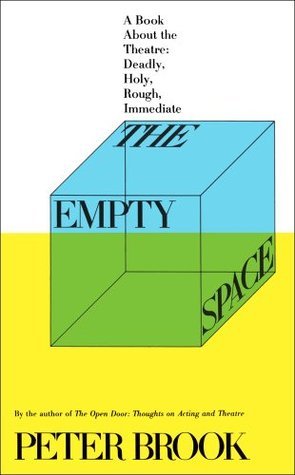
A timeless classic on the art of theatre from the most influential stage director of the twentieth century. In this seminal and iconoclastic book, groundbreaking director and cofounder of the Royal Shakespeare Company Peter Brook draws on a life in love with the stage to explore the issues facing a theatrical performance. He describes important developments in theatre from the last century, as well as smaller scale events, from productions by Stanislavsky to the rise of Method Acting, from Brecht’s revolutionary alienation technique to the free form Happenings of the 1960s, and from the different styles of such great Shakespearean actors as John Gielgud and Paul Scofield to a joyous impromptu performance in the burnt-out shell of the Hamburg Opera just after the war. Along the way, Brook provides theatre-makers with an indispensable guide to creating exhilarating and fresh performances. Passionate, unconventional, and fascinating, The Empty Space shows how theatre defies rules, builds and shatters illusions, and creates lasting memories for its audiences.
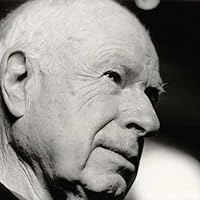
Author

Peter Brook is a world-renowned theater director, staging innovative productions of the works of famous playwrights. A native of London, he has been based in France since the 1970s. Peter Brook's parents were immigrant scientists from Russia. A precocious child with a distaste for formal education but a love of learning, Brook performed his own four-hour version of Shakespeare's Hamlet at the age of seven. After spending two years in Switzerland recovering from a glandular infection, Brook became one of the youngest undergraduates at Oxford University. At the same time he directed his first play in London, a production of Marlowe's Dr. Faustus. Brook made his directing debut at the Stratford Theatre at the age of 21, with a production of Love's Labours Lost. Over the next several years, Brook directed both theater and opera, as well as designing the sets and costumes for his productions. He eventually grew disillusioned with opera, calling it "deadly theater." He directed prominent actors, including Laurence Olivier in Titus Andronicus and Paul Schofeld in a filmed King Lear. He also directed a film adaptation of Lord of the Flies. In 1962, he was named a director of the Royal Shakespeare Company. Despite his popular successes, Brook sought out alternative ways to create vibrant, meaningful theater. He directed a season of experimental theater with the Royal Shakespeare Company, inspired by Antonin Artaud's "Theatre of Cruelty." He sought to turn away from stars and to create an ensemble of actors who improvised during a long rehearsal period in a search of the meaning of "holy theater." Out of this search came Brook's finest work. In 1964 he directed Genet's The Screens and Peter Weiss' Marat/Sade, for which he received seven major awards and introduced Glenda Jackson to the theater. Influenced by Brecht and Artaud, Marat/Sade shocked the audience with its insane asylum environment. In 1966 he developed US, a play about the Vietnam experience and the horrors of war. Jerzy Grotowski, one of the most important theater directors of this century and a man who profoundly influenced Brook, came to work with the company during this production. Brook also did an adaptation of Seneca's Oedipus by poet Ted Hughes, a who continued to collaborate with him for many years. The culmination of this phase of Brook's work was his production of A Midsummer Night's Dream (1970). Using trapezes, juggling, and circus effects, Brook and his actors created a sense of magic, joy, and celebration in this interpretation of Shakespeare's play. After this, Brook moved to Paris and founded the International Center of Theatre Research. He wanted to find a new form of theater that could speak to people worldwide—theater which was truly universal. He also wanted to work in an environment of unlimited rehearsal time in order to allow for a deep search-of-self for all involved. The first production that came out of this phase was Orghast (1971), which employed a new language developed by Ted Hughes. This production, performed at the ruins of Persepolis in Persia, used actors from many different countries.