Margins
Margins
Sign in
Margins
Subscribe to our newsletter
548 Market St PMB 65688, San Francisco California 94104-5401 USA
hello@margins.app
·
+1 (650) 223-5283
Privacy Policy
·
Terms of Use
© 2026 Paratext Inc. All rights reserved
Encounter Intelligence
Encounter Intelligence
Series · 7 books · 2016-2020
By
Jared Meyer
,
Paul Howard
,
Peter Huber
, and more
Books in series
#1
Uber-Positive
2016
Entire industries are being transformed, consumers have more power than ever before, and people are finding new ways to earn a living—even in today’s slow economic recovery. All of these improvements stem from the rise of the so-called sharing economy. Even in the face of these benefits, innovation is in danger of being suppressed because of overzealous government regulation that protects existing businesses—all behind the façade of consumer safety. This book chronicles Uber’s battle against the New York City taxi industry and its supporters in the government. It also shows the need to stand up for entrepreneurs and the vast benefits that they provide for consumers. As innovators tirelessly work to drive the economy forward, too often regulators function as annoying backseat drivers or roadblocks.
#2
Unlocking Precision Medicine
2016
New medicines in the pipeline can extend lives, save money, and even help prevent disease before symptoms appear – if we don’t discourage their innovators and investors by trying to lower drug prices artificially. Unlocking Precision Medicine explores the environment necessary for creation of these health care game-changers, and explains how the marketplace can effectively make them more affordable to all without killing the golden goose.
#3
The Administrative Threat
2017
Government agencies regulate Americans in the full range of their lives, including their political participation, their economic endeavors, and their personal conduct. Administrative power has thus become pervasively intrusive. But is this power constitutional? A similar sort of power was once used by English kings, and this book shows that the similarity is not a coincidence. In fact, administrative power revives absolutism. On this foundation, the book explains how administrative power denies Americans their basic constitutional freedoms, such as jury rights and due process. No other feature of American government violates as many constitutional provisions or is more profoundly threatening. As a result, administrative power is the key civil liberties issue of our era.
#4
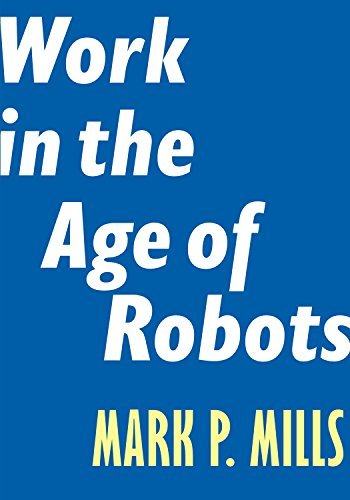
Work in the Age of Robots
2018
Are robots finally replacing humans? Does the emerging age of artificial intelligence and automation mean we will soon see “peak jobs” and the need for a Universal Basic Income to support a widening swath of hapless citizens unsuited for employment in a primarily “knowledge” workforce? Improving productivity—reducing labor hours per unit of product or service—has been the hallmark of economic progress for centuries. But advances due to robots and AI, some say, will be fundamentally different because digital machines are ready to revolutionize the nature of work in nearly every sector, not just one or two. But the lessons of history and the realities of technologies suggest that, despite yet more disruption, the overall result will be net job gains and faster economic growth.
#5
The Social Media Upheaval
2019
Social media giants are poisoning our journalism, our politics, our relationships and ultimately our minds. Glenn Reynolds looks at the up and downsides of social media and at proposals for regulation, and offers his own fix that respects free speech while reducing social media's toll.
#6
Digital Cathedrals
2020
We are now witnessing the build-out of society's first foundationally new infrastructure in nearly a century: the Cloud. It is an ecosystem of information-digital hardware, at the heart of which resides massive warehouse-scale datacenters unlike anything ever built. Give the resources committed to them and the reverence afforded to the companies that build and own them, datacenters might be called the digital cathedrals of the twenty-first century. The emerging Cloud is as different from the communications infrastructure that preceded it, as air travel was different from automobiles. And, using energy as a metric for scale—since there are only two kinds of infrastructure—today's global Cloud already consumes more energy than all aviation. Yet, as disruptive as the Cloud has already become, we are in fact just at the end of the beginning of what the digital masons are building for the twenty-first century. Who Will Invent America's Next Great Century? The big ideas that will revolutionize the way we live will not emerge from our nation's capital. They will be dreamt up, as they always have been, by enterprising Americans who hope to create positive value for others.
#7
America's New Destiny in Space
2020
With private space companies launching rockets, satellites, and people at a record pace, and with the U.S. and other governments committing to a future in space, Glenn Harlan Reynolds looks at how we got here, where we’re going, and why it matters for all of humanity.
Authors
Jared Meyer
Author · 1 book
Paul Howard
Author · 1 book
Peter Huber
Author · 1 book
Philip Hamburger
Author · 6 books
Mark P. Mills
Author · 3 books
Glenn Harlan Reynolds
Author · 1 book