Margins




548 Market St PMB 65688, San Francisco California 94104-5401 USA
© 2026 Paratext Inc. All rights reserved
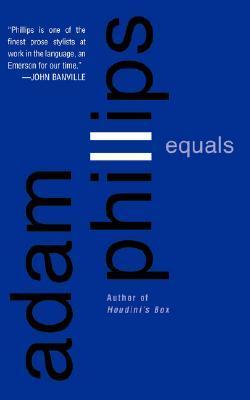
Does psychoanalysis teach us that freedom and equality are impossible for human beings? We would all like to think of ourselves as freedom-loving, egalitarian and democratic. Yet Freud has taught us that everything we do and say is rich in ambiguity and we are riven by conflict and antagonism, within and without. But if is true that our inner lives are one unflagging drama of desire and dependence, of greed, rivalry and abjection, then how can we ever presume to know what might be good for someone else? With all his customary grace and deftness, the celebrated writer Adam Phillips explores these issues in a liberating collection of essays. He looks at such topics as our fantasies of freedom and the nature of inhibition, at free association and the social role of mockery; he examine too the lives and works of such diverse figures as Svengali and Christopher Isherwood, Bertrand Russell and Saul Bellow. Throughout, Adam Phillips demonstrates how psychoanalysis - as a treatment and an experience and a way of reading - can, like democracy, allow people to speak and be heard.