Margins
Equinox Classic Indonesia book cover 1
Equinox Classic Indonesia book cover 2
Equinox Classic Indonesia book cover 3
Equinox Classic Indonesia
Series · 6 books · 1957-2009

Books in series

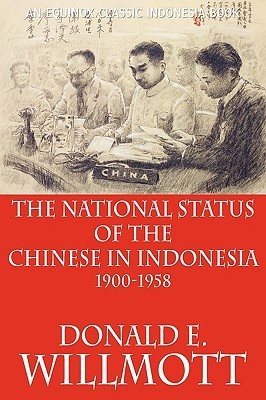
The National Status of the Chinese in Indonesia 1900-1958 book cover
#19

The National Status of the Chinese in Indonesia 1900-1958

2009

In 1956, approximately a year after Professor Willmott's return from Indonesia, the Modern Indonesia Project published as an Interim Report his study of the national status of the Chinese in Indonesia. Subsequently, following helpful comments by Indonesian and Western scholars who had read this study and after having accumulated a considerable amount of additional data, Dr. Willmott undertook to refine and augment his earlier study, while also carrying it forward chronologically through 1958. The present volume represents, then, a substantial expansion of his earlier Interim Report with considerable new data relating not only to the period 1955-1958 but also to the years 1900-1955. Dr. Willmott is particularly well qualified to undertake this study. He was born in China, a British subject, in 1925, living there until 1946 when he came to the United States to enroll in Oberlin College, from which he received his B.A. in 1950. Prior to his stay in Indonesia, he spent a year of resident graduate study at the University of Michigan and three at Cornell University, the emphasis of his work being in sociology and social psychology. He arrived in Indonesia with a command of the Indonesian and Chinese languages and a substantial knowledge of Indonesian and Chinese culture. His sixteen months of field work in Indonesia (during 1954-1955) were followed by the investigation of relevant material lodged in the Cornell University Library. Dr. Willmott's studies are the first of several carried out by members of the Cornell Modern Indonesia Project relating to the Chinese minority in Indonesia. - George McT. Kahin, 1961 About the Author Dr. Willmott received his Ph.D. degree in sociology from Cornell University in 1958, His major study, based upon his field research in Indonesia, The Chinese of Semarang, was published by Cornell University Press in 1960.

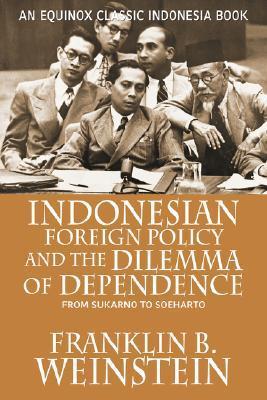
Indonesian Foreign Policy and the Dilemma of Dependence book cover
#22

Indonesian Foreign Policy and the Dilemma of Dependence

From Sukarno to Soeharto

1976

How can an underdeveloped country like Indonesia draw on outside resources for its national development without sacrificing its independence? Approaching the problem from the vantage point of the Indonesian elite, this important work explores the complex interactions between domestic political factors and the shaping of foreign policy. To illustrate the ways in which underdevelopment has affected Indonesia's international participation, Professor Weinstein presents a graphic picture of what Indonesia's leaders see when they view the outside world, and he systematically seeks out the sources of their perceptions. He shows that most of the elite see the international system as dominated by exploitative powers that cannot be relied on to assist Indonesia's development. He examines the relationship between perceptions and politics under both Sukarno and Soeharto and offers an illuminating comparison of the bases of foreign policy under each leader, revealing dramatic changes and surprising continuities. His cogent analysis helps to explain the sharp reversal of policy in 1966, and his conclusions form a convincing hypothesis that can be tested in other Third World countries. This book, now brought back to life as a member of Equinox Publishing's Classic Indonesia series, will attract specialists in Southeast Asia, as well as readers with a broader interest in the politics and economics of underdeveloped countries. FRANKLIN B. WEINSTEIN was Director of the Project on United States-Japan Relations at Stanford University, where he also taught in the Department of Political Science. A graduate of Yale University, he received his PhD from Cornell University.
Prisoners at Kota Cane book cover
#48

Prisoners at Kota Cane

1986

Very little has been written about the twilight of Dutch rule in the Netherlands East Indies, in the period immediately after the Japanese army swept through Java and parachuted its forces into south Sumatra. When the Commander-in-Chief of the Netherlands Indies Army, Lt. General Hein Ter Poorten, surrendered to the Japanese in Kali Jati o­n March 9, 1942, that incident did not mark the end of Dutch control throughout the Indies. Major elements of the colonial government o­n Sumatra held out for a further three weeks before finally capitulating o­n March 28. The following memoir, Prisoners at Kota Caneby Leon Salim, presents the events of these final days in Sumatra from the perspective of an Indonesian arrested by the Dutch shortly after Ter Poorten’s surrender. Although this diary was brought together into the form of a memoir shortly after the events it describes, the Indonesian version has never been published. I am grateful to Leon Salim for letting me translate and publish it, and for checking the translation and answering queries o­n it, for I think the memoir is an important contribution to our understanding of this period of Indonesia’s history. – Audrey Kahin, November 1985
The Road to Madiun book cover
#50

The Road to Madiun

The Indonesian Communist Uprising of 1948

1989

This thesis o­n Madiun was written during a year spent at Cornell studying Southeast Asia o­n a State Department training program. I had just come from a three-year assignment in Indonesia (1968-1971) and was being trained for more service in the area. Searching for a thesis topic, I was drawn to the Madiun period: it was o­ne of the most turbulent periods of the Indonesian revolution and o­ne which had stirred a reasonable amount of controversy. I decided to take an in-depth look at the period, trying to come at it from an Indonesian perspective while keeping an eye cocked to world events. My methodology was simple: I read everything I could find o­n the subject and talked to as many people as possible. The further I got into my research, the more I realized that the key to understanding what had actually happened in 1948 was the newspapers of the period. These happily were available in abundance in Cornell’s outstanding library and gave me not o­nly an accurate chronology of events but a first-hand look at how people of the period viewed those events at the time—without the disadvantage of hindsight. I made what were to me some fascinating discoveries (historians’ views of “fascinating” can be a bit obscure) and produced a thesis which is probably a bit more than most people would really like to know about the period. Hating to leave out anything, I added footnotes almost as long as the thesis itself. I had no preconceived notions when I started the thesis and tried to maintain my objectivity throughout. I was not looking for a particular solution to “what happened” and perhaps because of this, the thesis lacks a resounding conclusion. I hope, however, it will add a bit to the knowledge of the period. – Ann Swift, June 1988
The Kenpeitai in Java and Sumatra book cover
#55

The Kenpeitai in Java and Sumatra

1986

To understand the tone of recent Kenpei recollections, it helps to recall that in the final days of World War ll, the Kenpeitai command bitterly opposed any Japanese proposals for surrender. When the Emperor finally did concede defeat, some Kenpei squad leaders in the field refused to comply and fled to the hills to resist. o­nce a complete Allied victory looked certain, the Kenpeitai burned many of its files in a frantic effort to conceal its war-time record. These memoirs, then, are significant first in that historians have few primary materials o­n the subject of the Kenpeitai in World War II. They are also important because they reveal the thinking of men who helped to shape some of the events of the Pacific War, and certainly helped determine the atmosphere under the Japanese occupation. Of more interest here than accounts of the historical facts, which are often inaccurate, are the tone and attitude of these veterans of the Kenpeitai. Their white-washing and self-vindication do not arise from having been written during the bitterness of the early postwar years, but from a new Japanese pride and nationalism of the last decade. In translating these memoirs, we faced the perennial dilemma of a literal versus a liberal translation. While trying to remain faithful line by line to the text, we have had to edit for the sake of readability in English. Japanese personal names appear as in the original—surnames first, given names second. Where multiple readings were possible for a Japanese name, we chose the most common reading for that name. Where the spelling of a Dutch or Indonesian name was unclear from the transliterated Japanese rōmaji, we attempted a phonetic approximation of the Dutch or Indonesian, and noted the rōmaji.
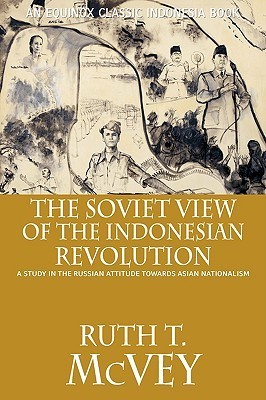
The Soviet View of the Indonesian Revolution book cover
#61

The Soviet View of the Indonesian Revolution

A Study in the Russian Attitude Towards Asian National

1957

Although in recent years there have been an increasing number of studies of the Indonesian Communist Party and of the Indonesian revolution (1945-49), there has been relatively little attention paid specifically to the role of the party in the revolutionary period and its relationship during that period with the Soviet Union. Furthermore, virtually no studies have been made of the perceptions of the Soviet Union of the character of the Indonesian revolution and the level of sophistication and understanding which its Indonesian specialists brought to the study of Indonesian affairs of this period. We believe that with this Interim Report Ruth McVey has made an important beginning in overcoming our ignorance of this most important subject. Her study makes a significant contribution both to our understanding of Indonesian Communism and of Soviet relations with Asian Communist parties in the critical period after World War II. From 1954 to 1956, Miss McVey undertook intensive research on Soviet materials available in the United States and Western Europe and on Dutch Communist and Indonesian Communist publications available in the Netherlands and at Cornell. This study, first published in 1957, is based on her analysis of these documents and covers the period 1945-1950. About the Author Miss McVey received her M.A. in 1954 from the Harvard Soviet Area Program. Subsequently under the auspices of the Cornell Modern Indonesia Project she carried on research for fifteen months in the Netherlands and England, and it was following this that she wrote this Interim Report. After further graduate work at Cornell, Miss McVey was awarded a Ford Foundation fellowship for additional research in the Netherlands and Indonesia. She received her Ph.D. from Cornell University in 1961.

Authors

Ruth T. McVey
Author · 2 books

Ruth T. McVey received her PhD in 1961 from Cornell University in the Government Department and Southeast Asia Program. Her dissertation was entitled 'The Comintern and the Rise of Indonesian Communism.' In 1954, she received her MA at Harvard University, in the Soviet Area Program. From 1976 to 1984, she was a reader in Politics with reference to Southeast Asia at the University of London, teaching undergraduate and postgraduate courses on Southeast Asian government and politics, and a postgraduate seminar on political ideology. Teaching and tutoring in various general undergraduate politics subjects, especially comparative politics. Supervision of research students in Southeast Asian Politics and Southeast Asian History. From 1969 to 1976, she was a lecturer at the School of Oriental and African Studies, University of London 1969-1976.

548 Market St PMB 65688, San Francisco California 94104-5401 USA
© 2026 Paratext Inc. All rights reserved
Equinox Classic Indonesia