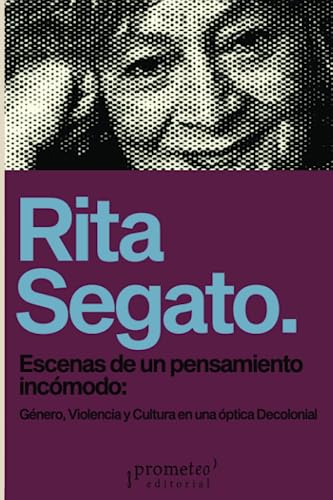



Las desobediencias en que estos textos incurren son de diversos órdenes. Lo que estas tienen en común, no obstante, es el hecho de abordar las distintas cuestiones siempre por su faceta dejada a la sombra, invisible, en sus tratamientos habituales. La lectura se hace por la puerta trasera, por el lado oscuro de cada tema. En una oportunidad me encontraba sentada a una mesa con algunos colegas, entre los que se hallaba un célebre periodista, Reynaldo Sietecase. Acababa de ser designada encargada de una cátedra recién creada en la Universidad Nacional de San Martín, cuando sonó mi teléfono urgiéndome a darle un nombre a la misma. Como no encontraba una respuesta, mi amigo periodista desde el otro lado de la mesa dijo con voz “¡Cátedra Rita Segato de pensamiento incómodo!” Perpleja, le pregunté: “¿Y por qué debería llamarse de esa manera?” Él respondió: “Rita, cuando vos pensás, incomodás”. Rita Segato PROMETEO EDITORIAL | ARGENTINA Este libro contiene el desarrollo de los siguientes temas, entre Con este libro usted tendrá una serie de ensayos de esta reconocida académica. estudios de género; rita segato; violencia de género; cultura popular; feminismo; pedagogía, antropología

Author

Rita Laura Segato is an Argentine-Brazilian academic, who has been called "one of Latin America's most celebrated feminist anthropologists" and "one of the most lucid feminist thinkers of this era". She is specially known for her research oriented towards gender in indigenous villages and Latin American communities, violence against women and the relationships between gender, racism and colonialism. One of her specialist areas is the study of gender violence. Segato was born in Buenos Aires and educated at the Instituto Interamericano de Etnomusicología y Folklore de Caracas. She has an MA and a PhD in anthropology (1984) from Queens University, Belfast. She teaches Anthropology at the University of Brasilia, where she holds the UNESCO Chair of Anthropology and Bioethics; since 2011 she has taught on the Postgraduate Programme of Bioethics and Human Rights. She additionally carries out research on behalf of Brazil's National Council for Scientific and Technological Development. In 2016, along with Prudencio García Martínez, Segato was an expert witness in the Sepur Zarco case, in which senior officers at a military base in Guatemala were convicted of crimes against humanity as a result of the holding of fourteen women in sexual and domestic slavery. The defence tried to challenge the expertise of the witnesses, but their appeal was unsuccessful. Her works were an inspiration to the Chilean collective Las Tesis from Valparaíso for the song and performance A Rapist in Your Path, which was performed by women throughout America, Europe and Australia.