Margins
Margins
Sign in
Margins
Subscribe to our newsletter
548 Market St PMB 65688, San Francisco California 94104-5401 USA
hello@margins.app
·
+1 (650) 223-5283
Privacy Policy
·
Terms of Use
© 2026 Paratext Inc. All rights reserved
📝 Essays
📝
Essays
On Directing Film
1991
David Mamet
According to David Mamet, a film director must, above all things, think visually. Most of this instructive and funny book is written in dialogue form and based on film classes Mamet taught at Columbia University. He encourages his students to tell their stories not with words, but through the juxtaposition of uninflected images. The best films, Mamet argues, are composed of simple shots. The great filmmaker understands that the burden of cinematic storytelling lies less in the individual shot than in the collective meaning that shots convey when they are edited together. Mamet borrows many of his ideas about directing, writing, and acting from Russian masters such as Konstantin Stanislavsky, Sergei M. Eisenstein, and Vsevelod Pudovkin, but he presents his material in so delightful and lively a fashion that he revitalizes it for the contemporary reader.
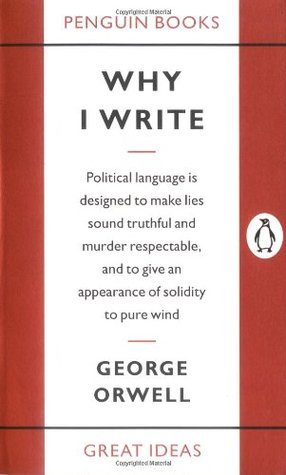
Why I Write
1946
George Orwell
Whether puncturing the lies of politicians, wittily dissecting the English character or telling unpalatable truths about war, Orwell's timeless, uncompromising essays are more relevant, entertaining and essential than ever in today's era of spin. Contents: "Why I Write", first published 1946 "The Lion and the Unicorn", first published 1940 "A Hanging", first published 1931 "Politics and the English Language", first published 1946
We Should All Be Feminists
2012
Chimamanda Ngozi Adichie
What does “feminism” mean today? That is the question at the heart of We Should All Be Feminists, a personal, eloquently-argued essay—adapted from her much-viewed TEDx talk of the same name—by Chimamanda Ngozi Adichie, the award-winning author of Americanah and Half of a Yellow Sun. With humor and levity, here Adichie offers readers a unique definition of feminism for the twenty-first century—one rooted in inclusion and awareness. She shines a light not only on blatant discrimination, but also the more insidious, institutional behaviors that marginalize women around the world, in order to help readers of all walks of life better understand the often masked realities of sexual politics. Throughout, she draws extensively on her own experiences—in the U.S., in her native Nigeria, and abroad—offering an artfully nuanced explanation of why the gender divide is harmful for women and men, alike. Argued in the same observant, witty and clever prose that has made Adichie a bestselling novelist, here is one remarkable author’s exploration of what it means to be a woman today—and an of-the-moment rallying cry for why we should all be feminists.
Make Good Art
2013
Neil Gaiman
In May 2012, bestselling author Neil Gaiman delivered the commencement address at Philadelphia’s University of the Arts, in which he shared his thoughts about creativity, bravery, and strength. He encouraged the fledgling painters, musicians, writers, and dreamers to break rules and think outside the box. Most of all, he encouraged them to make good art. The book Make Good Art, designed by renowned graphic artist Chip Kidd, contains the full text of Gaiman’s inspiring speech.
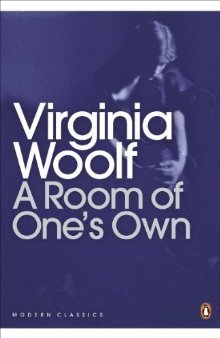
A Room of One's Own
1929
Virginia Woolf
A Room of One's Own is an extended essay by Virginia Woolf. First published on the 24th of October, 1929, the essay was based on a series of lectures she delivered at Newnham College and Girton College, two women's colleges at Cambridge University in October 1928. While this extended essay in fact employs a fictional narrator and narrative to explore women both as writers and characters in fiction, the manuscript for the delivery of the series of lectures, titled Women and Fiction, and hence the essay, are considered nonfiction. The essay is seen as a feminist text, and is noted in its argument for both a literal and figural space for women writers within a literary tradition dominated by patriarchy.