Margins




548 Market St PMB 65688, San Francisco California 94104-5401 USA
© 2026 Paratext Inc. All rights reserved
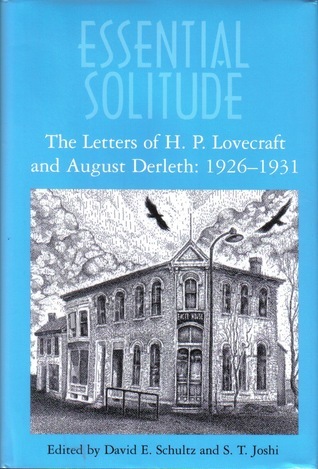
In this two-volume set, H. P. Lovecraft's relations to one of his most prominent colleagues and disciples, August Derleth (1909-1971), are recounted in the hundreds of letters they exchanged between 1926 and 1937. The youthful Derleth first wrote to Lovecraft, via Weird Tales magazine, in regard to an obscure work of weird fiction, and their subsequent correspondence deals extensively with the history of weird fiction, the two authors' ongoing attempts to publish stories in pulp magazines, Derleth's evolution into a sensitive writer of regional fiction and of detective stories, and debates over such issues as spiritualism, occultism, the literary use of coincidence, points of language and style, and other matters. Especially noteworthy are several letters by Lovecraft that Derleth interpreted as giving him permission to elaborate upon Lovecraft's pseudomythology, which Derleth named the Cthulhu Mythos. Nearly 400 of Lovecraft's letters and postcards are printed; only about 40 of Derleth's replies are extant. In an appendix, several of Derleth's early articles about Lovecraft are reprinted, describing Derleth's championing of Lovecraft and his foundation of Arkham House. All the letters are exhaustively annotated by David E. Schultz and S. T. Joshi. A two-volume hardcover set; individual volumes not sold separately.