Margins
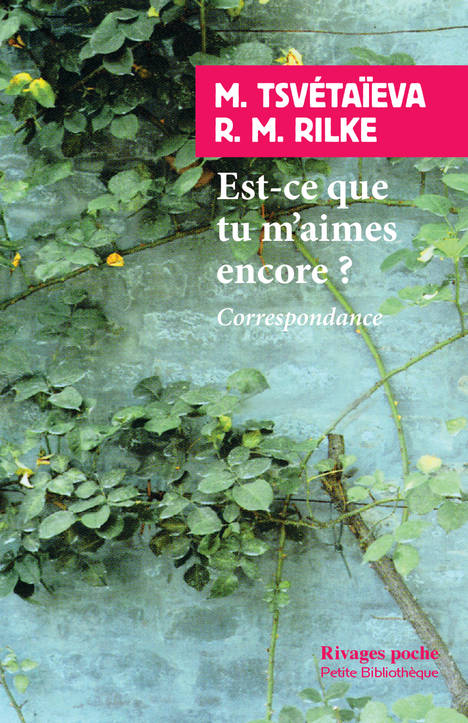
Est-ce que tu m'aimes encore ? Correspondance book cover
Est-ce que tu m'aimes encore ? Correspondance
2008
First Published
3.91
Average Rating
153
Number of Pages
« Je t'aime et je veux coucher avec toi, cette concision n'est pas permise à l'amitié. Mais je le dis d'une autre voix, presque dans le sommeil, profondément dans le sommeil. Je sonne tout autre chose que la passion. Si tu me prenais contre toi, tu prendrais contre toi - les plus déserts lieux. » (Marina Tsvétaïeva à Rilke) Marina Tsvétaïeva, de France où elle vit exilée, entre en contact épistolaire avec Rilke, en mai 1926. À sa lettre, brûlante de dévotion envers celui qui est pour elle l'incarnation même de la poésie, le grand solitaire Rilke répond profondément touché. S'ensuit une correspondance passionnée de part et d'autre, une histoire d'amour et de mots. Entre ces deux poètes que séparent l'âge (il a cinquante et un ans, elle trente-trois), la langue maternelle et le style, l'échange est admirable d'entente, de profondeur et de franchise. Et en même temps, en contrepoint de ce dialogue au sommet, comme deux amoureux ordinaires, ils échangent photos et confidences, et font des projets.

Avg Rating
3.91
Number of Ratings
23
5 STARS
26%
4 STARS
43%
3 STARS
26%
2 STARS
4%
1 STARS
0%
goodreads

Authors

Marina Tsvetaeva
Marina Tsvetaeva
Author · 46 books

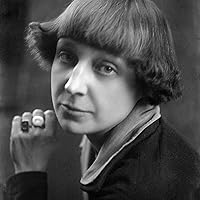
Марина Цветаева Marina Ivanovna Tsvetaeva was born in Moscow. Her father, Ivan Tsvetaev, was a professor of art history and the founder of the Museum of Fine Arts. Her mother Mariya, née Meyn, was a talented concert pianist. The family travelled a great deal and Tsvetaeva attended schools in Switzerland, Germany, and at the Sorbonne, Paris. Tsvetaeva started to write verse in her early childhood. She made her debut as a poet at the age of 18 with the collection Evening Album, a tribute to her childhood. In 1912 Tsvetaeva married Sergei Efron, they had two daughters and one son. Magic Lantern showed her technical mastery and was followed in 1913 by a selection of poems from her first collections. Tsvetaeva's affair with the poet and opera librettist Sofiia Parnok inspired her cycle of poems called Girlfriend. Parnok's career stopped in the late 1920s when she was no longer allowed to publish. The poems composed between 1917 and 1921 appeared in 1957 under the title The Demesne of the Swans. Inspired by her relationship with Konstantin Rodzevich, an ex-Red Army officer she wrote Poem of the Mountain and Poem of the End. After 1917 Revolution Tsvetaeva was trapped in Moscow for five years. During the famine one of her own daughters died of starvation. Tsvetaeva's poetry reveals her growing interest in folk song and the techniques of the major symbolist and poets, such as Aleksander Blok and Anna Akhmatova. In 1922 Tsvetaeva emigrated with her family to Berlin, where she rejoined her husband, and then to Prague. This was a highly productive period in her life - she published five collections of verse and a number of narrative poems, plays, and essays. During her years in Paris Tsvetaeva wrote two parts of the planned dramatic trilogy. The last collection published during her lifetime, After Russia, appeared in 1928. Its print, 100 numbered copies, were sold by special subscription. In Paris the family lived in poverty, the income came almost entirely from Tsvetaeva's writings. When her husband started to work for the Soviet security service, the Russian community of Paris turned against Tsvetaeva. Her limited publishing ways for poetry were blocked and she turned to prose. In 1937 appeared MOY PUSHKIN, one of Tsvetaeva's best prose works. To earn extra income, she also produced short stories, memoirs and critical articles. In exile Tsvetaeva felt more and more isolated. Friendless and almost destitute she returned to the Soviet Union in 1938, where her son and husband already lived. Next year her husband was executed and her daughter was sent to a labor camp. Tsvetaeva was officially ostracized and unable to publish. After the USSR was invaded by German Army in 1941, Tsvetaeva was evacuated to the small provincial town of Elabuga with her son. In despair, she hanged herself ten days later on August 31, 1941. source: http://www.poemhunter.com/marina-ivan...

Marina Tsvetáieva
Author · 3 books

Alternative spelling profile for Marina Tsvetaeva Nacida en Moscú (1892) su destino está inextricablemente unido a la historia contemporánea de Europa, marcada por dos guerras mundiales y el advenimiento de dos regímenes totalitarios. Casada muy joven con Serguéi Efrón, queda sola en Moscú, con dos niñas pequeñas—Irina, la menor, morirá de inanición durante la gran hambruna del invierno de 1919-1920—, cuando su marido marcha como voluntario del Ejército Blanco. En 1922 deja Rusia y, previo paso por Berlín, va a Praga donde se reencuentra con su marido. En Bohemia, Marina pasa uno de los períodos más felices y cruciales de su vida, intensifica su producción poética y su correspondencia; vive, además, una relación amorosa con Konstantín Rodzévich, que dio lugar a numerosos poemas, entre ellos el que sin duda es una de sus obras mayores, Poema del fin. En 1925, la familia se trasladó a París, donde Marina continuó con su actividad literaria. En 1938, y tras un período de angustiosas dudas—teme por el destino de los suyos y por el suyo propio, por el futuro de su hijo Mur y por las condiciones de vida que le esperan—vuelve con su hijo menor a Rusia, donde se encuentran su marido y su hija, Alia, colaboradores del gobierno soviético. Al cabo de dos meses, sin embargo, Serguéi Efrón es arrestado y Alia enviada a los campos. El Estado le prohíbe entonces publicar. El círculo parece cerrarse y la vida se convierte en un callejón sin salida. En 1941, Marina y su hijo son evacuados junto con un grupo de escritores a un remoto pueblo tártaro, donde, presa de la desesperación y la tristeza, se suicidó poco después.

Rainer Maria Rilke
Rainer Maria Rilke
Author · 128 books

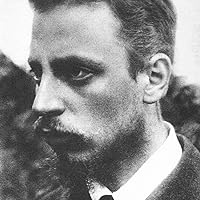
A mystic lyricism and precise imagery often marked verse of German poet Rainer Maria Rilke, whose collections profoundly influenced 20th-century German literature and include The Book of Hours (1905) and The Duino Elegies (1923). People consider him of the greatest 20th century users of the language. His haunting images tend to focus on the difficulty of communion with the ineffable in an age of disbelief, solitude, and profound anxiety—themes that tend to position him as a transitional figure between the traditional and the modernist poets. His two most famous sequences include the Sonnets to Orpheus , and his most famous prose works include the Letters to a Young Poet and the semi-autobiographical The Notebooks of Malte Laurids Brigge . He also wrote more than four hundred poems in French, dedicated to the canton of Valais in Switzerland, his homeland of choice.

548 Market St PMB 65688, San Francisco California 94104-5401 USA
© 2026 Paratext Inc. All rights reserved