Margins
1863
First Published
4.26
Average Rating
363
Number of Pages
Avg Rating
4.26
Number of Ratings
35
5 STARS
54%
4 STARS
26%
3 STARS
11%
2 STARS
9%
1 STARS
0%
goodreads

Authors

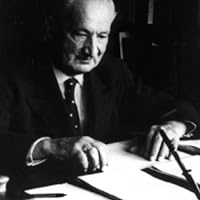
Karl Jaspers
Karl Jaspers
Author · 27 books

Jaspers was born in Oldenburg in 1883 to a mother from a local farming community, and a jurist father. He showed an early interest in philosophy, but his father's experience with the legal system undoubtedly influenced his decision to study law at university. It soon became clear that Jaspers did not particularly enjoy law, and he switched to studying medicine in 1902. Jaspers graduated from medical school in 1909 and began work at a psychiatric hospital in Heidelberg where Emil Kraepelin had worked some years earlier. Jaspers became dissatisfied with the way the medical community of the time approached the study of mental illness and set himself the task of improving the psychiatric approach. In 1913 Jaspers gained a temporary post as a psychology teacher at Heidelberg University. The post later became permanent, and Jaspers never returned to clinical practice. At the age of 40 Jaspers turned from psychology to philosophy, expanding on themes he had developed in his psychiatric works. He became a renowned philosopher, well respected in Germany and Europe. In 1948 Jaspers moved to the University of Basel in Switzerland. He remained prominent in the philosophical community until his death in Basel in 1969. Jaspers' dissatisfaction with the popular understanding of mental illness led him to question both the diagnostic criteria and the methods of clinical psychiatry. He published a revolutionary paper in 1910 in which he addressed the problem of whether paranoia was an aspect of personality or the result of biological changes. Whilst not broaching new ideas, this article introduced a new method of study. Jaspers studied several patients in detail, giving biographical information on the people concerned as well as providing notes on how the patients themselves felt about their symptoms. This has become known as the biographical method and now forms the mainstay of modern psychiatric practice. Jaspers set about writing his views on mental illness in a book which he published in 1913 as General Psychopathology. The two volumes which make up this work have become a classic in the psychiatric literature and many modern diagnostic criteria stem from ideas contained within them. Of particular importance, Jaspers believed that psychiatrists should diagnose symptoms (particularly of psychosis) by their form rather than by their content. For example, in diagnosing a hallucination, the fact that a person experiences visual phenomena when no sensory stimuli account for it (form) assumes more importance than what the patient sees (content). Jaspers felt that psychiatrists could also diagnose delusions in the same way. He argued that clinicians should not consider a belief delusional based on the content of the belief, but only based on the way in which a patient holds such a belief (see delusion for further discussion). Jaspers also distinguished between primary and secondary delusions. He defined primary delusions as autochthonous meaning arising without apparent cause, appearing incomprehensible in terms of normal mental processes. (This is a distinctly different use of the term autochthonous than its usual medical or sociological meaning of indigenous.) Secondary delusions, on the other hand, he classified as influenced by the person's background, current situation or mental state. Jaspers considered primary delusions as ultimately 'un-understandable,' as he believed no coherent reasoning process existed behind their formation. This view has caused some controversy, and the likes of R. D. Laing and Richard Bentall have criticised it, stressing that taking this stance can lead therapists into the complacency of assuming that because they do not understand a patient, the patient is deluded and further investigation on the part of the therapist will have no effect. Most commentators associate Jaspers with the philosophy of existentialism, in part because he draws largely upon the existentialist roots of Nietzsche and Kierk

Maurice Merleau-Ponty
Author · 22 books

French phenomenological philosopher, strongly influenced by Edmund Husserl and Martin Heidegger in addition to being closely associated with Jean-Paul Sartre and Simone de Beauvoir. At the core of Merleau-Ponty's philosophy is a sustained argument for the foundational role that perception plays in understanding the world as well as engaging with the world. Like the other major phenomenologists Merleau-Ponty expressed his philosophical insights in writings on art, literature, and politics; however Merleau-Ponty was the only major phenomenologist of the first half of the Twentieth Century to engage extensively with the sciences, and especially with descriptive psychology. Because of this engagement, his writings have become influential with the recent project of naturalizing phenomenology in which phenomenologists utilize the results of psychology and cognitive science. Merleau-Ponty was born in Rochefort-sur-Mer, Charente-Maritime. His father was killed in World War 1 when Merleau-Ponty was 3. After secondary schooling at the lycée Louis-le-Grand in Paris, Maurice Merleau-Ponty became a student at the École Normale Supérieure, where he studied alongside Sartre, Simone de Beauvoir, and Simone Weil. He passed the agrégation in philosophy in 1930. Merleau-Ponty first taught at Chartres, then became a tutor at the École Normale Supérieure, where he was awarded his doctorate on the basis of two important books: La structure du comportement (1942) and Phénoménologie de la Perception (1945). After teaching at the University of Lyon from 1945 to 1948, Merleau-Ponty lectured on child psychology and education at the Sorbonne from 1949 to 1952. He was awarded the Chair of Philosophy at the Collège de France from 1952 until his death in 1961, making him the youngest person to have been elected to a Chair. Besides his teaching, Merleau-Ponty was also political editor for Les Temps Modernes from the founding of the journal in October 1945 until December 1952. Aged 53, he died suddenly of a stroke in 1961, apparently while preparing for a class on Descartes. He was buried in Le Père Lachaise Cemetery in Paris.

Jean-Paul Sartre
Jean-Paul Sartre
Author · 117 books

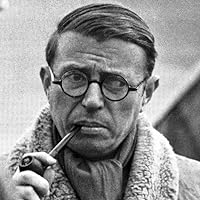
Jean-Paul Charles Aymard Sartre, normally known simply as Jean-Paul Sartre, was a French existentialist philosopher and pioneer, dramatist and screenwriter, novelist and critic. He was a leading figure in 20th century French philosophy. He declined the award of the 1964 Nobel Prize in Literature "for his work which, rich in ideas and filled with the spirit of freedom and the quest for truth, has exerted a far-reaching influence on our age." In the years around the time of his death, however, existentialism declined in French philosophy and was overtaken by structuralism, represented by Levi-Strauss and, one of Sartre's detractors, Michel Foucault.

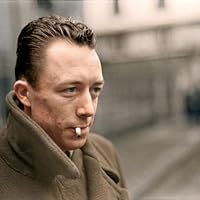
Albert Camus
Albert Camus
Author · 122 books

Works, such as the novels The Stranger (1942) and The Plague (1947), of Algerian-born French writer and philosopher Albert Camus concern the absurdity of the human condition; he won the Nobel Prize of 1957 for literature. Origin and his experiences of this representative of non-metropolitan literature in the 1930s dominated influences in his thought and work. He also adapted plays of Pedro Calderón de la Barca, Lope de Vega, Dino Buzzati, and Requiem for a Nun of William Faulkner. One may trace his enjoyment of the theater back to his membership in l'Equipe, an Algerian group, whose "collective creation" Révolte dans les Asturies (1934) was banned for political reasons. Of semi-proletarian parents, early attached to intellectual circles of strongly revolutionary tendencies, with a deep interest, he came at the age of 25 years in 1938; only chance prevented him from pursuing a university career in that field. The man and the times met: Camus joined the resistance movement during the occupation and after the liberation served as a columnist for the newspaper Combat. The essay Le Mythe de Sisyphe (The Myth of Sisyphus), 1942, expounds notion of acceptance of the absurd of Camus with "the total absence of hope, which has nothing to do with despair, a continual refusal, which must not be confused with renouncement - and a conscious dissatisfaction." Meursault, central character of L'Étranger (The Stranger), 1942, illustrates much of this essay: man as the nauseated victim of the absurd orthodoxy of habit, later - when the young killer faces execution - tempted by despair, hope, and salvation. Besides his fiction and essays, Camus very actively produced plays in the theater (e.g., Caligula, 1944). The time demanded his response, chiefly in his activities, but in 1947, Camus retired from political journalism. Doctor Rieux of La Peste (The Plague), 1947, who tirelessly attends the plague-stricken citizens of Oran, enacts the revolt against a world of the absurd and of injustice, and confirms words: "We refuse to despair of mankind. Without having the unreasonable ambition to save men, we still want to serve them." People also well know La Chute (The Fall), work of Camus in 1956. Camus authored L'Exil et le royaume (Exile and the Kingdom) in 1957. His austere search for moral order found its aesthetic correlative in the classicism of his art. He styled of great purity, intense concentration, and rationality. Camus died at the age of 46 years in a car accident near Sens in le Grand Fossard in the small town of Villeblevin. Chinese 阿尔贝·加缪

Friedrich Nietzsche
Friedrich Nietzsche
Author · 124 books

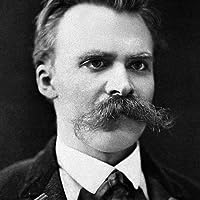
Friedrich Wilhelm Nietzsche (Ph.D., Philology, Leipzig University, 1869) was a German philosopher of the late 19th century who challenged the foundations of Christianity and traditional morality. He was interested in the enhancement of individual and cultural health, and believed in life, creativity, power, and the realities of the world we live in, rather than those situated in a world beyond. Central to his philosophy is the idea of “life-affirmation,” which involves a questioning of all doctrines that drain life's expansive energies, however socially prevalent those views might be. Often referred to as one of the first existentialist philosophers along with Søren Kierkegaard (1813–1855). From the Stanford Encyclopedia of Philosophy

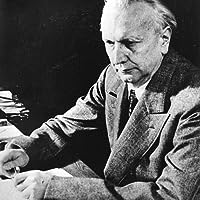
Martin Heidegger
Martin Heidegger
Author · 91 books
Martin Heidegger (1889-1976) was a German philosopher whose work is perhaps most readily associated with phenomenology and existentialism, although his thinking should be identified as part of such philosophical movements only with extreme care and qualification. His ideas have exerted a seminal influence on the development of contemporary European philosophy. They have also had an impact far beyond philosophy, for example in architectural theory (see e.g., Sharr 2007), literary criticism (see e.g., Ziarek 1989), theology (see e.g., Caputo 1993), psychotherapy (see e.g., Binswanger 1943/1964, Guignon 1993) and cognitive science (see e.g., Dreyfus 1992, 2008; Wheeler 2005; Kiverstein and Wheeler forthcoming).
548 Market St PMB 65688, San Francisco California 94104-5401 USA
© 2026 Paratext Inc. All rights reserved