Margins
Fables for Children, Stories for Children, Natural Science Stories, Popular Education, Decembrists, Moral Tales book cover
Fables for Children, Stories for Children, Natural Science Stories, Popular Education, Decembrists, Moral Tales
2015
First Published
3.96
Average Rating
532
Number of Pages
This book is an extensive collection of the author's parables and fables. It pulls from a diverse array of literary traditions to explore themes of human morality. The author uses simple and accessible language to craft stories that reflect the complexities of human nature. Intended for children, these fables draw on the storytelling traditions of Aesop, Tolstoy, and the Panchatantra. Each story presents a moral dilemma, showcasing the consequences of actions in a way that is both engaging and thought-provoking. The hierarchical structure of human society, the struggle for justice, and the frailty of human nature are explored. These stories invite readers into a world where characters embody virtues and vices, where wisdom and folly are tested through imaginative encounters with animals and the natural world. By the end, these fables provide not only entertainment but also insights into moral decision-making, making this book a valuable resource for parents and educators alike.

Avg Rating
3.96
Number of Ratings
49
5 STARS
41%
4 STARS
22%
3 STARS
31%
2 STARS
4%
1 STARS
2%
goodreads

Authors

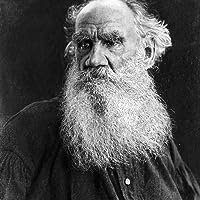
Leo Tolstoy
Leo Tolstoy
Author · 321 books

Lev Nikolayevich Tolstoy (Russian: Лев Николаевич Толстой; most appropriately used Liev Tolstoy; commonly Leo Tolstoy in Anglophone countries) was a Russian writer who primarily wrote novels and short stories. Later in life, he also wrote plays and essays. His two most famous works, the novels War and Peace and Anna Karenina, are acknowledged as two of the greatest novels of all time and a pinnacle of realist fiction. Many consider Tolstoy to have been one of the world's greatest novelists. Tolstoy is equally known for his complicated and paradoxical persona and for his extreme moralistic and ascetic views, which he adopted after a moral crisis and spiritual awakening in the 1870s, after which he also became noted as a moral thinker and social reformer. His literal interpretation of the ethical teachings of Jesus, centering on the Sermon on the Mount, caused him in later life to become a fervent Christian anarchist and anarcho-pacifist. His ideas on nonviolent resistance, expressed in such works as The Kingdom of God Is Within You, were to have a profound impact on such pivotal twentieth-century figures as Mohandas Gandhi and Martin Luther King, Jr.

548 Market St PMB 65688, San Francisco California 94104-5401 USA
© 2025 Paratext Inc. All rights reserved