Margins
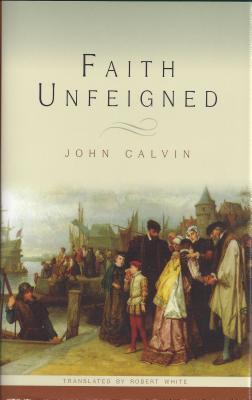
Faith Unfeigned book cover
Faith Unfeigned
2010
First Published
4.41
Average Rating
208
Number of Pages
Faith Unfeigned comprises four sermons preached by Calvin in 1549 and reworked by him for publication in 1552. They deal with a very practical problem: How to confess Christ and maintain the integrity of one's faith in a hostile environment where believers face not only ostracism but persecution and even death. Calvin's advice is firmly based on the scriptural premise that we belong, body and soul, to God our loving Father and to Christ our faithful Redeemer. The four sermons combine sound theology with strong pastoral concern. To them a small number of related Reformation texts has been added. Time has not diminished the importance of the issues which Calvin raises. His four sermons are, in a sense, as contemporary now as when first preached. The pressure to conform to non- or sub-Christian religions and cultures is something no Christian can escape. Persecution in many places is as painful a problem for pastors and people as it has ever been. In our weakness we are all adept, as Calvin frequently observes, at inventing excuses which fool no one but ourselves. To ponder the preacher's words is to be reminded of the cost of discipleship, and of the need for a much larger vision of God's saving grace and of the goal to which we are being led.

Avg Rating
4.41
Number of Ratings
22
5 STARS
50%
4 STARS
41%
3 STARS
9%
2 STARS
0%
1 STARS
0%
goodreads

Author

John Calvin
John Calvin
Author · 77 books

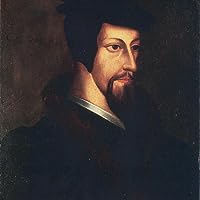
John Calvin, né Jehan Cauvin, re-translated from Latin Iohannes Calvinus into Jean Calvin in modern French, was an influential French theologian and pastor during the Protestant Reformation. He was a principal figure in the development of the system of Christian theology later called Calvinism. Originally trained as a humanist lawyer, he broke from the Roman Catholic Church around 1530. After religious tensions provoked a violent uprising against Protestants in France, Calvin fled to Basel, Switzerland, where in 1536 he published the first edition of his seminal work Institutes of the Christian Religion. In that year, Calvin was invited by William Farel to help reform the church in Geneva. The city council resisted the implementation of Calvin and Farel's ideas, and both men were expelled. At the invitation of Martin Bucer, Calvin proceeded to Strasbourg, where he became the minister of a church of French refugees. He continued to support the reform movement in Geneva, and was eventually invited back to lead its church. Following his return, he introduced new forms of church government and liturgy. Following an influx of supportive refugees and new elections to the city council, Calvin's opponents were forced out. Calvin spent his final years promoting the Reformation both in Geneva and throughout Europe. Calvin was a tireless polemic and apologetic writer. He also exchanged cordial and supportive letters with many reformers including Philipp Melanchthon and Heinrich Bullinger. In addition to the Institutes, he wrote commentaries on most books of the Bible as well as theological treatises and confessional documents, and he regularly gave sermons throughout the week in Geneva. Calvin was influenced by the Augustinian tradition, which led him to expound the doctrine of predestination and the absolute sovereignty of God in salvation. Calvin's writing and preaching provided the seeds for the branch of theology that bears his name. The Presbyterian and other Reformed churches, which look to Calvin as a chief expositor of their beliefs, have spread throughout the world. Calvin's thought exerted considerable influence over major religious figures and entire religious movements, such as Puritanism, and some have argued that his ideas have contributed to the rise of capitalism, individualism, and representative democracy in the West.

548 Market St PMB 65688, San Francisco California 94104-5401 USA
© 2026 Paratext Inc. All rights reserved