Margins
Filosofía para la felicidad book cover
Filosofía para la felicidad
2013
First Published
3.61
Average Rating
139
Number of Pages
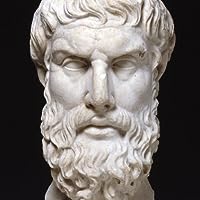
Pocos, muy pocos filósofos han sufrido tantas censuras, calumnias y encubrimientos como Epicuro. Siglos y siglos de difamación y mordaza. Lo cual no debería extrañarnos. Epicuro cultivó buena parte de sus teorías y sus prácticas en un jardín situado a las afueras de Atenas, en la periferia de toda filosofía oficial. En aquel jardín vivieron, debatieron y rieron hombres y mujeres, aristócratas y esclavos, todos iguales. Mientras el estado y la democracia atenienses se desmoronaban en el Ágora, en ese jardín cada cual se construía a sí mismo y se orientaba hacia su propia felicidad. Epicuro inventó allí nuevas posibilidades de existencia, nuevas virtudes, nuevos conceptos. Revolucionó por completo la historia del pensamiento. Fue el primero, muchos siglos antes que Nietzsche, en afirmar que sólo es posible filosofar con el cuerpo, desde el cuerpo. Fue el primero en enfrentarse a la hipocresía de los líderes políticos y económicos, que se apropiaban (y se apropian) del placer y la riqueza mientras pregonaban (y pregonan) la tristeza y la resignación. Fue el primero, en definitiva, en proponer una idea general de la filosofía como medicina de la mente, como camino hacia una vida buena, una existencia feliz para todo hombre y mujer. ¿Cómo no iban a querer silenciarlo? En este libro presentamos los principales textos y fragmentos que la historia nos ha dejado de Epicuro. Lo hacemos en la impecable traducción de Carlos García Gual, que consideramos, como editores y como lectores, la mejor versión jamás realizada en nuestra lengua de la obra de este pensador. Y la completamos con tres ensayos sobre la filosofía epicúrea escritos por tres de los más importantes especialistas internacionales en el ámbito de la filosofía el propio Carlos García Gual, Emilio Lledó y Pierre Hadot, donde reflexionan sobre Epicuro o el Jardín, Epicuro o el pensamiento, Epicuro o la subversión, Epicuro o la risa, Epicuro o el placer de la existencia

Avg Rating
3.61
Number of Ratings
116
5 STARS
19%
4 STARS
34%
3 STARS
35%
2 STARS
11%
1 STARS
0%
goodreads

Authors

Emilio Lledó
Emilio Lledó
Author · 5 books
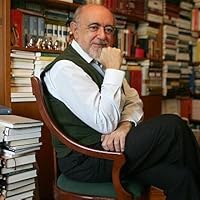
Emilio Lledó (Sevilla, 1927) se educó en Heidelberg, donde fue discípulo de Hans-Georg Gadamer. Catedrático de instituto en Valladolid y de Historia de la Filosofía en las universidades de La Laguna, de Barcelona y de Madrid (UNED), es miembro de la Real Academia Española.
Carlos Garcia Gual
Carlos Garcia Gual
Author · 15 books
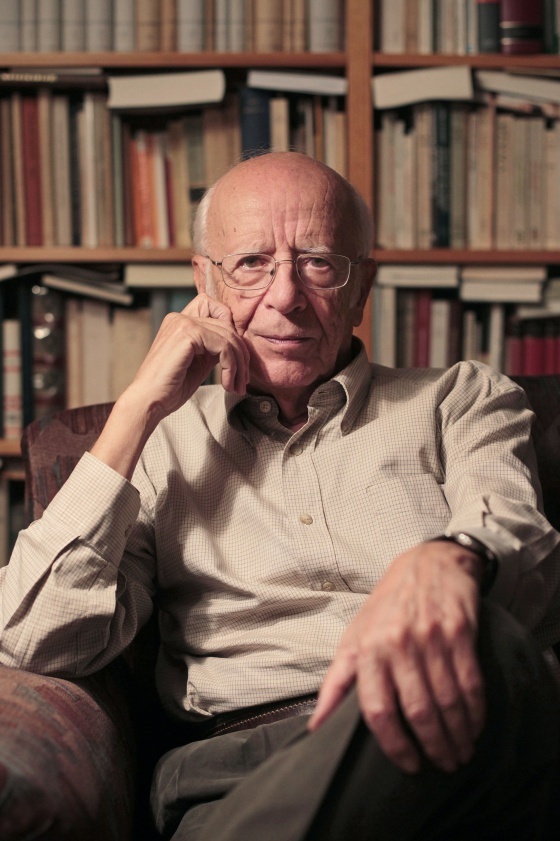
Carlos García Gual (Palma de Mallorca 1943): a Spanish writer, philologist, hellenist, editor, mythographer and critic.
Pierre Hadot
Pierre Hadot
Author · 13 books

Pierre Hadot (né à Paris, le 21 février 1922 - mort à Orsay, le 25 avril 2010) est un philosophe, historien et philologue français, spécialiste de l'antiquité, profond connaisseur de la période hellénistique et en particulier du néoplatonisme et de Plotin. Pierre Hadot est l'auteur d'une œuvre développée notamment autour de la notion d'exercice spirituel et de philosophie comme manière de vivre. Spécialiste de Plotin et du stoïcisme, en particulier de Marc-Aurèle, il est un de ceux qui ont accompagné le retour à la philosophie antique, considérée comme pratique, manière de vivre et exercice spirituel. Ses livres, très agréables à lire et d'une très grande érudition, manifestent constamment un rapport avec l'existence, l'expérience, voire la poésie, la littérature et le mysticisme.

Epicurus
Epicurus
Author · 24 books

Epicurus (Greek: Ἐπίκουρος, Epikouros, "upon youth"; Samos, 341 BCE – Athens, 270 BCE; 72 years) was an ancient Greek philosopher and the founder of the school of philosophy called Epicureanism. Only a few fragments and letters remain of Epicurus' 300 written works. Much of what is known about Epicurean philosophy derives from later followers and commentators. For Epicurus, the purpose of philosophy was to attain the happy, tranquil life, characterized by aponia, the absence of pain and fear, and by living a self-sufficient life surrounded by friends. He taught that pleasure and pain are the measures of what is good and bad, that death is the end of the body and the soul and should therefore not be feared, that the gods do not reward or punish humans, that the universe is infinite and eternal, and that events in the world are ultimately based on the motions and interactions of atoms moving in empty space. His parents, Neocles and Chaerestrate, both Athenian citizens, had immigrated to the Athenian settlement on the Aegean island of Samos about ten years before Epicurus' birth in February 341 BCE. As a boy he studied philosophy for four years under the Platonist teacher Pamphilus. At the age of 18 he went to Athens for his two-year term of military service. The playwright Menander served in the same age-class of the ephebes as Epicurus. After the death of Alexander the Great, Perdiccas expelled the Athenian settlers on Samos to Colophon. After the completion of his military service, Epicurus joined his family there. He studied under Nausiphanes, who followed the teachings of Democritus. In 311/310 BC Epicurus taught in Mytilene but caused strife and was forced to leave. He then founded a school in Lampsacus before returning to Athens in 306 BC. There he founded The Garden, a school named for the garden he owned about halfway between the Stoa and the Academy that served as the school's meeting place. Even though many of his teachings were heavily influenced by earlier thinkers, especially by Democritus, he differed in a significant way with Democritus on determinism. Epicurus would often deny this influence, denounce other philosophers as confused, and claim to be "self-taught". Epicurus never married and had no known children. He suffered from kidney stones, to which he finally succumbed in 270 BCE at the age of 72, and despite the prolonged pain involved, he wrote to Idomeneus: "I have written this letter to you on a happy day to me, which is also the last day of my life. For I have been attacked by a painful inability to urinate, and also dysentery, so violent that nothing can be added to the violence of my sufferings. But the cheerfulness of my mind, which comes from the recollection of all my philosophical contemplation, counterbalances all these afflictions. And I beg you to take care of the children of Metrodorus, in a manner worthy of the devotion shown by the young man to me, and to philosophy." -http://en.wikipedia.org/wiki/Epicurus

548 Market St PMB 65688, San Francisco California 94104-5401 USA
© 2026 Paratext Inc. All rights reserved