Margins
Margins
Sign in
Margins
Subscribe to our newsletter
548 Market St PMB 65688, San Francisco California 94104-5401 USA
hello@margins.app
·
+1 (650) 223-5283
Privacy Policy
·
Terms of Use
© 2026 Paratext Inc. All rights reserved
📚 Filosofía principiante
📚
Filosofía principiante
The Consolations of Philosophy
2000
Alain de Botton
Alain de Botton's The Consolations of Philosophy takes the discipline of logic and the mind back to its roots. Drawing inspiration from six of the finest minds in history - Socrates, Epicurus, Seneca, Montaigne, Schopenhauer and Nietzsche - he addresses lack of money, the pain of love, inadequacy, anxiety and conformity. De Botton's book led one critic to call philosophy 'the new rock and roll'.
Descartes' Meditation on First Philosophy
2006
David Mills Daniel
Descartes' Meditations on First Philosophy was published in 1641, designed for the philosopher and for the theologian. It consists of six meditations, Of the Things that we may doubt, Of the Nature of the Human Mind, Of that He exists, Of Truth and Error, Of the Essence of Material Things, Of the Existence of Material Things and of the Real Distinction between the Mind and the Body of Man. However many scientists were opposed to Descartes' ideas, even in his own lifetime. Although famous as a mathematician, his mechanics of how the world exists, were proven not to be possible by Newton. This did not stop his ideas being championed in Europe for over a hundred years. His philosophy is one that students cannot be without and this Briefly provides a thorough and accessible guide to one of his most important works.
The Problems of Philosophy
1912
Bertrand Russell
A lively and still one of the best introductions to philosophy, this book pays off both a closer reading for students and specialists, and a casual reading for the general public.
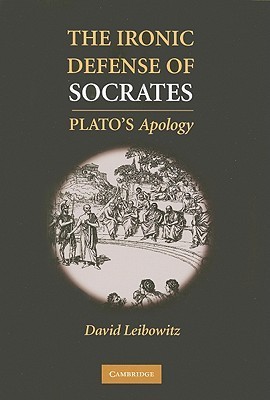
The Ironic Defense of Socrates
Plato's Apology
David M. Leibowitz
This book offers a controversial new interpretation of Plato’s Apology of Socrates. By paying unusually close attention to what Socrates indicates about the meaning and extent of his irony, David Leibowitz arrives at unconventional conclusions about Socrates’ teaching on virtue, politics, and the gods; the significance of his famous turn from natural philosophy to political philosophy; and the purpose of his insolent “defense speech.” Leibowitz shows that Socrates is not just a colorful and quirky figure from the distant past but an unrivaled guide to the good life – the thoughtful life – who is as relevant today as in ancient Athens. On the basis of his unconventional understanding of the dialogue as a whole, and of the Delphic oracle story in particular, Leibowitz also attempts to show that the Apology is the key to the Platonic corpus, indicating how many of the disparate themes and apparently contradictory conclusions of the other dialogues fit together.