Margins
Margins
Sign in
Margins
Subscribe to our newsletter
548 Market St PMB 65688, San Francisco California 94104-5401 USA
hello@margins.app
·
+1 (650) 223-5283
Privacy Policy
·
Terms of Use
© 2026 Paratext Inc. All rights reserved
⭐ Five Stars
⭐
Five Stars
Crime and Punishment
1866
Fyodor Dostoevsky
Raskolnikov, a destitute and desperate former student, wanders through the slums of St Petersburg and commits a random murder without remorse or regret. He imagines himself to be a great man, a Napoleon: acting for a higher purpose beyond conventional moral law. But as he embarks on a dangerous game of cat and mouse with a suspicious police investigator, Raskolnikov is pursued by the growing voice of his conscience and finds the noose of his own guilt tightening around his neck. Only Sonya, a downtrodden sex worker, can offer the chance of redemption.
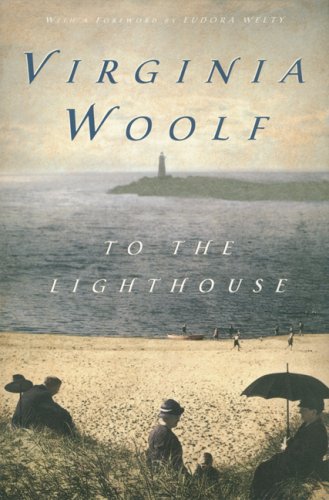
To the Lighthouse
1927
Virginia Woolf
The serene and maternal Mrs. Ramsay, the tragic yet absurd Mr. Ramsay, and their children and assorted guests are on holiday on the Isle of Skye. From the seemingly trivial postponement of a visit to a nearby lighthouse, Woolf constructs a remarkable, moving examination of the complex tensions and allegiances of family life and the conflict between men and women. As time winds its way through their lives, the Ramsays face, alone and simultaneously, the greatest of human challenges and its greatest triumph—the human capacity for change.
Frankenstein
1818
Mary Shelley
'Now that I had finished, the beauty of the dream vanished, and breathless horror and disgust filled my heart ...' Obsessed with creating life itself, Victor Frankenstein plunders graveyards for the material to fashion a new being, which he shocks into life with electricity. But his botched creature, rejected by Frankenstein and denied human companionship, sets out to destroy his maker and all that he holds dear. Mary Shelley's chilling Gothic tale was conceived when she was only eighteen, living with her lover Percy Shelley near Byron's villa on Lake Geneva. It would become the world's most famous work of horror fiction, and remains a devastating exploration of the limits of human creativity. Based on the third edition of 1831, this volume contains all the revisions Mary Shelley made to her story, as well as her 1831 introduction and Percy Bysshe Shelley's preface to the first edition. This revised edition includes as appendices a select collation of the texts of 1818 and 1831 together with 'A Fragment' by Lord Byron and Dr John Polidori's 'The Vampyre: A Tale'.
Jane Eyre
1847
Charlotte Bronte
Alternate editions can be found here and here. A gothic masterpiece of tempestuous passions and dark secrets, Charlotte Brontë's Jane Eyre is edited with an introduction and notes by Stevie Davis in Penguin Classics. Charlotte Brontë tells the story of orphaned Jane Eyre, who grows up in the home of her heartless aunt, enduring loneliness and cruelty. This troubled childhood strengthens Jane's natural independence and spirit - which prove necessary when she finds employment as a governess to the young ward of Byronic, brooding Mr Rochester. As her feelings for Rochester develop, Jane gradually uncovers Thornfield Hall's terrible secret, forcing her to make a choice. Should she stay with Rochester and live with the consequences, or follow her convictions - even if it means leaving the man she loves? A novel of intense power and intrigue, Jane Eyre dazzled readers with its passionate depiction of a woman's search for equality and freedom.
The Fire Next Time
1963
James Baldwin
A national bestseller when it first appeared in 1963, The Fire Next Time galvanized the nation and gave passionate voice to the emerging civil rights movement. At once a powerful evocation of James Baldwin’s early life in Harlem and a disturbing examination of the consequences of racial injustice, the book is an intensely personal and provocative document. It consists of two “letters,” written on the occasion of the centennial of the Emancipation Proclamation, that exhort Americans, both black and white, to attack the terrible legacy of racism. Described by The New York Times Book Review as “sermon, ultimatum, confession, deposition, testament, and chronicle…all presented in searing, brilliant prose,” The Fire Next Time stands as a classic of our literature.