


Margins
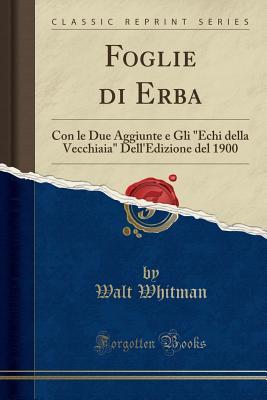
Foglie Di Erba book cover
Foglie Di Erba
Con Le Due Aggiunte E Gli "echi Della Vecchiaia" Dell'edizione del 1900
2018
First Published
4.43
Average Rating
627
Number of Pages

Excerpt from Foglie di Erba: Con le Due Aggiunte e Gli "Echi della Vecchiaia" Dell'Edizione del 1900 Nel 1640 la? Parte occidentale dell'isola fu occupata da coloni di stirpe olandese: piu tardi alcuni coloni inglesi si stabilirono ad oriente. I possedimenti delle due razze si vennero, a mano a mano, allargando, finche si tocca rono in quel luogo dove surse poi Huntington, che presto divenne una citta mista delle due stirpi. This book is a reproduction of an important historical work. Forgotten Books uses state-of-the-art technology to digitally reconstruct the work, preserving the original format whilst repairing imperfections present in the aged copy. In rare cases, an imperfection in the original, such as a blemish or missing page, may be replicated in our edition. We do, however, repair the vast majority of imperfections successfully; any imperfections that remain are intentionally left to preserve the state of such historical works.
Avg Rating
4.43
Number of Ratings
7
5 STARS
57%
4 STARS
29%
3 STARS
14%
2 STARS
0%
1 STARS
0%
goodreads

Author

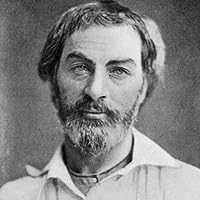
Walt Whitman
Walt Whitman
Author · 95 books

Walter Whitman (1819-1892) was an American poet, essayist, journalist, and humanist. He was a part of the transition between Transcendentalism and realism, incorporating both views in his works. Whitman is among the most influential poets in the American canon, often called the father of free verse. Born on Long Island, Whitman worked as a journalist, a teacher, a government clerk, and a volunteer nurse during the American Civil War in addition to publishing his poetry. Early in his career, he also produced a temperance novel, Franklin Evans (1842). After working as clerk, teacher, journalist and laborer, Whitman wrote his masterpiece, Leaves of Grass, pioneering free verse poetry in a humanistic celebration of humanity, in 1855. Emerson, whom Whitman revered, said of Leaves of Grass that it held "incomparable things incomparably said." During the Civil War, Whitman worked as an army nurse, later writing Drum Taps (1865) and Memoranda During the War (1867). His health compromised by the experience, he was given work at the Treasury Department in Washington, D.C. After a stroke in 1873, which left him partially paralyzed, Whitman lived his next 20 years with his brother, writing mainly prose, such as Democratic Vistas (1870). Leaves of Grass was published in nine editions, with Whitman elaborating on it in each successive edition. In 1881, the book had the compliment of being banned by the commonwealth of Massachusetts on charges of immorality. A good friend of Robert Ingersoll, Whitman was at most a Deist who scorned religion. D. 1892. More: http://www.whitmanarchive.org/ http://philosopedia.org/index.php/Wal... http://www.poets.org/poet.php/prmPID/126 http://www.poetryfoundation.org/bio/w... http://en.wikipedia.org/wiki/Walt\_Whi... http://www.poemhunter.com/walt-whitman/

548 Market St PMB 65688, San Francisco California 94104-5401 USA
© 2025 Paratext Inc. All rights reserved