


Margins
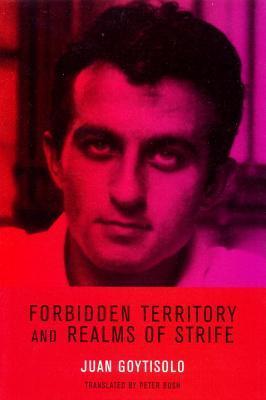
Forbidden Territory and Realms of Strife book cover
Forbidden Territory and Realms of Strife
The Memoirs of Juan Goytisolo
1987
First Published
4.02
Average Rating
512
Number of Pages

For forty-five years, the expatriate Juan Goytisolo has been widely acknowledged as both Spain’s greatest living writer and its most scabrous critic. In some thirty books of fiction, autobiography, essays and journalism, he has turned the Spanish language against what he derides as ‘Sunnyspain’, flaying the ‘Hispanos’ while excavating their culture’s Moorish and Jewish roots. This, his masterful two-volume autobiography first published in the mid-1980s, broke new ground in Spanish letters with its introspective sexual and emotional honesty. It charts the writer’s unique journey from a Barcelona childhood violently disrupted by the Spanish civil war to student rebellion against the Francoist dictatorship and exile as a ‘self-banished Spaniard’ to Paris in 1956. In Paris, Goytisolo fell in love with Monique Lange, befriended Jean Genet, and discovered his own homosexuality as he supported the struggles for Algerian independence. His passionate, iconoclastic pen spares no one, least of all himself, in this striking portrayal of politics and sexuality in twentieth-century France and Spain.
Avg Rating
4.02
Number of Ratings
41
5 STARS
39%
4 STARS
32%
3 STARS
22%
2 STARS
7%
1 STARS
0%
goodreads

Author

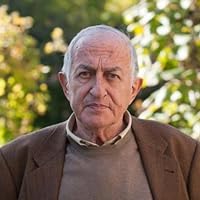
Juan Goytisolo
Juan Goytisolo
Author · 30 books

Desde la trilogía formada por Señas de identidad, Don Julián y Juan sin tierra, que le situó entre los mejores autores de la literatura española contemporánea, la obra narrativa de Juan Goytisolo (Barcelona, 1931) ha derivado en cada nueva singladura hacia territorios inexplorados que cuestionan siempre el género de la ficción. Esta voluntad de ir a contracorriente ha propiciado la gestación de textos tan singulares como Makbara (1980), Las virtudes del pájaro solitario (1988), La cuarentena (1991), La saga de los Marx (1993), El sitio de los sitios (1995), Las semanas del jardín (1997), Carajicomedia (2000), Telón de boca (2003) o El exiliado de aquí y allá (2008). No obstante, Juan Goytisolo no destaca sólo como autor de ficción, sino que también cultiva con maestría el género del ensayo, con obras como Contra las sagradas formas (2007) o Genet en el Raval (2009). En 2014 se le ha otorgado el Premio Cervantes de las Letras. ==== Juan Goytisolo Gay was born in Barcelona at 1931. A vocal opponent of Franco, he left Spain for France in 1956. In Paris, he worked as a consultant for the publisher Gallimard while he was also working on his own oeuvre. There he met his future wife, Monique Langue, and Jean Genet, who influenced his vision of literature. While living in Paris, he started the most experimental side of his books. Mixing poetry with painting and fiction with non-fiction, he explored the possibilities of language, leaving behind the social commentary of his first novels. "Marks of Identity" was the start, but then he turned even more radical with "Count Julian" and "Juan the Landless", where he rejected definitely, because of a lack of identification, his Spanish identity in favor of adopting a "cervantina" nationality. In the 1970s he visited Marrakech often. In 1981 he bought a house there. In 1996, after the death of his wife, he moved there and adopted Morocco as his main residence. He is widely considered one of the most important Spanish authors of his time. His brothers, José Agustín Goytisolo and Luis Goytisolo, are also writers. In 2008 he won Spain's Premio Nacional de las Letras and in 2014 the Cervantes Prize. See also http://en.wikipedia.org/wiki/Juan\_Goy...

548 Market St PMB 65688, San Francisco California 94104-5401 USA
© 2026 Paratext Inc. All rights reserved