Margins
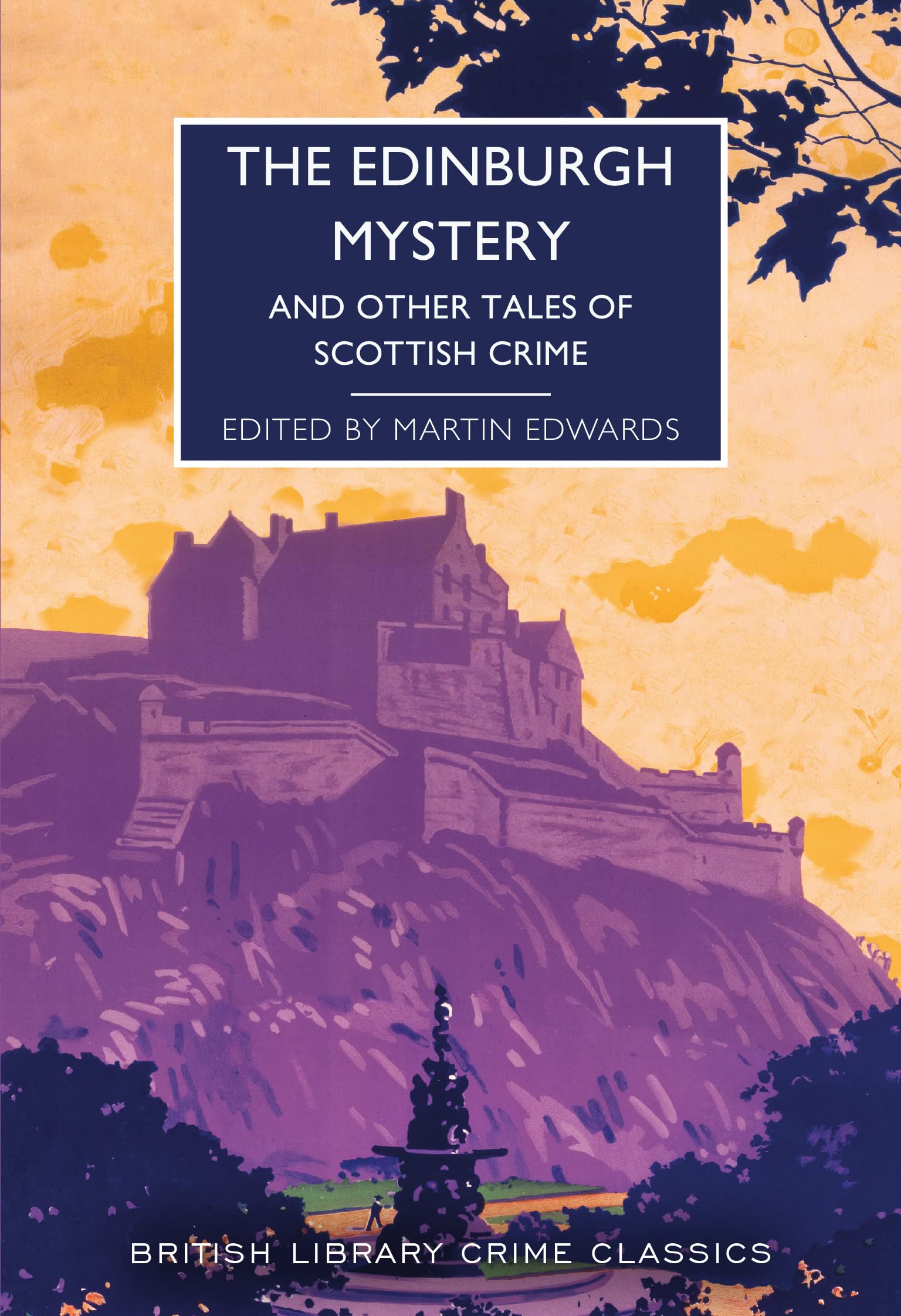
Francis McNab book cover 1
Francis McNab
Series · 2 books · 1929-2022

Books in series

Authors

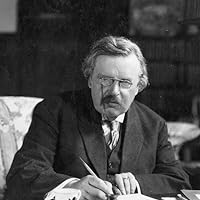
G.K. Chesterton
G.K. Chesterton
Author · 229 books

Gilbert Keith Chesterton was an English writer, philosopher, lay theologian, and literary and art critic. He was educated at St. Paul’s, and went to art school at University College London. In 1900, he was asked to contribute a few magazine articles on art criticism, and went on to become one of the most prolific writers of all time. He wrote a hundred books, contributions to 200 more, hundreds of poems, including the epic Ballad of the White Horse, five plays, five novels, and some two hundred short stories, including a popular series featuring the priest-detective, Father Brown. In spite of his literary accomplishments, he considered himself primarily a journalist. He wrote over 4000 newspaper essays, including 30 years worth of weekly columns for the Illustrated London News, and 13 years of weekly columns for the Daily News. He also edited his own newspaper, G.K.’s Weekly. Chesterton was equally at ease with literary and social criticism, history, politics, economics, philosophy, and theology.

J. Storer Clouston
J. Storer Clouston
Author · 4 books

Joseph Storer Clouston, although born in Cumberland, was classed as an Orcadian author and historian as he originally came from an old Orkney family. He was the son of psychiatrist Sir Thomas Smith Clouston and his wife Harriet (nee Storer). He was educated at Merchiston Castle School, Edinburgh and Magdalen College, Oxford. Although he was called to the bar at the Inner Temple in London in 1895, he never practised as a lawyer. His first published book was Vandred the Viking; or The Feud and the Spell (1898) and the following year he published what was to be his most celebrated work, The Lunatic at Large, to which there were a number of sequels. He married his wife Winifred at St Andrews and St Leonards, Fife on 11 March 1903 and at one time they lived in St John's Wood, London. They had two sons and one daughter. His novel The Spy in Black (1917) was made into a successful film in 1939 and starred Conrad Veidt. It was released in the USA as 'U-Boat 29'. He was also a historian and as such was the author of a couple of histories of Orkney, Records of the Earldom of Orkney 1299 - 1614 (1914) and A History of Orkney (1932). He was a founder member and the second president of the Orkney Antiquarian Society, and a Fellow of the Society of Antiquaries of Scotland. He died at his home Smoogro House, Orphir, Orkney on 23 June 1944. Gerry Wolstenholme October 2012

Henry Howarth Bashford
Author · 2 books
Sir Henry Howarth Bashford (1880 – 1961) was a distinguished English physician, becoming doctor to George VI. He is now remembered as a writer, in particular of the satirical Augustus Carp, Esq., By Himself: Being the Autobiography of a Really Good Man (1924), which was first published anonymously.
J.J. Connington
J.J. Connington
Author · 26 books
Pseudonym of Alfred Walter Stewart.
Emmuska Orczy
Emmuska Orczy
Author · 51 books

Full name: Emma ("Emmuska") Magdolna Rozália Mária Jozefa Borbála Orczy de Orczi was a Hungarian-British novelist, best remembered as the author of THE SCARLET PIMPERNEL (1905). Baroness Orczy's sequels to the novel were less successful. She was also an artist, and her works were exhibited at the Royal Academy, London. Her first venture into fiction was with crime stories. Among her most popular characters was The Old Man in the Corner, who was featured in a series of twelve British movies from 1924, starring Rolf Leslie. Baroness Emmuska Orczy was born in Tarnaörs, Hungary, as the only daughter of Baron Felix Orczy, a noted composer and conductor, and his wife Emma. Her father was a friend of such composers as Wagner, Liszt, and Gounod. Orczy moved with her parents from Budapest to Brussels and then to London, learning to speak English at the age of fifteen. She was educated in convent schools in Brussels and Paris. In London she studied at the West London School of Art. Orczy married in 1894 Montague Barstow, whom she had met while studying at the Heatherby School of Art. Together they started to produce book and magazine illustrations and published an edition of Hungarian folktales. Orczy's first detective stories appeared in magazines. As a writer she became famous in 1903 with the stage version of the Scarlet Pimpernel.

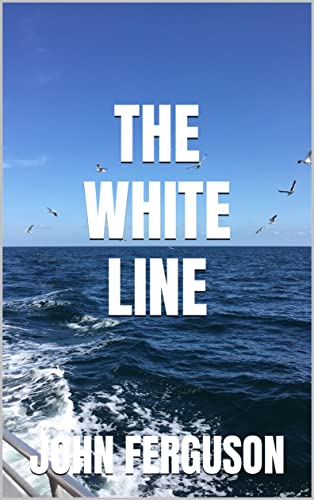
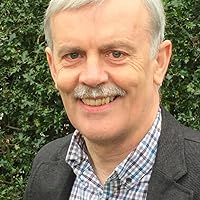
John Ferguson
Author · 3 books

John Ferguson (1871-1952) was a Scottish clergyman, playwright, and mystery writer. John Ferguson was born at Callander, Perthshire, but has made his home in many sharply contrasted places, from the misty isle of Skye to the sunlit island of Guernsey. And though now a resident in the New Forest near Lymington he lived for six years in the grim Dunimarle Castle in Fife, where Macduff's wife and child were murdered by Mac­beth. As a dramatist Mr Ferguson is probably best known for his now famous play Campbell of Kilmohr, which at its first Royalty Theatre production was hailed by the dramatic critic of the Glasgow Herald as 'a new and significant type of Scottish drama'. Of John Ferguson's work one critic has said, 'As no two of his stories are in any sense repetitious, it is probably his practice of setting each tale against the background in which he writes that gives this variety in characterization and action to each of his works.' His books have been translated into many foreign languages, the latest of which is Turkish. In his story of the history and development of the detective story, Masters of Mystery, Douglas Thom­son writes, 'Mr Ferguson is one of the most delight­ful stylists in this genre'.

Anthony Wynne
Anthony Wynne
Author · 24 books

Anthony Wynne is a pseudonym of Robert McNair Wilson, an English physician, who developed a specialism in cardiology after working as an assistant to Sir James Mackenzie, whose biography he subsequently wrote in 1926. He was born in Glasgow, the son of William and Helen Wilson, (née Turner), He was educated at Glasgow Academy and Glasgow University and became House Surgeon at Glasgow Western Infirmary. He was Medical Correspondent of 'The Times' from 1914–1942. He twice stood, unsuccessfully, for Parliament, as liberal candidate for the Saffron Walden district of Essex in 1922 and 1923. He wrote biographies and historical works under his own name and a single novel under the pseudonym Harry Colindale. Under Anthony Wynne, he created Eustace Hailey, a doctor in mental diseases and amateur sleuth, who featured in many of his 45 mystery novels, beginning with 'The Mystery of the Evil Eye' (1925) and ending with 'Death of a Shadow' (1950). As Anthony Wynne he also wrote short stories for a variety of magazines and newspapers. He married Winifred Paynter on 7th December 1905 in Alnwick, Northumberland, and the couple had three sons. In the September quarter of 1928 he married again, Doris May Fischel, at Hampstead and they had two sons. He died in the New Forest, Hampshire, on 29 November 1963.

Bill Knox
Bill Knox
Author · 27 books

Also wrote as Robert MacLeod (westerns), Noah Webster and Michael Kirk. William (Bill) Knox was a Scottish author, journalist and broadcaster, best known for his crime novels and for presenting the long-running STV series Crimedesk. Born in Glasgow, Knox became the youngest journalist for a Glasgow newspaper at age 16. He went on to report on crime, on motoring, and to become a news editor. He began writing crime novels in the 1950s. Knox often wrote under pseudonyms, frequently for the American market. These included Michael Kirk, Robert MacLeod and Noah Webster. He published over 50 crime novels, including several series, notably the "Thane and Moss" books.

Martin Edwards
Martin Edwards
Author · 54 books
Martin Edwards’ latest novel, Gallows Court, was published in September. He is consultant to the British Library’s Crime Classics series, and has written sixteen contemporary whodunits, including The Coffin Trail, which was shortlisted for the Theakston’s Prize for best crime novel of the year. His genre study The Golden Age of Murder won the Edgar, Agatha, H.R.F. Keating and Macavity awards, while The Story of Classic Crime in 100 Books has been nominated for two awards in the UK and three in the US. Editor of 38 anthologies, he has also won the CWA Short Story Dagger and the CWA Margery Allingham Prize, and been nominated for an Anthony, the CWA Dagger in the Library, the CWA John Creasey Memorial Dagger, and a CWA Gold Dagger. He is President of the Detection Club and Chair of the Crime Writers’ Association, and Archivist of both organisations. He has received the Red Herring award for services to the CWA, and the Poirot award for his outstanding contribution to the crime genre.
Josephine Tey
Josephine Tey
Author · 15 books

Josephine Tey was a pseudonym of Elizabeth Mackintosh. Josephine was her mother's first name and Tey the surname of an English Grandmother. As Josephine Tey, she wrote six mystery novels featuring Scotland Yard's Inspector Alan Grant. The first of these, The Man in the Queue (1929) was published under the pseudonym of Gordon Daviot , whose name also appears on the title page of another of her 1929 novels, Kif; An Unvarnished History. She also used the Daviot by-line for a biography of the 17th century cavalry leader John Graham, which was entitled Claverhouse (1937). Mackintosh also wrote plays (both one act and full length), some of which were produced during her lifetime, under the pseudonym Gordon Daviot. The district of Daviot, near her home of Inverness in Scotland, was a location her family had vacationed. The name Gordon does not appear in either her family or her history. Elizabeth Mackintosh came of age during World War I, attending Anstey Physical Training College in Birmingham, England during the years 1915 - 1918. Upon graduation, she became a physical training instructor for eight years. In 1926, her mother died and she returned home to Inverness to care for her invalid father. Busy with household duties, she turned to writing as a diversion, and was successful in creating a second career. Alfred Hitchcock filmed one of her novels, A Shilling for Candles (1936) as Young and Innocent in 1937 and two other of her novels have been made into films, The Franchise Affair (1948), filmed in 1950, and 'Brat Farrar' (1949), filmed as Paranoiac in 1963. In addition, a number of her works have been dramatised for radio. Her novel The Daughter of Time (1951) was voted the greatest mystery novel of all time by the Crime Writers' Association in 1990. Miss Mackintosh never married, and died at the age of 55, in London. A shy woman, she is reported to have been somewhat of a mystery even to her intimate friends. While her death seems to have been a surprise, there is some indication she may have known she was fatally ill for some time prior to her passing.

Augustus Muir
Author · 2 books
Charles Augustus Carlow Muir (1892 - 1989) was a Scottish journalist, novelist, and historian, best known for writing mysteries.
P.M. Hubbard
P.M. Hubbard
Author · 9 books
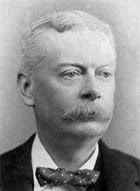
Philip Maitland Hubbard was an English writer. He was known principally for his crime and suspense stories although he wrote in other forms and genres as well, for example contributing short stories and poetry to The Magazine of Fantasy and Science Fiction and articles, verse and parliamentary reports for Punch. Hubbard was born in Reading in Berkshire, but was brought up in Guernsey in the Channel Islands. He was educated at Elizabeth College, Guernsey and at Jesus College, Oxford, where in 1933 he won the Newdigate Prize for poetry with "Ovid among the Goths". He served with the Indian Civil Service from 1934 until its disbandment in 1947 upon Indian independence, after which he worked for the British Council and as Deputy Director of the National Union of Manufacturers. From 1960 until shortly before his death he worked as a freelance writer. He lived in Dorset and in Scotland, and was married with three children, although separated at his death. P. M. Hubbard's main output was sixteen full-length novels for adults. These are typically suspense stories which have their settings in the countryside or coastline of England or Scotland (although one, The Custom of the Country, is set mainly in Pakistan). Most of the novels feature a male protagonist (although in some, such as Flush as May and The Quiet River, the protagonist is a woman) and characters who in general are middle-class, articulate and strong-willed. Most of the novels draw extensively on one or more of the author's interests and preoccupations including country pursuits, small-boat sailing, folk religion and the works of William Shakespeare. Hubbard's novel High Tide was adapted for television and broadcast in 1980 as part of the UK ITV network's Armchair Thriller series. He was described in his obituary in The Times as a "most imaginative and distinguished practitioner", writing with an "assurance and individuality of style and tone." He died on 17 March 1980.

Cyril Hare
Cyril Hare
Author · 14 books

Cyril Hare was the pseudonymn of Alfred Alexander Gordon Clark who was the third son of Henry Herbert Gordon Clark of Mickleham Hall, a merchant in the wine and spirit trade in the family firm of Matthew Clark & Sons. Having spent most of his formative years in the country where he learned to hunt, shoot and fish, he was educated at St Aubyn's, Rottingdean and Rugby, where he won a prize for writing English verse, before reading history at New College, Oxford, where he gained a first class degree. His family tradition indicated a legal career and he was duly called to the bar in 1924 and he joined the firm of famed lawyer Ronald Oliver and went on to practice in the civil and criminal courts in and around London. He was 36 when he began his writing career and he picked his pseudonymn from Hare Court, where he worked, and Cyril Mansions, Battersea, where he lived after he had married Mary Barbara Lawrence in 1933. The couple had one son and two daughters. His first literary endeavours were short, flippant sketches for Punch magazine and he had articles published in the Illustrated London News and The Law Journal. His first detective novel, 'Tenant for Death' was published in 1937 and it was called 'an engaging debut'. During the early years of World War II he toured as a judge's marshall and he used his experiences as the basis for his fourth novel 'Tragedy at Law', which was published in 1942. In that same year he became a civil servant with the Director of Public Prosecutions and in the latter stages of the war he worked in the Ministry of Economic Warfare, where his experiences proved invaluable when writing 'With a Bare Bodkin' in 1946. He was appointed county court judge for Surrey in 1950 and he spent his time between travelling the circuit trying civil cases and writing his detective fiction. In addition to these two strings to his bow, he was a noted public speaker and was often in demand by a wide variety of societies. But his workload did curtail his literary output, which was also hampered by the fact that he did not use a typewriter, and his reputation, very good as it is in the field of detective fiction, stands on nine novels and a host of short stories. He also wrote a children's book, 'The Magic Bottle' in 1946 and a play, 'The House of Warbeck' in 1955. He has left two enduting characters in Inspector Mallett of Scotland Yard, who featured in three novels, and Francis Pettigrew, an amateur sleuth, who also featured in three novels. In addition the two appeared together in two other novels, 'Tragedy at Law' (1942) and 'He Should Have Died Hereafter' (1958). Having suffered from tuberculosis for some time, he died at his home near Boxhill, Surrey on 25 August 1958, aged only 57. After his death Michael Gilbert introduced a fine collection of his short stories entitled 'The Best Detective Stories of Cyril Hare', in which he paid due tribute to a fellow lawyer and mystery writer. Gerry Wolstenholme June 2011

Margot Bennett
Author · 5 books
Scottish author Margot Bennett was born in 1912 and worked first first as a copywriter in the UK and Australia and then as a nurse during the Spanish Civil War before turning to writing. Her output in crime fiction was relatively small, yet successful: The Man Who Didn't Fly was shortlisted for the CWA Gold Dagger and was runner-up to Charlotte Armstrong's A Dram of Poison for Best Novel at the Edgars in 1956, and she won the Gold Dagger two years later in 1958 with Someone from the Past. She was also chosen to contribute a short story to the second CWA anthology, Choice Of Weapons, edited by Michael Gilbert.
Arthur Conan Doyle
Arthur Conan Doyle
Author · 850 books

Sir Arthur Ignatius Conan Doyle was born the third of ten siblings on 22 May 1859 in Edinburgh, Scotland. His father, Charles Altamont Doyle, a talented illustrator, was born in England of Irish descent, and his mother, born Mary Foley, was Irish. They were married in 1855. Although he is now referred to as "Conan Doyle", the origin of this compound surname (if that is how he meant it to be understood) is uncertain. His baptism record in the registry of St Mary's Cathedral in Edinburgh gives 'Arthur Ignatius Conan' as his Christian name, and simply 'Doyle' as his surname. It also names Michael Conan as his godfather. At the age of nine Conan Doyle was sent to the Roman Catholic Jesuit preparatory school, Hodder Place, Stonyhurst. He then went on to Stonyhurst College, leaving in 1875. From 1876 to 1881 he studied medicine at the University of Edinburgh. This required that he provide periodic medical assistance in the towns of Aston (now a district of Birmingham) and Sheffield. While studying, Conan Doyle began writing short stories. His first published story appeared in "Chambers' Edinburgh Journal" before he was 20. Following his graduation, he was employed as a ship's doctor on the SS Mayumba during a voyage to the West African coast. He completed his doctorate on the subject of tabes dorsalis in 1885. In 1885 Conan Doyle married Louisa (or Louise) Hawkins, known as "Touie". She suffered from tuberculosis and died on 4 July 1906. The following year he married Jean Elizabeth Leckie, whom he had first met and fallen in love with in 1897. Due to his sense of loyalty he had maintained a purely platonic relationship with Jean while his first wife was alive. Jean died in London on 27 June 1940. Conan Doyle fathered five children. Two with his first wife—Mary Louise (28 January 1889 – 12 June 1976), and Arthur Alleyne Kingsley, known as Kingsley (15 November 1892 – 28 October 1918). With his second wife he had three children—Denis Percy Stewart (17 March 1909 – 9 March 1955), second husband in 1936 of Georgian Princess Nina Mdivani (circa 1910 – 19 February 1987; former sister-in-law of Barbara Hutton); Adrian Malcolm (19 November 1910–3 June 1970) and Jean Lena Annette (21 December 1912–18 November 1997). Conan Doyle was found clutching his chest in the hall of Windlesham, his house in Crowborough, East Sussex, on 7 July 1930. He had died of a heart attack at age 71. His last words were directed toward his wife: "You are wonderful." The epitaph on his gravestone in the churchyard at Minstead in the New Forest, Hampshire, reads: STEEL TRUE BLADE STRAIGHT ARTHUR CONAN DOYLE KNIGHT PATRIOT, PHYSICIAN & MAN OF LETTERS Conan Doyle's house, Undershaw, located in Hindhead, south of London, where he had lived for a decade, had been a hotel and restaurant between 1924 and 2004. It now stands empty while conservationists and Conan Doyle fans fight to preserve it. A statue honours Conan Doyle at Crowborough Cross in Crowborough, where Conan Doyle lived for 23 years. There is also a statue of Sherlock Holmes in Picardy Place, Edinburgh, close to the house where Conan Doyle was born. Series: * Sherlock Holmes

Jennie Melville
Author · 19 books

Gwendoline Williams Butler (aka Gwendoline Butler) Gwendoline Williams was born on 19th August 1922 in South London, England, UK, daughter of Alice (Lee) and Alfred Edward Williams, her younger twin brothers are also authors. Educated at Lady Margaret Hall, Oxford, where she read History, and later lectured there. On 16th October 1949, she married Dr Lionel Harry Butler (1923-1981), a professor of medieval history at University of St. Andrews and historian, Fellow of All Souls and Principal of Royal Holloway College. The marriage had a daughter, Lucilla Butler. In 1956, she started to published John Coffin novels under her married name, Gwendoline Butler. In 1962, she decided used her grandmother's name, Jennie Melville as pseudonym to sing her Charmian Daniels novels. She was credited for inventing the "woman's police procedural". In addition to her mystery series, she also wrote romantic novels. In 1981, her novel The Red Staircase won the Romantic Novel of the Year Award by the Romantic Novelists' Association.

Michael Innes
Michael Innes
Author · 57 books

Michael Innes was the pseudonym of John Innes MacKintosh (J.I.M.) Stewart (J.I.M. Stewart). He was born in Edinburgh, and educated at Edinburgh Academy and Oriel College, Oxford. He was Lecturer in English at the University of Leeds from 1930 - 1935, and spent the succeeding ten years as Jury Professor of English at the University of Adelaide, South Australia. He returned to the United Kingdom in 1949, to become a Lecturer at the Queen's University of Belfast. In 1949 he became a Student (Fellow) of Christ Church, Oxford, becoming a Professor by the time of his retirement in 1973. As J.I.M. Stewart he published a number of works of non-fiction, mainly critical studies of authors, including Joseph Conrad and Rudyard Kipling, as well as about twenty works of fiction and a memoir, 'Myself and Michael Innes'. As Michael Innes, he published numerous mystery novels and short story collections, most featuring the Scotland Yard detective John Appleby.

548 Market St PMB 65688, San Francisco California 94104-5401 USA
© 2026 Paratext Inc. All rights reserved
Francis McNab