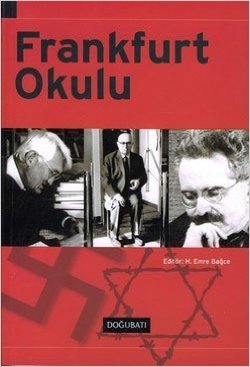



Frankfurt Okulu, Batı düşünce tarihinin en bunalımlı yıllarında bir kırılma anına rastlar. Bir grup entelektüel, kapitalizm ve faşizm için alternatif sayılabilecek dünya görüşlerini “Frankfurt Okulu” çatısı altında bir araya toplamışlardı. Adorno, Horkheimer, Benjamin, Marcuse, Fromm –müteakiben Habermas– ve bu çevrenin diğer mensupları, geçmişin katı ve geleceğin umutsuz göründüğü bir zaman dilimi arasında sıkışmışlardı. Ama yine de Batı düşüncesini yeniden yorumlayabilecek kayda değer yapıtları onlar ortaya koymuştu. Aydınlanmanın Diyalektiği, Negatif Diyalektik, Pasajlar, Tek Boyutlu İnsan, Us ve Devrim, Minima Moralia gibi yapıtlar Frankfurt Okulu’nun “opus magnum”larıdır. Frankfurt Okulu üyeleri bir yandan “Kapitalizmi konuşmuyorsanız faşizm konusunda da sessiz kalmalısınız” derken, diğer yandan dogmatik pozitivizme, bilimciliğe ve ortodoks Marksizme karşı çıkıyorlardı. Bu karşı çıkışın altında ise Batı düşünce geleneğince mütemadiyen tahrip edilmiş “özne”nin güçlü isyanı vardı. Frankfurt Okulu düşünürleri, Marx, Hegel ve Weber okumalarından estetik ve sanatsal görüşlere, ideoloji tariflerinden, popüler kültür ve medya eleştirilerine kadar birçok alanda etkili olabilmiş en verimli, en gözde ve aynı zamanda trajedi sesinin doruklara yükseldiği okullardan biridir. Alanının en seçkin isimleri tarafından oluşan bu kitap Frankfurt Okulu’na nüfuz eden en kapsamlı, derinlikli makaleleri bir araya getiriyor.
Authors


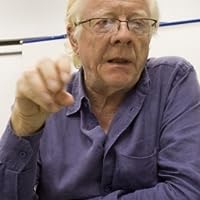
Douglas Kellner is a "third generation" critical theorist in the tradition of the Frankfurt Institute for Social Research, or Frankfurt School. Kellner was an early theorist of the field of critical media literacy and has been a leading theorist of media culture generally.[citation needed] In his recent work, he has increasingly argued that media culture has become dominated by the forms of spectacle and mega-spectacle. He also has contributed important studies of alter-globalization processes, and has always been concerned with counter-hegemonic movements and alternative cultural expressions in the name of a more radically democratic society. Kellner has written with a number of authors, including (with Steven Best) an award-winning trilogy of books on postmodern turns in philosophy, the arts, and in science and technology. More recently, he is known for his work exploring the politically oppositional potentials of new media and attempted to delineate what they term "multiple technoliteracies" as a movement away from the present attempt to standardize a corporatist form of computer literacy. Previously, Kellner served as the literary executor of the famed documentary film maker Emile de Antonio and is presently overseeing the publication of six volumes of the collected papers of the critical theorist Herbert Marcuse. At present, Kellner is the George Kneller Chair in the Philosophy of Education in the Graduate School of Education and Information Studies at the University of California, Los Angeles.


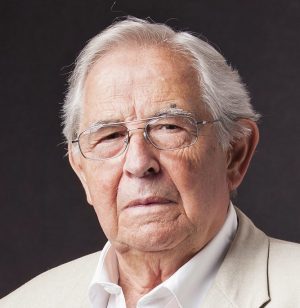
Seyla Benhabib is a Turkish Jewish professor of political science and philosophy at Yale, and director of the program in Ethics, Politics, and Economics, and a well-known contemporary philosopher. She previously taught in the departments of philosophy at Boston University, SUNY Stony Brook, the New School for Social Research, and the Department of Government at Harvard University. She is the author of several books, most notably about the philosophers Hannah Arendt and Jürgen Habermas. She has also worked with many important philosophers and scholars, including Herbert Marcuse. Benhabib is well known for combining critical theory with feminist theory.

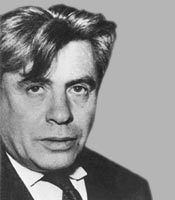
Lucien Goldmann was a French philosopher and sociologist of Jewish-Romanian origin. A professor at the EHESS in Paris, he was a Marxist theorist. Goldmann was born in Bucharest, Romania, but grew up in Botoşani. He studied law at the University of Bucharest and the University of Vienna under the Austromarxist jurist Max Adler.[1] In 1934, he went to the University of Paris to study political economy, literature, and philosophy.[1] He moved to Switzerland in November 1942, where he was placed in a refugee camp until 1943.[1] Through Jean Piaget's intervention, he was subsequently given a scholarship to the University of Zurich,[1] where he completed his PhD in philosophy in 1945 with a thesis entitled Mensch, Gemeinschaft und Welt in der Philosophie Immanuel Kants (Man, Community and world in the Philosophy of Immanuel Kant).