Margins
Fransız Üçlemesi book cover
Fransız Üçlemesi
2016
First Published
4.56
Average Rating
495
Number of Pages
Marx'in Fransa'daki sinif mucadelelerine iliskin uc kitabi, Fransiz Uclemesi basligiyla tek kitapta toplandi; ciltli-sert kapak olarak… Fransiz Uclemesi, Karl Marx'in Fransa'daki sinif mucadeleleriyle ilgili uc temel eserini bir araya Subat 1848 Devrimi sonrasinda yasanan gelismelerin cozumlendigi Fransa'da Sinif Mucadeleleri 1848-1850 ile Louis Bonaparte'in 18 Brumaire'i ve 1871 Paris Komunu deneyiminin cozumlendigi Fransa'da Ic Savas. Ayrica, Fransa'da Ic Savas'in birinci ve ikinci taslaklari da kitapta yer aliyor. Fransa'daki 1848 Subat Devriminde, isci sinifi, siyaset sahnesine ilk kez ayri bir sinif olarak cikmis, cumhuriyetin ilan edilmesini saglamis ve bu cumhuriyetin "sosyal" bir cumhuriyet olmasi icin mucadele etmisti. Egemen siniflarin karsiligi, isci sinifini erken bir ayaklanmaya zorlayarak, ayni yilin Haziran ayinda bir katliam gerceklestirmek oldu. "Burjuva cumhuriyeti"nin gercekte "burjuva diktatorlugu"nden baska bir sey olamayacagi goruldu. Fransa'da Sinif Mucadeleleri'nde, isci sinifinin kapitalist duzen ve onun siyasal kurumlari hakkindaki yanilsamalarini cozumlenirken, yenilgilerden cikarilmasi gereken dersler tarif ediliyor. Engels'in 1895 tarihli kapsamli Giris yazisina ise, Almanya'daki sosyal demokrat parti yoneticilerinin o donemdeki dayatmalari nedeniyle istemeden cikardigi pasajlari da iceren eksiksiz hâliyle yer veriliyor. 1848 yilinin Aralik ayinda halkin buyuk cogunlugunun oylariyla cumhurbaskanligina secilen Louis Bonaparte, Aralik 1851'de bir hukumet darbesi gerceklestirerek Fransa'daki Ikinci Cumhuriyet donemine son verdi. 18 Brumaire'de, siradan ve gulunc bir maceracinin kahraman rolunu oynamasini mumkun kilan kosullar cozumlenirken, burjuva cumhuriyetcilerinin ve kucuk burjuva cumhuriyetcilerinin politikalarinin, Louis Bonaparte'in Aralik 1852'de kendisini imparator ilan edebilmesine nasil yol actigi da ortaya koyuluyor. Louis Bonaparte 1870 yilinda Prusya'ya actigi savasta esir dusmus, ulkede cumhuriyet ilan edilmis, bur

Avg Rating
4.56
Number of Ratings
18
5 STARS
72%
4 STARS
11%
3 STARS
17%
2 STARS
0%
1 STARS
0%
goodreads

Author

Karl Marx
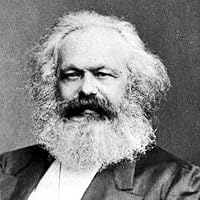
Karl Marx
Author · 134 books

Karl Marx, Ph.D. (University of Jena, 1841) was a social scientist who was a key contributor to the development of Communist theory. Marx was born in Trier, a city then in the Kingdom of Prussia's Province of the Lower Rhine. His father, born Jewish, converted to Protestantism shortly before Karl's birth in response to a prohibition newly introduced into the Rhineland by the Prussian Kingdom on Jews practicing law. Educated at the Universities of Bonn, Jena, and Berlin, Marx founded the Socialist newspaper Vorwärts! in 1844 in Paris. After being expelled from France at the urging of the Prussian government, which "banished" Marx in absentia, Marx studied economics in Brussels. He and Engels founded the Communist League in 1847 and published the Communist Manifesto. After the failed revolution of 1848 in Germany, in which Marx participated, he eventually wound up in London. Marx worked as foreign correspondent for several U.S. publications. His Das Kapital came out in three volumes (1867, 1885 and 1894). Marx organized the International and helped found the Social Democratic Party of Germany. Although Marx was not religious, Bertrand Russell later remarked, "His belief that there is a cosmic force called Dialectical Materialism which governs human history independently of human volitions, is mere mythology" (Portraits from Memory, 1956). Marx once quipped, "All I know is that I am not a Marxist" (according to Engels in a letter to C. Schmidt; see Who's Who in Hell by Warren Allen Smith). D. 1883. Marx began co-operating with Bruno Bauer on editing Hegel's Philosophy of Religion in 1840. Marx was also engaged in writing his doctoral thesis, The Difference Between the Democritean and Epicurean Philosophy of Nature, which he completed in 1841. It was described as "a daring and original piece of work in which Marx set out to show that theology must yield to the superior wisdom of philosophy": the essay was controversial, particularly among the conservative professors at the University of Berlin. Marx decided, instead, to submit his thesis to the more liberal University of Jena, whose faculty awarded him his PhD in April 1841. As Marx and Bauer were both atheists, in March 1841 they began plans for a journal entitled Archiv des Atheismus (Atheistic Archives), but it never came to fruition. Marx has been described as one of the most influential figures in human history. Marx is typically cited, with Émile Durkheim and Max Weber, as one of the three principal architects of modern social science. More: http://en.wikipedia.org/wiki/Karl\_Marx http://plato.stanford.edu/entries/marx/ http://www.econlib.org/library/Enc/bi... http://www.marxists.org/archive/marx/... http://www.historyguide.org/intellect... http://www.bbc.co.uk/history/historic... http://www.spartacus.schoolnet.co.uk/... http://www.britannica.com/EBchecked/t...

548 Market St PMB 65688, San Francisco California 94104-5401 USA
© 2026 Paratext Inc. All rights reserved