Margins




548 Market St PMB 65688, San Francisco California 94104-5401 USA
© 2026 Paratext Inc. All rights reserved
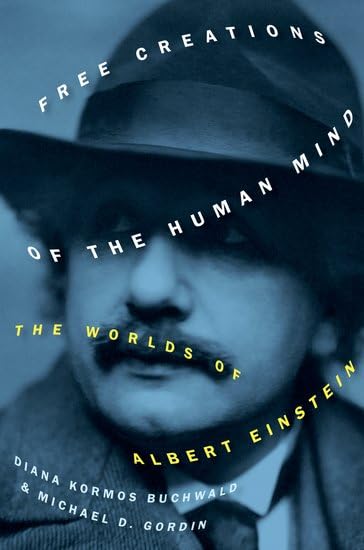
A nuanced portrait of Albert Einstein, a world citizen pivotally engaged in politics, humanitarianism, and science. Albert Einstein (1879-1955) was the most influential scientist of the twentieth century, and his influence shows little sign of abating. His work comprises of much of today's understanding of the structure of the microphysical and cosmic universes. Einstein was a man of the modern world, faced with intellectual and existential challenges of extraordinary magnitude, a working scientist immersed in epochal theories of special relativity, the quantum theory, but also in organizational activities and teaching at Princeton's Institute for Advanced Study. More than any other past scientist, Einstein still pervades popular iconography and has come to symbolize genius, creativity, and innovation infused with humanism, wisdom, and humor. His life is interconnected with so many of the important political and intellectual movements of his era - Zionism, pacifism, Nazism, nuclear weapons, philosophy, civil rights, McCarthyism, the League of Nations, and more- that his views shaped the world he lived in while his persona acquired a formidable patina deposited by generations of apocryphal mythmaking, both during and after his lifetime. Free Creations of the Human The Worlds of Albert Einstein presents a concise and nuanced account of Einstein's life and work embedded in his intellectual and social contexts, based on the substantial discoveries made through the study of his tremendous personal archive and several generations of assiduous scholarship. By disentangling the public persona from the private man, the rhetorical statement from the heartfelt conviction, this book shows Einstein as a man of the modern world, faced with intellectual and existential challenges of extraordinary magnitude, whose life was framed by turbulent, violent historical events.