Margins
Margins
Sign in
Margins
Subscribe to our newsletter
548 Market St PMB 65688, San Francisco California 94104-5401 USA
hello@margins.app
·
+1 (650) 223-5283
Privacy Policy
·
Terms of Use
© 2026 Paratext Inc. All rights reserved
📚 French Classics
📚
French Classics
Thérèse Desqueyroux
1927
Francois Mauriac
Thérèse Desqueyroux walks free from court, acquitted of trying to poison her husband. Everyone knew she'd tried to do it, but family honour was more important than the truth. As she travels home to the gloomy forests of Argelouse, Thérèse looks back over the marriage that brought her nothing but stifling darkness, and wonders, has she really escaped punishment or is it only just about to begin? Nobel-prize winner François Mauriac's masterpiece is Thérèse Desqueyroux, the story of a complex woman trapped by provincial life. First published in 1927, this astonishing and daring novel has echoes of Madame Bovary and has recently been made into a ravishing film starring Amélie actress Audrey Tautou.
The Princesse de Clèves
1678
Madame de La Fayette
This new translation of The Princesse de Clèves also includes two shorter works also attributed to Mme de Lafayette, The Princesse de Montpensier and The Comtesse de Tende.
Bel-Ami
1885
Guy de Maupassant
Guy de Maupassant's scandalous tale of an opportunistic young man corrupted by the allure of power, "Bel-Ami" is translated with an introduction by Douglas Parmee in "Penguin Classics". Young, attractive and very ambitious, George Duroy, known to his admirers as Bel-Ami, is offered a job as a journalist on La Vie francaise and soon makes a great success of his new career. But he also comes face to face with the realities of the corrupt society in which he lives - the sleazy colleagues, the manipulative mistresses, and wily financiers - and swiftly learns to become an arch-seducer, blackmailer and social climber in a world where love is only a means to an end. Written when Maupassant was at the height of his powers, "Bel-Ami" is a novel of great frankness and cynicism, but it is also infused with the sheer joy of life - depicting the scenes and characters of Paris in the belle epoque with wit, sensitivity, and humanity. Douglas Parmee's translation captures all the vigour and vitality of Maupassant's novel. His introduction explores the similarities between Bel-Ami and Maupassant himself and demonstrates the skill with which the author depicts his large cast of characters and the French society of the Third Republic.
Alcools
1913
Guillaume Apollinaire
Alcools, first published in 1913 and one of the few indispensable books of twentieth- century poetry, provides a key to the century's history and consciousness. Champion of "cubism," Guillaume Apollinaire (1880-1918) fashions in verse the sonic equivalent of what Picasso accomplishes in his cubist works: simultaneity. Apollinaire has been so influential that without him there would have been no New York School of poetry and no Beat Movement. This new translation reveals his complex, beautiful, and wholly contemporary poetry. Printed with the original French on facing pages.
Gargantua
1534
Francois Rabelais
As a companion volume to Pantagruel, this new edition of Gargantua continues Rabelais’ acclaimed fantasy of a mythical family of giants. Gargantua introduces Pantagruel’s father—another wondrous giant. As he tells Gargantua’s life story from his birth and education to his later life, Rabelais uses the events of the giant’s life to parody medieval and classical learning, mock traditional ecclesiastical authority, and proffer his own thoughts on humanism and society. Marked with the same warm humor, obsession with food, and scatological wit of Pantagruel, Gargantua is a further striking burlesque on Rabelais’ contemporaries and a glorious outpouring of Renaissance plenitude.
The Hypochondriac
1673
Molière
To reduce his medical fees, hypochondriac M. Argan decides to marry off his daughter Angelica to a physician's son. Unfortunately, Angelica loves Clíante. Argan's brother Bíralde and Toinette, an inventive maid, save the situation for the lovers and expose Mme Argan's schemes to bleed her husband of his fortune. Then they persuade the hypochondriac to turn physician so that he can quack himself free of charge.
Juste la fin du monde
1990
Jean-Luc Lagarce
Le fils retourne dans sa famille pour l'informer de sa mort prochaine. Ce sont les retrouvailles avec le cercle familial où l'on se dit l'amour que l'on se porte à travers les éternelles querelles. De cette visite qu'il voulait définitive, le fils repartira sans avoir rien dit.
Antigone
1944
Jean Anouilh
Antigone was originally produced in Paris in 1942, when France was occupied and part of Hitler's Europe. The play depicts an authoritarian regime which mirrors the predicament of the French people of the time. Based on Sophocles' ancient Greek tragedy, Antigone which was first performed in Athens in the 5th century BC, its theme was nevertheless topical. For in Antigone's faithfulness to her dead brother and his proper burial and her reiterated "No!" to the dictator Creon, the French audience saw its own resistance to the German occupation. The Germans allowed the play to be performed presumably because they found Creon's arguments for dictatorship so convincing. The play is regularly performed and studied around the world. "Anouilh is a poet, but not a poet of he is a poet of words-acted, of scenes-set, of players-performing" Peter Brook
Tartuffe
1664
Molière
Condemned and banned for five years in Molière’s day, Tartuffe is a satire on religious hypocrisy. Tartuffe worms his way into Orgon’s household, blinding the master of the house with his religious "devotion," and almost succeeds in his attempts to seduce his wife and disinherit his children before the final unmasking.
Le Mariage de Figaro
1778
Ludwig Ferdinand Huber
Sensual gaiety is at the heart of this comic masterpiece which continues the merry tale of the little barber of Seville, a clever common man whose wits overcome his superiors who would suppress him. In paring down the number of players, presenting the scenes more economically, and offering a translation that removes archaic phrasing, Mr. Sahlins delivers a script that can be comfortably staged by present-day theatres.
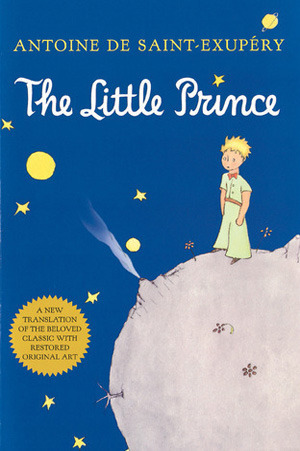
The Little Prince
1943
Antoine de Saint-Exupéry
A pilot stranded in the desert awakes one morning to see, standing before him, the most extraordinary little fellow. "Please," asks the stranger, "draw me a sheep." And the pilot realizes that when life's events are too difficult to understand, there is no choice but to succumb to their mysteries. He pulls out pencil and paper... And thus begins this wise and enchanting fable that, in teaching the secret of what is really important in life, has changed forever the world for its readers. Few stories are as widely read and as universally cherished by children and adults alike as The Little Prince, presented here in a stunning new translation with carefully restored artwork. The definitive edition of a worldwide classic, it will capture the hearts of readers of all ages.
The Stranger
1942
Albert Camus
Published in 1942 by French author Albert Camus, The Stranger has long been considered a classic of twentieth-century literature. Le Monde ranks it as number one on its "100 Books of the Century" list. Through this story of an ordinary man unwittingly drawn into a senseless murder on a sundrenched Algerian beach, Camus explores what he termed "the nakedness of man faced with the absurd."