Margins
Margins
Sign in
Margins
Subscribe to our newsletter
548 Market St PMB 65688, San Francisco California 94104-5401 USA
hello@margins.app
·
+1 (650) 223-5283
Privacy Policy
·
Terms of Use
© 2026 Paratext Inc. All rights reserved
📚
French Lit
The Lost Estate
1913
Alain-Fournier
In a small village in the Sologne, Fifteen-year-old François Seurel narrates the story of his relationship with seventeen-year-old Augustin Meaulnes. Impulsive, reckless and heroic, Meaulnes embodies the romantic ideal, the search for the unobtainable, and the mysterious world between childhood and adulthood.
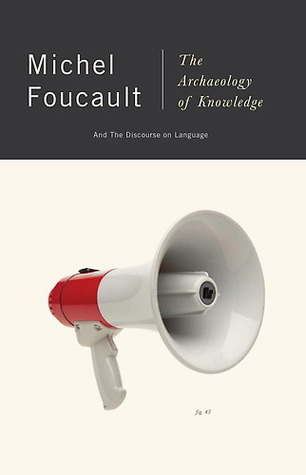
The Archaeology of Knowledge and The Discourse on Language
1969
Michel Foucault
Librarian note: an alternate cover for this edition can be found here. Madness, sexuality, power, knowledge—are these facts of life or simply parts of speech? In a series of works of astonishing brilliance, historian Michel Foucault excavated the hidden assumptions that govern the way we live and the way we think. The Archaeology of Knowledge begins at the level of “things aid” and moves quickly to illuminate the connections between knowledge, language, and action in a style at once profound and personal. A summing up of Foucault’s own methodological assumptions, this book is also a first step toward a genealogy of the way we live now. Challenging, at times infuriating, it is an absolutely indispensable guide to one of the most innovative thinkers of our time.
Around the World in Eighty Days
1872
Jules Verne
One night in the reform club, Phileas Fogg bets his companions that he can travel across the globe in just eighty days. Breaking the well-established routine of his daily life, he immediately sets off for Dover with his astonished valet Passepartout. Passing through exotic lands and dangerous locations, they seize whatever transportation is at hand—whether train or elephant—overcoming set-backs and always racing against the clock.
The Myth of Sisyphus
1942
Albert Camus
Throughout history, some books have changed the world. They have transformed the way we see ourselves—and each other. They have inspired debate, dissent, war and revolution. They have enlightened, outraged, provoked and comforted. They have enriched lives—and destroyed them. Now Penguin brings you the works of the great thinkers, pioneers, radicals and visionaries whose ideas shook civilization and helped make us who we are. Inspired by the myth of a man condemned to ceaselessly push a rock up a mountain and watch it roll back to the valley below, The Myth of Sisyphus transformed twentieth-century philosophy with its impassioned argument for the value of life in a world without religious meaning.
The Lover
1984
Marguerite Duras
Set against the backdrop of French colonial Vietnam, The Lover reveals the intimacies and intricacies of a clandestine romance between a pubescent girl from a financially strapped French family and an older, wealthy Chinese-Vietnamese man.
Power
2000
Michel Foucault
The final volume in the definitive collection of Foucault’s articles, interviews, and seminars. Power, the third and final volume of The New Press' Essential Works of Foucault series, draws together Foucault s contributions to what he saw as the still-underdeveloped practice of political analysis. It covers the domains Foucault helped to make part of the core agenda of Western political culture medicine, psychiatry, the penal system, sexuality illuminating and expanding on the themes of The Birth of the Clinic, Discipline and Punish, and the first volume of The History of Sexuality. Power includes previously unpublished lectures, later writings highlighting Foucault s revolutionary analysis of the politics of personal conduct and freedom, interviews, and letters that illuminate Foucault's own political activism.
Bel-Ami
1885
Guy de Maupassant
Guy de Maupassant's scandalous tale of an opportunistic young man corrupted by the allure of power, "Bel-Ami" is translated with an introduction by Douglas Parmee in "Penguin Classics". Young, attractive and very ambitious, George Duroy, known to his admirers as Bel-Ami, is offered a job as a journalist on La Vie francaise and soon makes a great success of his new career. But he also comes face to face with the realities of the corrupt society in which he lives - the sleazy colleagues, the manipulative mistresses, and wily financiers - and swiftly learns to become an arch-seducer, blackmailer and social climber in a world where love is only a means to an end. Written when Maupassant was at the height of his powers, "Bel-Ami" is a novel of great frankness and cynicism, but it is also infused with the sheer joy of life - depicting the scenes and characters of Paris in the belle epoque with wit, sensitivity, and humanity. Douglas Parmee's translation captures all the vigour and vitality of Maupassant's novel. His introduction explores the similarities between Bel-Ami and Maupassant himself and demonstrates the skill with which the author depicts his large cast of characters and the French society of the Third Republic.
What Is Existentialism?
1944
Simone de Beauvoir
'It is possible for man to snatch the world from the darkness of absurdity' How should we think and act in the world? These writings on the human condition by one of the twentieth century's great philosophers explore the absurdity of our notions of good and evil, and show instead how we make our own destiny simply by being. One of twenty new books in the bestselling Penguin Great Ideas series. This new selection showcases a diverse list of thinkers who have helped shape our world today, from anarchists to stoics, feminists to prophets, satirists to Zen Buddhists.
Discipline and Punish
The Birth of the Prison
Michel Foucault
Librarian note: an alternate cover for this edition can be found here. Barely two hundred and fifty years ago a man condemned of attempting to assassinate the King of France was drawn and quartered in a grisly spectacle that suggested an unmediated duel between the violence of the criminal and the violence of the state. This groundbreaking book by the most influential philosopher since Sartre compels us to reevaluate our assumptions about all the ensuing reforms in the penal institutions of the West. For as he examines innovations that range from the abolition of torture to the institution of forced labor and the appearance of the modern penitentiary, Michel Foucault suggests that punishment has shifted its focus from the prisoner's body to the soul—and that our very concern with rehabilitation encourages and refines criminal activity. Lucidly reasoned and deftly marshaling a vast body of research, Discipline and Punish is a genuinely revolutionary book, whose implications extend beyond the prison to the minute power relations of our society.
📚 French Lit