


Margins
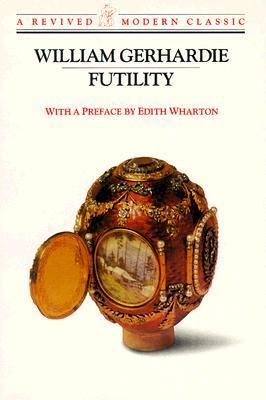
Futility book cover
Futility
A Novel On Russian Themes
1922
First Published
3.56
Average Rating
261
Number of Pages

Hailed by his famous contemporaries including Edith Wharton, H.G. Wells, Katherine Mansfield, Graham Greene, and Evelyn Waugh, who called him a "genius," William Gerhardie is one of the twentieth century's forgotten masters, and his lovely comedy Futility one of the century's neglected masterpieces. It tells the story of someone very similar to Gerhardie himself: a young Englishman raised in Russia who returns to St. Petersburg and falls in love with the daughter of a hilariously dysfunctional family—all played out with the armies of the Russian Revolution marching back and forth outside the parlor window. Part British romantic comedy, part Russian social realism, and with a large cast of memorable characters, this astoundingly funny and poignant novel is the tale of people persisting in love and hope despite the odds.

Avg Rating
3.56
Number of Ratings
243
5 STARS
19%
4 STARS
38%
3 STARS
28%
2 STARS
10%
1 STARS
5%
goodreads

Author

William Gerhardie
William Gerhardie
Author · 6 books

William Alexander Gerhardie (21 November 1895 – 15 July 1977)[1] was a British (Anglo-Russian) novelist and playwright. William Gerhardie by Norman Ivor Lancashire (1927-2004). Photograph by Stella Harpley Gerhardie (or Gerhardi: he added the 'e' in later years as an affectation) was one of the most critically acclaimed English novelists of the 1920s (Evelyn Waugh told him 'I have talent, but you have genius'). H.G. Wells also championed his work. His first novel, Futility, was written while he was at Worcester College, Oxford and drew on his experiences in Russia fighting (or attempting to fight) the Bolsheviks, along with his childhood experiences visiting pre-revolutionary Russia. Some say that it was the first work in English to fully explore the theme of 'waiting' later made famous by Samuel Beckett in Waiting for Godot, but it is probably more apt to recognize a common comic nihilism between those two figures. His next novel, The Polyglots, is probably his masterpiece (although some argue for Doom). Again it deals with Russia (Gerhardie was strongly influenced by the tragi-comic style of Russian writers such as Chekhov about whom he wrote a study while in College). He collaborated with Hugh Kingsmill on the biography The Casanova Fable, his friendship with Kingsmill being both a source of conflict over women and a great intellectual stimulus. After World War II Gerhardie's star waned, and he became unfashionable. Although he continued to write, he published no new work after 1939. After a period of poverty-stricken oblivion, he lived to see two 'definitive collected works' published by Macdonald (in 1947-49 and then revised again in 1970-74). An idiosyncratic study of world history between 1890 and 1940 ("God's Fifth Column") was discovered among his papers and published posthumously. More recently, both Prion and New Directions Press have been reissuing his works.

548 Market St PMB 65688, San Francisco California 94104-5401 USA
© 2026 Paratext Inc. All rights reserved