


Margins
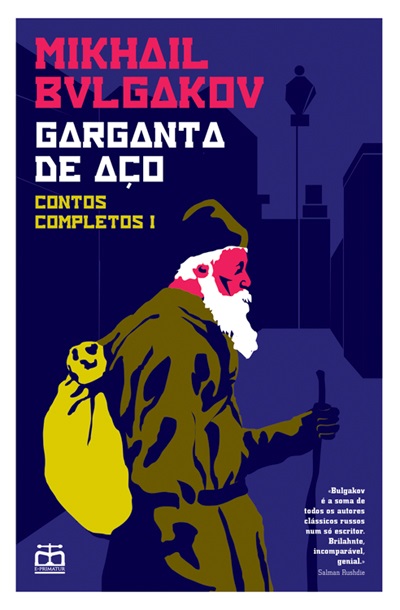
Garganta de Aço - Contos Completos I book cover
Garganta de Aço - Contos Completos I
2020
First Published
3.94
Average Rating
464
Number of Pages

Part of Series

A faceta mal conhecida do grande clássico moderno russo. Entre nós Bulgakov é sobretudo conhecido pelo romance Margarida e o Mestre, uma vez que ao público português chegou apenas uma pequena parte de uma obra tão vasta quanto notável. A ficção curta de Bulgakov reflecte o espírito do seu tempo, bem como o país natal do escritor. No entanto, o registo destes contos, em grande parte inéditos em língua portuguesa, oscila entre as correntes de tradição clássica e as grandes vanguardas literárias internacionais. Nos dois volumes que irão reunir a ficção curta completa de Bulgakov, os contos serão apresentados por ordem cronológica de publicação, revelando assim ao leitor o próprio percurso literário que o autor trilhou. Estas breves narrativas são o retrato de uma Rússia envolta num turbilhão político e social, mas também numa febre de novas ideias e de escolas literárias ou artísticas. Os contos que aqui se compilam cruzam temáticas modernistas e vanguardistas com o registo quase bucólico inspirado na experiência de Bulgakov enquanto médico de província. O rústico e o urbano misturam-se assim com sageza para revelar as várias faces de um país multifacetado em tempos de mudança. «Bulgakov conseguiu a proeza política de sobreviver artisticamente num tempo em que isso era quase impossível e sem nunca fazer concessões. A todas as limitações que o seu tempo e o seu meio o sujeitavam sobrepunha-se o génio.» Joseph Brodsky (Prémio Nobel da Literatura) «Admire-se Bulgakov, que conseguiu trazer uma tradição de escrita russa e fazê-la sobreviver no meio da tempestade.» Milan Kundera «Quem nunca leu Bulgakov não pode perceber a literatura russa moderna.» Susan Sontag «A corrupção do humano pelo humano é um dos temas que prevalecem nos textos de Bulgakov. O bem e o mal têm raízes muito semelhantes que se entrecruzam e lançam o leitor no enigma de existir.» Edyth C. Haber «Na literatura ocidental dificilmente existe um escritor tão surpreendente e versátil como Bulgakov.» Tzvetan Todorov «Bulgakov é o meu autor russo de eleição.» Michel Tournier Inclui: Apontamentos de um Jovem Médico Morfina entre outros
Avg Rating
3.94
Number of Ratings
17
5 STARS
18%
4 STARS
65%
3 STARS
12%
2 STARS
6%
1 STARS
0%
goodreads

Author

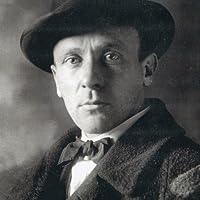
Mikhail Bulgakov
Mikhail Bulgakov
Author · 89 books

Mikhail Bulgakov was born in Kyiv, Russian Empire (today part of modern Ukraine) on 3/15 May 1891. He studied and briefly practised medicine and, after indigent wanderings through revolutionary Russia and the Caucasus, he settled in Moscow in 1921. His sympathetic portrayal of White characters in his stories, in the plays The Days of the Turbins (The White Guard), which enjoyed great success at the Moscow Art Theatre in 1926, and Flight (1927), and his satirical treatment of the officials of the New Economic Plan, led to growing criticism, which became violent after the play, The Purple Island. His later works treat the subject of the artist and the tyrant under the guise of historical characters, with plays such as Molière, staged in 1936, Don Quixote, staged in 1940, and Pushkin, staged in 1943. He also wrote a brilliant biography, highly original in form, of his literary hero, Molière, but The Master and Margarita, a fantasy novel about the devil and his henchmen set in modern Moscow, is generally considered his masterpiece. Fame, at home and abroad, was not to come until a quarter of a century after his death in Moscow in 1940. Detailed Version Mikhaíl Afanasyevich Bulgakov (Russian: Михаил Афанасьевич Булгаков) was the first of six children in the family of a theology professor. His family belonged to the intellectual elite of Kyiv. Bulgakov and his brothers took part in the demonstration commemorating the death of Leo Tolstoy. Bulgakov later graduated with honors from the Medical School of Kyiv University in 1915. He married his classmate Tatiana Lappa, who became his assistant at surgeries and in his doctor's office. He practiced medicine, specializing in venereal and other infectious diseases, from 1915 to 1919 (he later wrote about the experience in "Notes of a Young Doctor.") He joined the anti-communist White Army during the Russian Civil War. After the Civil War, he tried (unsuccesfully) to emigrate from Russia to reunite with his brother in Paris. Several times he was almost killed by opposing forces on both sides of the Russian Civil War, but soldiers needed doctors, so Bulgakov was left alive. He provided medical help to the Chehchens, Caucasians, Cossacs, Russians, the Whites, and the Reds. In 1921, Bulgakov moved to Moscow. There he became a writer and became friends with Valentin Katayev, Yuri Olesha, Ilya Ilf, Yevgeni Petrov, and Konstantin Paustovsky. Later, he met Mikhail Zoschenko, Anna Akhmatova, Viktor Ardov, Sergei Mikhalkov, and Kornei Chukovsky. Bulgakov's plays at the Moscow Art Theatre were directed by Stanislavsky and Vladimir Nemirovich-Danchenko. Bugakov's own way of life and his witty criticism of the ugly realities of life in the Soviet Union caused him much trouble. His story "Heart of a Dog" (1925) is a bitter satire about the loss of civilized values in Russia under the Soviet system. Soon after, Bulgakov was interrogated by the Soviet secret service, OGPU. After interrogations, his personal diary and several unfinished works were confiscated by the secret service. His plays were banned in all theaters, which terminated his income. Destitute, he wrote to his brother in Paris about his terrible life and poverty in Moscow. Bulgakov distanced himself from the Proletariat Writer's Union because he refused to write about the peasants and proletariat. He adapted "Dead Souls" by Nikolai Gogol for the stage; it became a success but was soon banned. He took a risk and wrote a letter to Joseph Stalin with an ultimatum: "Let me out of the Soviet Union, or restore my work at the theaters." On the 18th of April of 1930, Bulgakov received a telephone call from Joseph Stalin. The dictator told the writer to fill an employment application at the Moscow Art Theater. Gradually, Bulgakov's plays were back in the repertoire of the Moscow Art Theatre. But most other theatres were in fear and did not stage any of th

548 Market St PMB 65688, San Francisco California 94104-5401 USA
© 2026 Paratext Inc. All rights reserved