Margins
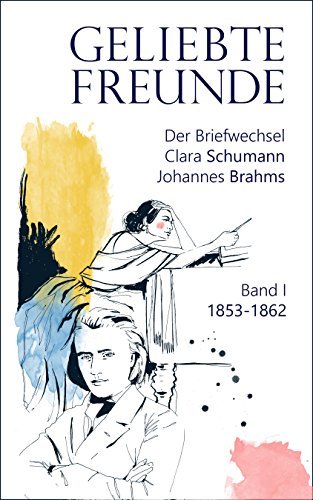
Geliebte Freunde book cover
Geliebte Freunde
1853 - 1862 (Der Briefwechsel Clara Schumann - Johannes Brahms 1)
2017
First Published
566
Number of Pages
Zum ersten Mal seit fast hundert Jahren in moderner Dokumente der großen Freundschaft zweier großer Künstler. Die nahezu vollständige Sammlung aller erhaltenen Briefe zwischen Clara Schumann und Johannes Brahms führt uns auf eine Reise durch fünf Jahrzehnte deutscher Hochkultur. In Triumph und Tragödie begleiten wir, ganz nah, zwei empfindsame Seelen, die schon für ihre Zeitgenossen den Glanz der Unerreichbaren trugen. Der erste Band der Sammlung ist überwiegend von Brahms geprägt, da Clara ihre Briefe aus dieser Zeit fast vollständig vernichtet hat. Wir erleben einen von Verliebtheit überwältigten Brahms, der den schwerkranken Ehemann Robert Schumann verehrt und Clara durch die sich entfaltende Tragödie beisteht. Diese Zeit bildet das Fundament einer lebenslangen Freundschaft.


Authors

Johannes Brahms
Johannes Brahms
Author · 5 books

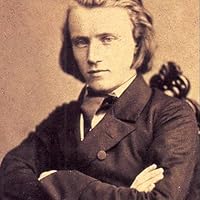
In 1833, Johannes Brahms was born in Germany. As a teenager playing for drunken sailors in a Hamburg bar, Brahms would prop up books of poetry to read as a diversion. His favorite poet was the anticlerical G.F. Daumer, described by the Catholic Encyclopedia as "an enemy of Christianity". Brahms' works were influenced by such writers as Hoffman, Friedrich Schiller and Robert Burns. He was well-read in philosophy and science, and was an avid hiker who took inspiration from nature. When asked by a conductor to add additional sectarian text to his German Requiem, Brahms responded, "As far as the text is concerned, I confess that I would gladly omit even the word German and instead use Human; also with my best knowledge and will I would dispense with passages like John 3:16." (Jan Swafford, Johannes Brahms: A Biography). A liberal, Brahms ardently opposed anti-Semitism, was approachable even at the height of his fame, and was always generous with his time and charity. Biographer Swafford writes of the young composer: "Though he was to be a freethinker in religion, Johannes pored over the Bible beyond the requirements for his Protestant confirmation." From then on, "Music was Brahms' religion." According to Swafford, Brahms was "a humanist and an agnostic." After nearly 64 years of near perfect health, never even enduring a headache, Brahms succumbed quickly to liver cancer. There was no deathbed conversion. D. 1897. In his lifetime, Brahms' popularity and influence were considerable; following a comment by the nineteenth-century conductor Hans von Bülow, he is sometimes grouped with Johann Sebastian Bach and Ludwig van Beethoven as one of the "Three Bs". The diligent, highly constructed nature of Brahms' works was a starting point and an inspiration for a generation of composers. More: http://en.wikipedia.org/wiki/Johannes... http://www.johannesbrahms.org/ http://www.biography.com/people/johan... http://www.bach-cantatas.com/Lib/Brah... http://www.ipl.org/div/mushist/rom/br... http://www.naxos.com/person/Johannes\_... http://www.last.fm/music/Johannes+Brahms http://www.classicalarchives.com/brah... http://www.allmusic.com/artist/johann... http://www.pbs.org/wnet/gperf/educati...

Clara Schumann
Clara Schumann
Author · 2 books
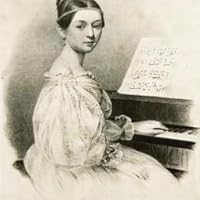
Clara Schumann (née Clara Josephine Wieck) was a German musician and composer, considered one of the most distinguished pianists of the Romantic era. She exerted her influence over a 61-year concert career, changing the format and repertoire of the piano recital and the tastes of the listening public. Her husband was the composer Robert Schumann. She and her husband encouraged Johannes Brahms, and she was the first pianist to give public performances of some of Brahms' works, notably the Variations and Fugue on a Theme by Handel.
548 Market St PMB 65688, San Francisco California 94104-5401 USA
© 2025 Paratext Inc. All rights reserved