Margins
Margins
Sign in
Margins
Subscribe to our newsletter
548 Market St PMB 65688, San Francisco California 94104-5401 USA
hello@margins.app
·
+1 (650) 223-5283
Privacy Policy
·
Terms of Use
© 2026 Paratext Inc. All rights reserved
📚
George Eliot
Middlemarch
1872
George Eliot
Taking place in the years leading up to the First Reform Bill of 1832, Middlemarch explores nearly every subject of concern to modern life: art, religion, science, politics, self, society, human relationships. Among her characters are some of the most remarkable portraits in English literature: Dorothea Brooke, the heroine, idealistic but naive; Rosamond Vincy, beautiful and egoistic: Edward Casaubon, the dry-as-dust scholar: Tertius Lydgate, the brilliant but morally-flawed physician: the passionate artist Will Ladislaw: and Fred Vincey and Mary Garth, childhood sweethearts whose charming courtship is one of the many humorous elements in the novel's rich comic vein.
Silas Marner
1861
George Eliot
Silas Marner: The Weaver of Raveloe is the third novel by George Eliot, published in 1861. An outwardly simple tale of a linen weaver, it is notable for its strong realism and its sophisticated treatment of a variety of issues ranging from religion to industrialisation to community.
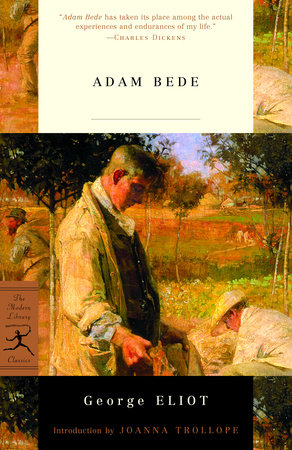
Adam Bede
1859
George Eliot
The story of a beautiful country girl's seduction by the local squire and its bitter, tragic sequel is an old and familiar one which George Eliot invests with peculiar and haunting power. A bestseller from the moment of publication, Adam Bede, although on one level a rich and loving re-creation of a small community shaken to its core, is more than a charming, faultlessly evoked pastoral. However much the reader may sympathize with Hetty Sorrel and identify with Arthur Donnithorne, her seducer, and with Adam Bede, the man Hetty betrays,it is George Eliots' creation of the distant aesthetic whole - the complex, multifarious life of Hayslope - which so grips the reader's imagination. As Stephen Gill comments: 'Reading the novel is a process of learning simultaneously about the world of Adam Bede and the world of Adam Bede.'
📚 George Eliot