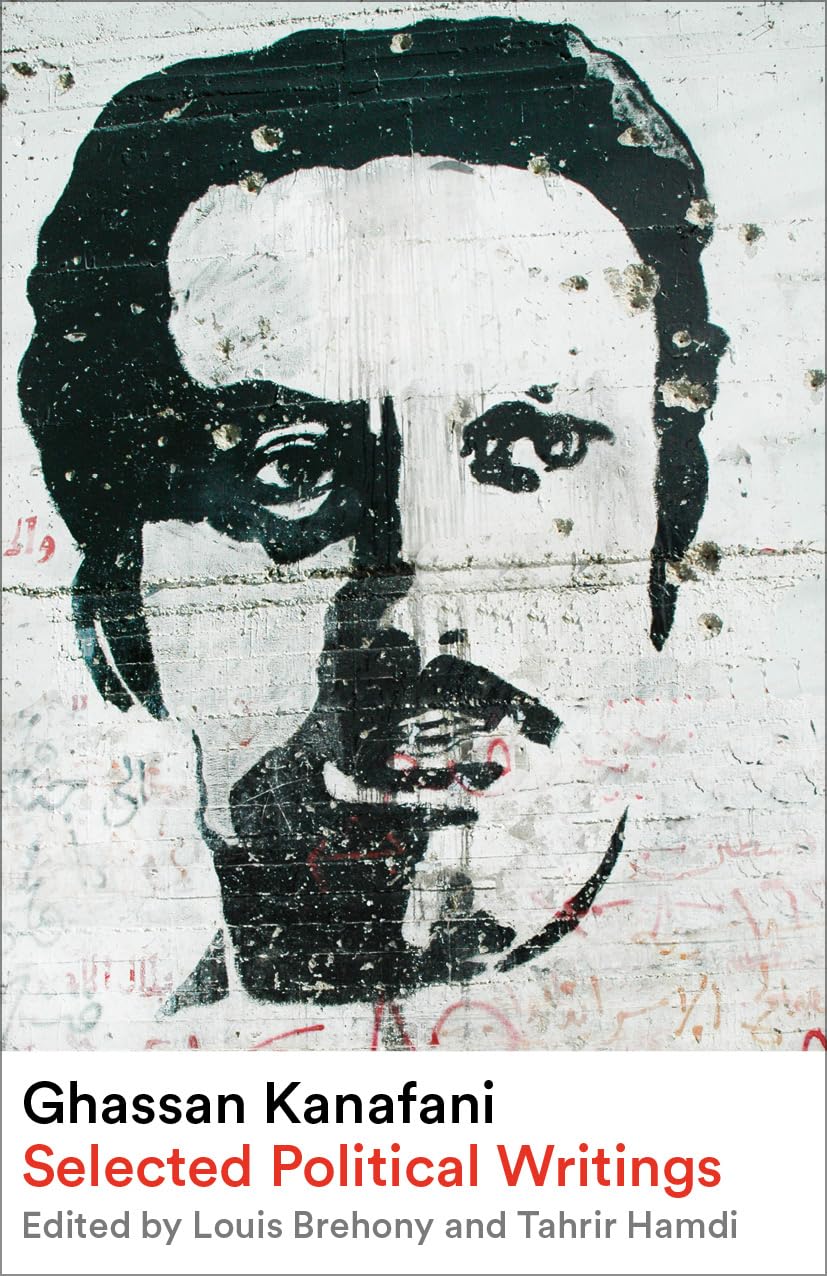
Ghassan Kanafani (1936 – 1972) is perhaps the greatest Palestinian novelist, whose books including Men in the Sun and Returning to Haifa documented the horrors of war and occupation. His literature was deeply inspired by his life as a political thinker, strategist and revolutionary. Here, his writings on theory and contemporary politics are collected for the first time. From reflections on his readings of Marxist theory, to historical studies and blazing analyses of contemporary geopolitical developments, this collection shows a fascinating intellectual evolution and a commitment to the fight for liberation. Containing new commentary from leading contemporary writers, this collection is a testament to Kanafani's continuing relevance. Like many of his peers, Kanafani was assassinated by agents of Israel, but the impact of his work remains a testament to the power of revolutionary Palestinian struggle and anti-Zionist Arab thought.
Author

Ghassan Kanafani (Arabic: غسان كنفاني) Ghassan Kanafani was a Palestinian journalist, fiction writer, and a spokesman for the Popular Front for the Liberation of Palestine. Kanafani died at the age of 36, assassinated by car bomb in Beirut, Lebanon. Ghassan Fayiz Kanafani was born in Acre in Palestine (then under the British mandate) in 1936. His father was a lawyer, and sent Ghassan to a French missionary school in Jaffa. During the 1948 Arab-Israeli War, Kanafani and his family fled to Lebanon, but soon moved on to Damascus, Syria, to live there as Palestinian refugees. After studying Arabic literature at the University of Damascus, Kanafani became a teacher at the Palestinian refugee camps in Syria. There, he began writing short stories, influenced by his contact with young children and their experiences as stateless citizens. In 1960 he moved to Beirut, Lebanon, where he became the editor of several newspapers, all with an Arab nationalist affiliation. In Beirut, published the novel Men in the Sun (1962). He published extensively on literature and politics, focusing on the the Palestinian liberation movement and the refugee experience, as well as engaging in scholarly literary criticism, publishing several books about post-1948 Palestinian and Israeli literature.