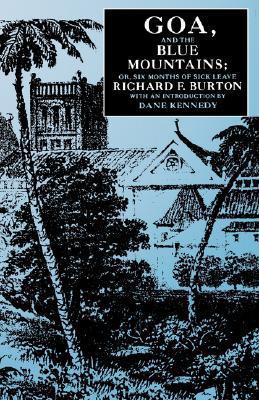
Published in 1851, this is the first book written by the famed Victorian explorer Richard F. Burton. It is an account of his journey through portions of southwest India while he was on sick leave from the British Indian army. Traveling through Bombay to the Portuguese colony of Goa, he went through Calicut and other cities on the Malabar coast, ending up in the Nilgiri mountains at the hill station of Ootacamund. The observant traveler, not the intrepid adventurer, is the narrator of the account, and its intended audience was the voracious Victorian consumer of travel literature. Coupled with a critical introduction by Dane Kennedy, this facsimile edition provides a revealing look at the people who inhabited a part of India that was generally off the beaten track in the nineteenth century. The Portuguese and Mestizo inhabitants of Goa, the Todas of Ootacamund, as well as the fellow Britons Burton meets on his journey are all subject to his penetrating scrutiny. Burton's clever, ascerbic, and unorthodox personality together with his irreverence for convention and his bemused disdain for humanity come through clearly in these pages, as does his extraordinary command of the languages and literatures of various peoples. "What a glad moment it is, to be sure, when the sick and seedy, the tired and testy invalid from pestiferous Scinde or pestilential Guzerat, 'leaves all behind him' and scrambles over the sides of his Pattimar." "His what?" "Ah! we forget. The gondola and barque are household words in your English ears, the budgerow is beginning to own an old familiar sound, but you are right―the 'Pattimar' requires a definition."
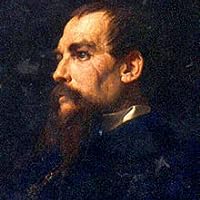
Author

Captain Sir Richard Francis Burton KCMG FRGS was a British geographer, explorer, translator, writer, soldier, orientalist, cartographer, ethnologist, spy, linguist, poet, fencer and diplomat. He was known for his travels and explorations within Asia, Africa and the Americas as well as his extraordinary knowledge of languages and cultures. According to one count, he spoke 29 European, Asian, and African languages. Burton's best-known achievements include travelling in disguise to Mecca, an unexpurgated translation of One Thousand and One Nights (also commonly called The Arabian Nights in English after Andrew Lang's adaptation), bringing the Kama Sutra to publication in English, and journeying with John Hanning Speke as the first Europeans led by Africa's greatest explorer guide, Sidi Mubarak Bombay, utilizing route information by Indian and Omani merchants who traded in the region, to visit the Great Lakes of Africa in search of the source of the Nile. Burton extensively criticized colonial policies (to the detriment of his career) in his works and letters. He was a prolific and erudite author and wrote numerous books and scholarly articles about subjects including human behaviour, travel, falconry, fencing, sexual practices, and ethnography. A unique feature of his books is the copious footnotes and appendices containing remarkable observations and unexpurgated information. He was a captain in the army of the East India Company serving in India (and later, briefly, in the Crimean War). Following this he was engaged by the Royal Geographical Society to explore the east coast of Africa and led an expedition guided by the locals and was the first European to see Lake Tanganyika. In later life he served as British consul in Fernando Po, Santos, Damascus and, finally, Trieste. He was a Fellow of the Royal Geographical Society and was awarded a knighthood (KCMG) in 1886.