


Margins
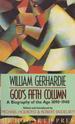
God's Fifth Column book cover
God's Fifth Column
A Biography of the Age, 1890-1940
1981
First Published
4.00
Average Rating
360
Number of Pages

God's Fifth Column is the last book of William Gerhardie. Well known in the 1920s and 1930s chiefly as a novelist (whose books were admired by Arnold Bennett, Graham Greene, Evelyn Waugh and others), Gerhardie fell mysteriously silent at the beginning of the Second World War and did not publish another book during the remaining thirty-seven years of his life. After his death the manuscript of this ambitious and unusual book was discovered among his papers and was skilfully edited for publication by Michael Holroyd and Robert Skidedlsky. The novel itself is a biography of the age, 1890-1940, through which Gerhardie lived. For Gerhardie, it was the artists rather than orthodox historians, the men of imagination rather than of will, who were the true spokesmen for mankind; and it is through the artist's vision and the writer's use of language that he tries to bring the age into moral perspective. God's Fifth Column is one of the most remarkable works of this gifted writer.
Avg Rating
4.00
Number of Ratings
13
5 STARS
38%
4 STARS
31%
3 STARS
23%
2 STARS
8%
1 STARS
0%
goodreads

Authors

Michael Holroyd
Michael Holroyd
Author · 17 books

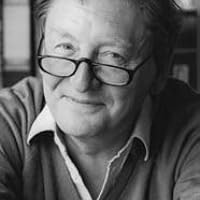
Michael Holroyd is the author of acclaimed biographies of George Bernard Shaw, the painter Augustus John, Lytton Strachey, and Ellen Terry and Henry Irving, as well as two memoirs, Basil Street Blues and Mosaic. Knighted for his services to literature, he is the president emeritus of the Royal Society of Literature and the only nonfiction writer to have been awarded the David Cohen British Prize for Literature. His previous book, A Strange Eventful History, won the James Tait Black Memorial Prize for biography in 2009. He lives in London with his wife, the novelist Margaret Drabble. http://us.macmillan.com/author/michae...

William Gerhardie
William Gerhardie
Author · 6 books

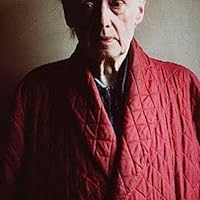
William Alexander Gerhardie (21 November 1895 – 15 July 1977)[1] was a British (Anglo-Russian) novelist and playwright. William Gerhardie by Norman Ivor Lancashire (1927-2004). Photograph by Stella Harpley Gerhardie (or Gerhardi: he added the 'e' in later years as an affectation) was one of the most critically acclaimed English novelists of the 1920s (Evelyn Waugh told him 'I have talent, but you have genius'). H.G. Wells also championed his work. His first novel, Futility, was written while he was at Worcester College, Oxford and drew on his experiences in Russia fighting (or attempting to fight) the Bolsheviks, along with his childhood experiences visiting pre-revolutionary Russia. Some say that it was the first work in English to fully explore the theme of 'waiting' later made famous by Samuel Beckett in Waiting for Godot, but it is probably more apt to recognize a common comic nihilism between those two figures. His next novel, The Polyglots, is probably his masterpiece (although some argue for Doom). Again it deals with Russia (Gerhardie was strongly influenced by the tragi-comic style of Russian writers such as Chekhov about whom he wrote a study while in College). He collaborated with Hugh Kingsmill on the biography The Casanova Fable, his friendship with Kingsmill being both a source of conflict over women and a great intellectual stimulus. After World War II Gerhardie's star waned, and he became unfashionable. Although he continued to write, he published no new work after 1939. After a period of poverty-stricken oblivion, he lived to see two 'definitive collected works' published by Macdonald (in 1947-49 and then revised again in 1970-74). An idiosyncratic study of world history between 1890 and 1940 ("God's Fifth Column") was discovered among his papers and published posthumously. More recently, both Prion and New Directions Press have been reissuing his works.

Robert Skidelsky
Robert Skidelsky
Author · 11 books

Lord Skidelsky is Emeritus Professor of Political Economy at the University of Warwick. His three volume biography of the economist John Maynard Keynes (1983, 1992, 2000) received numerous prizes, including the Lionel Gelber Prize for International Relations and the Council on Foreign Relations Prize for International Relations. He is the author of the The World After Communism (1995) (American edition called The Road from Serfdom). He was made a life peer in 1991, and was elected Fellow of the British Academy in 1994. He is chairman of the Govenors of Brighton College Robert Skidelsky was born on 25 April 1939 in Harbin, Manchuria. His parents were British subjects, but of Russian ancestry. His father worked for the family firm, L. S. Skidelsky, which leased the Mulin coalmine from the Chinese government. When war broke out between Britain and Japan in December 1941, he and his parents were interned first in Manchuria then Japan, but released in exchange for Japanese internees in England. From 1953 to 1958, he was a boarder at Brighton College (of which he is now chairman of the board of governors). He went on to read history at Jesus College, Oxford, and from 1961 to 1969, he was successively research student, senior student, and research fellow at Nuffield College, Oxford. In 1967, he published his first book, Politicians and the Slump, Labour Government of 1929-31, based on his D.Phil dissertation. The book explores the ways in which British politicians handled the Great Depression. During a two year research fellowship at the British Academy, he began work in his biography of Sir Oswald Mosley (published in 1975) and published English Progressive Schools (1969). In 1970, he became an Associate Professor at the School of Advanced International Studies, John Hopkins University. But the controversy surrounding the publication of his biography of Sir Oswald Mosley - in which he was felt to have let Mosley off too lightly - led John Hopkins University to refuse him tenure. Oxford University also proved unwilling to give him a permanent post. In 1978, he was appointed Professor of International Studies at the University of Warwick, where he has since remained, though joining the Economics Department as Professor Political Economy in 1990. He is currently Andrew D. White Professor-at-Large at Cornell University. The first volume of his biography of John Maynard Keynes, Hopes Betrayed, 1883-1920, was published in 1983. The second volume, The Economist as Saviour, 1920-1937 (1992) won the Wolfson Prize for History. The third volume, Fighting for Britain, 1937-1946 (2000) won the Duff Cooper Prize, the James Tait Black Memorial Prize for Biography, the Lionel Gelber Prize for International Relations and the Arthur Ross Council on Foreign Relations Prize for International Relations. Since 2003, he has been a non-executive director of the mutual fund manager, Janus Capital and Rusnano Capital; from 2008-10 he sat on the board of Sistema JSC. He is a director of the Moscow School of Political Studies and was the founder and executive secretary of the UK/Russia Round Table. Since 2002, he has been chairman of the Centre for Global Studies. In 2010, he joined the Advisory Board of the Institute of New Economic Thinking. He writes a monthly column for Project Syndicate, "Against the Current", which is syndicated in newspapers all over the world. His account of the current economic crisis, Keynes: The Return of the Master, was published by Penguin Allen Lane in September 2009. A short history of twentieth-century Britain was published by Random House in the volume A World by Itself: A History of the British Isles edited by Jonathan Clark in January 2010. He is now in the process of writing How Much is Enough? The Economics of the Good Life jointly with his son Edward Skidelsky.

548 Market St PMB 65688, San Francisco California 94104-5401 USA
© 2026 Paratext Inc. All rights reserved