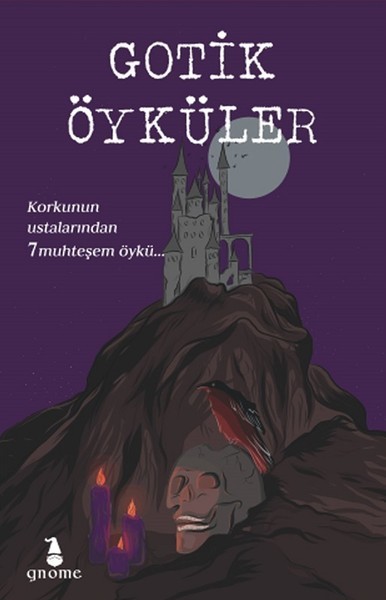



Peçeli yüzünü solgun izleyicilerinin oluşturduğu çemberde gezdirerek, “Niye sadece benden ürküyorsunuz?” diye bağırdı. “Birbirinizden de ürkün! Erkekler benden kaçındı, kadınlar bana hiç acıma göstermedi, çocuklarsa çığlık atıp kaçtılar, sırf kara peçem yüzünden? Bu kumaş parçasını böylesine korkunç yapan nedir, üstü kapalı simgelediği gizemden başka? Ne zaman dost dostuna ve âşık sevgilisine yüreğinin en derinliklerini açar, ne zaman insan günahlarının üzerine aşağılık bir biçimde titreyip yaratıcısının gözünden boş yere saklamaya uğraşmayı bırakır, işte o zaman beni canavar ilan edin, çünkü ben bu sembolün altında yaşadım ve öleceğim! Etrafıma bakıyorum ve ah! “Her yüzde bir kara peçe var!” Sarı Duvar Kağıdı - Charlotte Perkins Gilman Papazın Kara Peçesi - Nathaniel Hawtorne Kuledeki Oda - E.F. Benson Duvardaki Fareler - H.P. Lovecraft Topal Rahip - S. Carleton Ceset Hırsızları - Robert Louis Stevenson Berenice - Edgar Allan Poe
Authors

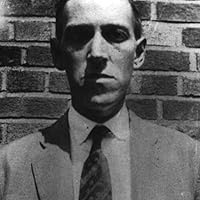
Howard Phillips Lovecraft, of Providence, Rhode Island, was an American author of horror, fantasy and science fiction. Lovecraft's major inspiration and invention was cosmic horror: life is incomprehensible to human minds and the universe is fundamentally alien. Those who genuinely reason, like his protagonists, gamble with sanity. Lovecraft has developed a cult following for his Cthulhu Mythos, a series of loosely interconnected fictions featuring a pantheon of human-nullifying entities, as well as the Necronomicon, a fictional grimoire of magical rites and forbidden lore. His works were deeply pessimistic and cynical, challenging the values of the Enlightenment, Romanticism and Christianity. Lovecraft's protagonists usually achieve the mirror-opposite of traditional gnosis and mysticism by momentarily glimpsing the horror of ultimate reality. Although Lovecraft's readership was limited during his life, his reputation has grown over the decades. He is now commonly regarded as one of the most influential horror writers of the 20th Century, exerting widespread and indirect influence, and frequently compared to Edgar Allan Poe. — Wikipedia

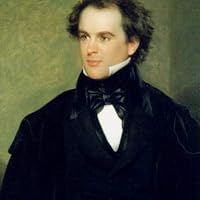
Nathaniel Hawthorne was a 19th century American novelist and short story writer. He is seen as a key figure in the development of American literature for his tales of the nation's colonial history. Shortly after graduating from Bowdoin College, Hathorne changed his name to Hawthorne. Hawthorne anonymously published his first work, a novel titled Fanshawe, in 1828. In 1837, he published Twice-Told Tales and became engaged to painter and illustrator Sophia Peabody the next year. He worked at a Custom House and joined a Transcendentalist Utopian community, before marrying Peabody in 1842. The couple moved to The Old Manse in Concord, Massachusetts, later moving to Salem, the Berkshires, then to The Wayside in Concord. The Scarlet Letter was published in 1850, followed by a succession of other novels. A political appointment took Hawthorne and family to Europe before returning to The Wayside in 1860. Hawthorne died on May 19, 1864, leaving behind his wife and their three children. Much of Hawthorne's writing centers around New England and many feature moral allegories with a Puritan inspiration. His work is considered part of the Romantic movement and includes novels, short stories, and a biography of his friend, the United States President Franklin Pierce.

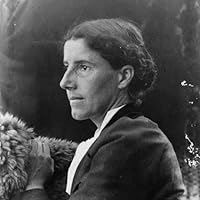
Charlotte Perkins Gilman, also known as Charlotte Perkins Stetson, was a prominent American sociologist, novelist, writer of short stories, poetry, and nonfiction, and a lecturer for social reform. She was a utopian feminist during a time when her accomplishments were exceptional for women, and she served as a role model for future generations of feminists because of her unorthodox concepts and lifestyle. Her best remembered work today is her semi-autobiographical short story, "The Yellow Wallpaper", which she wrote after a severe bout of post-partum depression. She was the daughter of Frederic B. Perkins.

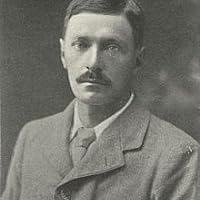
Edward Frederic "E. F." Benson was an English novelist, biographer, memoirist, archaeologist and short story writer. E. F. Benson was the younger brother of A.C. Benson, who wrote the words to "Land of Hope and Glory", Robert Hugh Benson, author of several novels and Roman Catholic apologetic works, and Margaret Benson, an author and amateur Egyptologist. Benson died during 1940 of throat cancer at the University College Hospital, London. He is buried in the cemetery at Rye, East Sussex. Last paragraph from Wikipedia