Margins
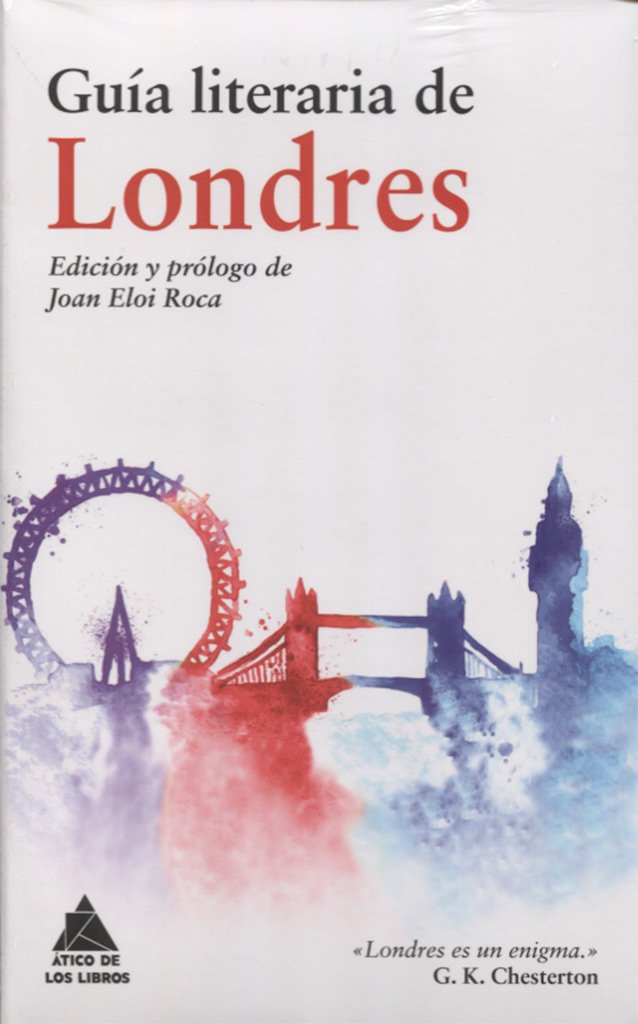
Guía literaria de Londres book cover
Guía literaria de Londres
2016
First Published
3.00
Average Rating
336
Number of Pages
Tácito fue el primer gran escritor en mencionar Londres y, desde entonces, muchos otros grandes creadores nos han dejado sus impresiones de la ciudad. En este libro Dostoyevski y Boswell nos acompañan por los bajos fondos londinenses, mientras que Dickens, De Amicis, London o Kipling nos hacen de guías y nos dan consejos para manejarnos en la capital de Inglaterra. Otros, como Beda el Venerable, John Evelyn o Samuel Pepys nos cuentan cómo la ciudad superó pestes, incendios e invasiones, mientras que Soseki, Rimbaud o Verlaine ilustran que no es fácil vivir en Londres si no se dispone de dinero. Jane Austen, Mark Twain o Charlotte Brontë son sólo algunos más de los muchos autores que contribuyen a esta guía, que cuenta también con deliciosos grabados que permiten al lector ver lo que es y también lo que fue. Imprescindible como complemento a una guía tradicional, la Guía literaria de Londres nos permite disfrutar de un triple en el espacio, hacia los monumentos londinenses; en el tiempo, hacia otras épocas y sensibilidades; y en el espíritu, hacia algunas de las mentes más creativas, divertidas y magníficas que ha dado la Literatura universal.

Avg Rating
3.00
Number of Ratings
1
5 STARS
0%
4 STARS
0%
3 STARS
100%
2 STARS
0%
1 STARS
0%
goodreads

Authors

John Macky
Author · 1 book

John Macky (died 1726) was a Scottish spy. He was the first person to inform the British authorities of James II and VII's intended invasion of England in 1692 after the former king had fled from England to France. In October 1693 he was made inspector of the coast from Harwich to Dover, tasked with intercepting hostile intelligence. Macky published an attack on James II and VII's exiled court in A View of the Court of St Germains from the Year 1690 to 1695 in 1696. His network of spies was crucial to the discovery in February and March 1708 of the Jacobite plans to invade Scotland. He later came under the suspicion of the authorities and was imprisoned, but was released in 1714 following the accession of George I. Macky married Sarah Spring, the only daughter of Sir William Spring, 2nd Baronet, and used her dowry to fund the construction of five packet boats in Dover, where he served as Director of the Packet Boats. In 1733 their son, Spring Macky, published Memoirs of the Secret Services of John Macky.

Theophile Gautier
Theophile Gautier
Author · 57 books
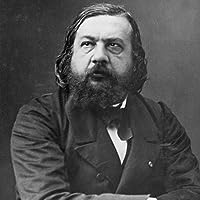
Pierre Jules Théophile Gautier was a French poet, dramatist, novelist, journalist, and literary critic. In the 1830 Revolution, he chose to stay with friends in the Doyenné district of Paris, living a rather pleasant bohemian life. He began writing poetry as early as 1826 but the majority of his life was spent as a contributor to various journals, mainly for La Presse, which also gave him the opportunity for foreign travel and meeting many influential contacts in high society and in the world of the arts, which inspired many of his writings including Voyage en Espagne (1843), Trésors d'Art de la Russie (1858), and Voyage en Russie (1867). He was a celebrated abandonnée of the Romantic Ballet, writing several scenarios, the most famous of which is Giselle. His prestige was confirmed by his role as director of Revue de Paris from 1851-1856. During this time, he became a journalist for Le Moniteur universel, then the editorship of influential review L'Artiste in 1856. His works include: Albertus (1830), La Comédie de la Mort (1838), Une Larme du Diable (1839), Constantinople (1853) and L'Art Moderne (1856)
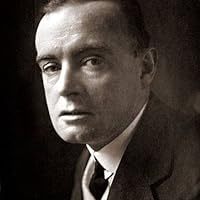
Saki
Saki
Author · 128 books

Known British writer Hector Hugh Munro under pen name Saki published his witty and sometimes bitter short stories in collections, such as The Chronicles of Clovis (1911). His sometimes macabre satirized Edwardian society and culture. People consider him a master and often compare him to William Sydney Porter and Dorothy Rothschild Parker. His tales feature delicately drawn characters and finely judged narratives. "The Open Window," perhaps his most famous, closes with the line, "Romance at short notice was her specialty," which thus entered the lexicon. Newspapers first and then several volumes published him as the custom of the time. His works include * a full-length play, The Watched Pot , in collaboration with Charles Maude; * two one-act plays; * a historical study, The Rise of the Russian Empire , the only book under his own name; * a short novel, The Unbearable Bassington ; * the episodic The Westminster Alice , a parliamentary parody of Alice in Wonderland ; * and When William Came: A Story of London under the Hohenzollerns , an early alternate history. Oscar Fingal O'Flahertie Wills Wilde, Charles Lutwidge Dodgson, and Joseph Rudyard Kipling, influenced Munro, who in turn influenced Alan Alexander Milne, Sir Noel Pierce Coward, and Pelham Grenville Wodehouse.

Justin McCarthy
Justin McCarthy
Author · 1 book

McCarthy began his career as a journalist at age 18 in Cork, Ireland. From 1853 to 1859 he was in Liverpool, on the staff of the Northern Daily Times, during which period he married (in March 1855) Charlotte Ailman. In 1860 he moved to London, as parliamentary reporter to The Morning Star, of which he became editor in 1864. He gave up his post in 1868, and, after a lecturing tour in the United States, joined the staff of the Daily News as leader-writer in 1870. In this capacity he became one of the most useful and respected upholders of the liberal politics of the time. He lectured again in America in 1870-1871, and again in 1886-1887. McCarthy's most important work is his History of Our Own Times (vols. I-IV, 1879–1880; vol. V, 1897), which treats of the period between Queen Victoria's accession and her Diamond Jubilee. He also began a History of the Four Georges (1884 1901), of which the latter half was written by his son, Justin Huntly McCarthy. McCarthy also published several novels, including three with Rosa Campbell Praed. Librarian note: There is more than one author in the Goodreads database with this name. Justin^McCarthy

Oscar Wilde
Oscar Wilde
Author · 358 books

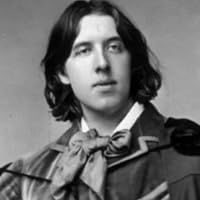
Oscar Fingal O'Flahertie Wills Wilde was an Irish playwright, poet, and author of numerous short stories, and one novel. Known for his biting wit, and a plentitude of aphorisms, he became one of the most successful playwrights of the late Victorian era in London, and one of the greatest celebrities of his day. Several of his plays continue to be widely performed, especially The Importance of Being Earnest. As the result of a widely covered series of trials, Wilde suffered a dramatic downfall and was imprisoned for two years hard labour after being convicted of "gross indecency" with other men. After Wilde was released from prison he set sail for Dieppe by the night ferry. He never returned to Ireland or Britain, and died in poverty.

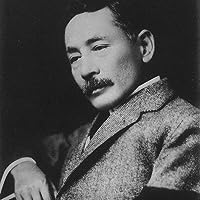
Natsume Soseki
Natsume Soseki
Author · 51 books
Natsume Sōseki (夏目 漱石), born Natsume Kinnosuke (夏目 金之助), was a Japanese novelist. He is best known for his novels Kokoro, Botchan, I Am a Cat and his unfinished work Light and Darkness. He was also a scholar of British literature and composer of haiku, kanshi, and fairy tales. From 1984 until 2004, his portrait appeared on the front of the Japanese 1000 yen note. In Japan, he is often considered the greatest writer in modern Japanese history. He has had a profound effect on almost all important Japanese writers since.
Samuel Pepys
Samuel Pepys
Author · 25 books

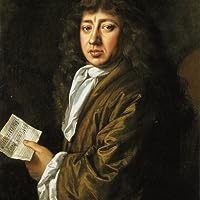
Samuel Pepys was an English naval administrator and Member of Parliament, who is now most famous for his diary. Although Pepys had no maritime experience, he rose by patronage, hard work and his talent for administration, to be the Chief Secretary to the Admiralty under King James II. His influence and reforms at the Admiralty were important in the early professionalization of the Royal Navy. The detailed private diary he kept during 1660–1669 was first published in the nineteenth century, and is one of the most important primary sources for the English Restoration period. It provides a combination of personal revelation and eyewitness accounts of great events, such as the Great Plague of London, the Second Dutch War and the Great Fire of London. His surname is usually pronounced /'pi:ps/ ('peeps').

Henry James
Henry James
Author · 235 books

Henry James, OM (1843-1916), son of theologian Henry James Sr., brother of the philosopher and psychologist William James and diarist Alice James, was an American-born author, one of the founders and leaders of a school of realism in fiction. He spent much of his life in England and became a British subject shortly before his death. He is primarily known for a series of major novels in which he portrayed the encounter of America with Europe. His plots centered on personal relationships, the proper exercise of power in such relationships, and other moral questions. His method of writing from the point of view of a character within a tale allowed him to explore the phenomena of consciousness and perception, and his style in later works has been compared to impressionist painting. James insisted that writers in Great Britain and America should be allowed the greatest freedom possible in presenting their view of the world, as French authors were. His imaginative use of point of view, interior monologue and unreliable narrators in his own novels and tales brought a new depth and interest to realistic fiction, and foreshadowed the modernist work of the twentieth century. An extraordinarily productive writer, in addition to his voluminous works of fiction he published articles and books of travel writing, biography, autobiography, and criticism,and wrote plays, some of which were performed during his lifetime with moderate success. His theatrical work is thought to have profoundly influenced his later novels and tales.

Daniel Defoe
Daniel Defoe
Author · 50 books
Daniel Defoe (1659/1661 [?] - 1731) was an English writer, journalist, and spy, who gained enduring fame for his novel The life and strange surprizing adventures of Robinson Crusoe: of York, mariner (1719). Defoe is notable for being one of the earliest practitioners of the novel and helped popularize the genre in Britain. In some texts he is even referred to as one of the founders, if not the founder, of the English novel. A prolific and versatile writer, he wrote more than five hundred books, pamphlets, and journals on various topics (including politics, crime, religion, marriage, psychology and the supernatural). He was also a pioneer of economic journalism.
William Hepworth Dixon
Author · 1 book

William Hepworth Dixon (1821 - 1879), historian and traveller, born near Manchester, went to London in 1846, and became connected with the Daily News, for which he wrote articles on social and prison reform. In 1850, he published John Howard and the Prison World of Europe, which had a wide circulation, and about the same time he wrote a Life of Peace (1851), in answer to Macaulay's onslaught. Lives of Admiral Blake and Lord Bacon followed, which received somewhat severe criticisms at the hands of competent authorities. Dixon was editor of The Athenaeum, 1853-69, and wrote many books of travel, including The Holy Land (1865), New America (1867), and Free Russia (1870). His later historical works include Her Majesty's Tower, and The History of Two Queens (Catherine of Arragon and Anne Boleyn). Though a diligent student of original authorities, and sometimes successful in throwing fresh light on his subjects, Dixon was not always accurate, and thus laid himself open to criticism; and his book, Spiritual Wives, treating of Mormonism, was so adversely criticised as to lead to an action. He wrote, however, in a fresh and interesting style. He was one of the founders of the Palestine Exploration Fund, and was a member of the first School Board for London (1870). He was called to the Bar in 1854, but never practised. -Wikipedia

Charlotte Bronte
Charlotte Bronte
Author · 107 books

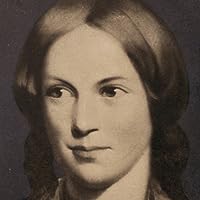
Charlotte Brontë was an English novelist, the eldest out of the three famous Brontë sisters whose novels have become standards of English literature. See also Emily Brontë and Anne Brontë. Charlotte Brontë was born in Thornton, Yorkshire, England, the third of six children, to Patrick Brontë (formerly "Patrick Brunty"), an Irish Anglican clergyman, and his wife, Maria Branwell. In April 1820 the family moved a few miles to Haworth, a remote town on the Yorkshire moors, where Patrick had been appointed Perpetual Curate. This is where the Brontë children would spend most of their lives. Maria Branwell Brontë died from what was thought to be cancer on 15 September 1821, leaving five daughters and a son to the care of her spinster sister Elizabeth Branwell, who moved to Yorkshire to help the family. In August 1824 Charlotte, along with her sisters Emily, Maria, and Elizabeth, was sent to the Clergy Daughters' School at Cowan Bridge in Lancashire, a new school for the daughters of poor clergyman (which she would describe as Lowood School in Jane Eyre). The school was a horrific experience for the girls and conditions were appalling. They were regularly deprived of food, beaten by teachers and humiliated for the slightest error. The school was unheated and the pupils slept two to a bed for warmth. Seven pupils died in a typhus epidemic that swept the school and all four of the Brontë girls became very ill - Maria and Elizabeth dying of tuberculosis in 1825. Her experiences at the school deeply affected Brontë - her health never recovered and she immortalised the cruel and brutal treatment in her novel, Jane Eyre. Following the tragedy, their father withdrew his daughters from the school. At home in Haworth Parsonage, Charlotte and the other surviving children—Branwell, Emily, and Anne—continued their ad-hoc education. In 1826 her father returned home with a box of toy soldiers for Branwell. They would prove the catalyst for the sisters' extraordinary creative development as they immediately set to creating lives and characters for the soldiers, inventing a world for them which the siblings called 'Angria'. The siblings became addicted to writing, creating stories, poetry and plays. Brontë later said that the reason for this burst of creativity was that: 'We were wholly dependent on ourselves and each other, on books and study, for the enjoyments and occupations of life. The highest stimulus, as well as the liveliest pleasure we had known from childhood upwards, lay in attempts at literary composition.' After her father began to suffer from a lung disorder, Charlotte was again sent to school to complete her education at Roe Head school in Mirfield from 1831 to 1832, where she met her lifelong friends and correspondents, Ellen Nussey and Mary Taylor. During this period (1833), she wrote her novella The Green Dwarf under the name of Wellesley. The school was extremely small with only ten pupils meaning the top floor was completely unused and believed to be supposedly haunted by the ghost of a young lady dressed in silk. This story fascinated Brontë and inspired the figure of Mrs Rochester in Jane Eyre. Brontë left the school after a few years, however she swiftly returned in 1835 to take up a position as a teacher, and used her wages to pay for Emily and Anne to be taught at the school. Teaching did not appeal to Brontë and in 1838 she left Roe Head to become a governess to the Sidgewick family—partly from a sense of adventure and a desire to see the world, and partly from financial necessity. Charlotte became pregnant soon after her wedding, but her health declined rapidly and, according to biographer Elizabeth Gaskell, she was attacked by "sensations of perpetual nausea and ever-recurring faintness." She died, with her unborn child, on 31 March 1855.

Fiódor Dostoyevski
Author · 11 books
Spanish orthographical variant author record for Fyodor Dostoyevsky.
Percy Hetherington Fitzgerald
Author · 1 book

Percy Hetherington Fitzgerald (1834 - 1925) was an Anglo-Irish author and critic, painter and sculptor. He was born in Ireland at Fane Valley, County Louth, educated at Stonyhurst College, Lancashire, and at Trinity College, Dublin. He was called to the Irish bar and was for a time crown prosecutor on the northeastern circuit. After moving to London, he became a contributor to Charles Dickens' magazine, Household Words, and later dramatic critic for the Observer and the Whitehall Review. Among his many writings are numerous biographies and works relating to the history of the theatre.

Charles Dickens
Charles Dickens
Author · 429 books

Charles John Huffam Dickens (1812-1870) was a writer and social critic who created some of the world's best-known fictional characters and is regarded as the greatest novelist of the Victorian era. His works enjoyed unprecedented popularity during his lifetime, and by the twentieth century critics and scholars had recognised him as a literary genius. His novels and short stories enjoy lasting popularity. Dickens left school to work in a factory when his father was incarcerated in a debtors' prison. Despite his lack of formal education, he edited a weekly journal for 20 years, wrote 15 novels, five novellas, hundreds of short stories and non-fiction articles, lectured and performed extensively, was an indefatigable letter writer, and campaigned vigorously for children's rights, education, and other social reforms. Dickens was regarded as the literary colossus of his age. His 1843 novella, A Christmas Carol, remains popular and continues to inspire adaptations in every artistic genre. Oliver Twist and Great Expectations are also frequently adapted, and, like many of his novels, evoke images of early Victorian London. His 1859 novel, A Tale of Two Cities, set in London and Paris, is his best-known work of historical fiction. Dickens' creative genius has been praised by fellow writers—from Leo Tolstoy to George Orwell and G. K. Chesterton—for its realism, comedy, prose style, unique characterisations, and social criticism. On the other hand, Oscar Wilde, Henry James, and Virginia Woolf complained of a lack of psychological depth, loose writing, and a vein of saccharine sentimentalism. The term Dickensian is used to describe something that is reminiscent of Dickens and his writings, such as poor social conditions or comically repulsive characters. On 8 June 1870, Dickens suffered another stroke at his home after a full day's work on Edwin Drood. He never regained consciousness, and the next day he died at Gad's Hill Place. Contrary to his wish to be buried at Rochester Cathedral "in an inexpensive, unostentatious, and strictly private manner," he was laid to rest in the Poets' Corner of Westminster Abbey. A printed epitaph circulated at the time of the funeral reads: "To the Memory of Charles Dickens (England's most popular author) who died at his residence, Higham, near Rochester, Kent, 9 June 1870, aged 58 years. He was a sympathiser with the poor, the suffering, and the oppressed; and by his death, one of England's greatest writers is lost to the world." His last words were: "On the ground", in response to his sister-in-law Georgina's request that he lie down. (from Wikipedia)

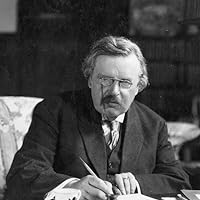
G.K. Chesterton
G.K. Chesterton
Author · 220 books

Gilbert Keith Chesterton was an English writer, philosopher, lay theologian, and literary and art critic. He was educated at St. Paul’s, and went to art school at University College London. In 1900, he was asked to contribute a few magazine articles on art criticism, and went on to become one of the most prolific writers of all time. He wrote a hundred books, contributions to 200 more, hundreds of poems, including the epic Ballad of the White Horse, five plays, five novels, and some two hundred short stories, including a popular series featuring the priest-detective, Father Brown. In spite of his literary accomplishments, he considered himself primarily a journalist. He wrote over 4000 newspaper essays, including 30 years worth of weekly columns for the Illustrated London News, and 13 years of weekly columns for the Daily News. He also edited his own newspaper, G.K.’s Weekly. Chesterton was equally at ease with literary and social criticism, history, politics, economics, philosophy, and theology.

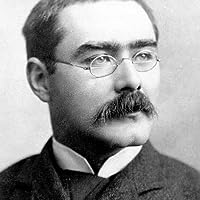
Rudyard Kipling
Rudyard Kipling
Author · 256 books

Joseph Rudyard Kipling was a journalist, short-story writer, poet, and novelist. Kipling's works of fiction include The Jungle Book (1894), Kim (1901), and many short stories, including The Man Who Would Be King (1888). His poems include Mandalay (1890), Gunga Din (1890), The Gods of the Copybook Headings (1919), The White Man's Burden (1899), and If— (1910). He is regarded as a major innovator in the art of the short story; his children's books are classics of children's literature; and one critic described his work as exhibiting "a versatile and luminous narrative gift". Kipling was one of the most popular writers in the United Kingdom, in both prose and verse, in the late 19th and early 20th centuries. Henry James said: "Kipling strikes me personally as the most complete man of genius (as distinct from fine intelligence) that I have ever known." In 1907, at the age of 41, he was awarded the Nobel Prize in Literature, making him the first English-language writer to receive the prize, and its youngest recipient to date. He was also sounded out for the British Poet Laureateship and on several occasions for a knighthood, both of which he declined. Awarded the Nobel Prize in Literature in 1907 "in consideration of the power of observation, originality of imagination, virility of ideas and remarkable talent for narration which characterize the creations of this world-famous author." Kipling kept writing until the early 1930s, but at a slower pace and with much less success than before. On the night of 12 January 1936, Kipling suffered a haemorrhage in his small intestine. He underwent surgery, but died less than a week later on 18 January 1936 at the age of 70 of a perforated duodenal ulcer. Kipling's death had in fact previously been incorrectly announced in a magazine, to which he wrote, "I've just read that I am dead. Don't forget to delete me from your list of subscribers."

John Ashton
Author · 3 books

Librarian Note: There is more than one author in the Goodreads database with this name. John Ashton (1834-1911) was an English author and historian, who compiled numerous books about the social and cultural lives of earlier generations.

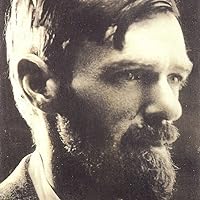
D.H. Lawrence
D.H. Lawrence
Author · 183 books

David Herbert Richards Lawrence was an English writer of the 20th century, whose prolific and diverse output included novels, short stories, poems, plays, essays, travel books, paintings, translations, literary criticism, and personal letters. His collected works represent an extended reflection upon the dehumanizing effects of modernity and industrialisation. In them, Lawrence confronts issues relating to emotional health and vitality, spontaneity, human sexuality and instinct. Lawrence's opinions earned him many enemies and he endured official persecution, censorship, and misrepresentation of his creative work throughout the second half of his life, much of which he spent in a voluntary exile he called his "savage pilgrimage." At the time of his death, his public reputation was that of a pornographer who had wasted his considerable talents. E. M. Forster, in an obituary notice, challenged this widely held view, describing him as "the greatest imaginative novelist of our generation." Later, the influential Cambridge critic F. R. Leavis championed both his artistic integrity and his moral seriousness, placing much of Lawrence's fiction within the canonical "great tradition" of the English novel. He is now generally valued as a visionary thinker and a significant representative of modernism in English literature. http://en.wikipedia.org/wiki/D.H.\_Law...

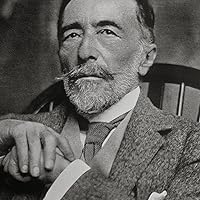
Joseph Conrad
Joseph Conrad
Author · 128 books

Joseph Conrad (born Józef Teodor Konrad Korzeniowski ) was a Polish-born English novelist who today is most famous for Heart of Darkness, his fictionalized account of Colonial Africa. Conrad left his native Poland in his middle teens to avoid conscription into the Russian Army. He joined the French Merchant Marine and briefly employed himself as a wartime gunrunner. He then began to work aboard British ships, learning English from his shipmates. He was made a Master Mariner, and served more than sixteen years before an event inspired him to try his hand at writing. He was hired to take a steamship into Africa, and according to Conrad, the experience of seeing firsthand the horrors of colonial rule left him a changed man. Joseph Conrad settled in England in 1894, the year before he published his first novel. He was deeply interested in a small number of writers both in French and English whose work he studied carefully. This was useful when, because a need to come to terms with his experience, lead him to write Heart of Darkness, in 1899, which was followed by other fictionalized explorations of his life. He has been lauded as one of the most powerful, insightful, and disturbing novelists in the English canon despite coming to English later in life, which allowed him to combine it with the sensibilities of French, Russian, and Polish literature.

Lord Byron
Lord Byron
Author · 84 books

George Gordon Byron (invariably known as Lord Byron), later Noel, 6th Baron Byron of Rochdale FRS was a British poet and a leading figure in Romanticism. Amongst Byron's best-known works are the brief poems She Walks in Beauty, When We Two Parted, and So, we'll go no more a roving, in addition to the narrative poems Childe Harold's Pilgrimage and Don Juan. He is regarded as one of the greatest British poets and remains widely read and influential, both in the English-speaking world and beyond. Byron's notabilty rests not only on his writings but also on his life, which featured upper-class living, numerous love affairs, debts, and separation. He was notably described by Lady Caroline Lamb as "mad, bad, and dangerous to know". Byron served as a regional leader of Italy's revolutionary organization, the Carbonari, in its struggle against Austria. He later travelled to fight against the Ottoman Empire in the Greek War of Independence, for which Greeks revere him as a national hero. He died from a fever contracted while in Messolonghi in Greece.

Philip Gilbert Hamerton
Author · 2 books
Philip Gilbert Hamerton (1834 - 1894)...
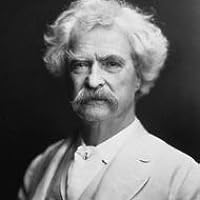
Mark Twain
Mark Twain
Author · 389 books

Librarian Note: There is more than one author by this name in the Goodreads database. Samuel Langhorne Clemens, better known by his pen name Mark Twain, was an American author and humorist. He is noted for his novels Adventures of Huckleberry Finn (1885), called "the Great American Novel", and The Adventures of Tom Sawyer (1876). Twain grew up in Hannibal, Missouri, which would later provide the setting for Huckleberry Finn and Tom Sawyer. He apprenticed with a printer. He also worked as a typesetter and contributed articles to his older brother Orion's newspaper. After toiling as a printer in various cities, he became a master riverboat pilot on the Mississippi River, before heading west to join Orion. He was a failure at gold mining, so he next turned to journalism. While a reporter, he wrote a humorous story, "The Celebrated Jumping Frog of Calaveras County," which proved to be very popular and brought him nationwide attention. His travelogues were also well-received. Twain had found his calling. He achieved great success as a writer and public speaker. His wit and satire earned praise from critics and peers, and he was a friend to presidents, artists, industrialists, and European royalty. However, he lacked financial acumen. Though he made a great deal of money from his writings and lectures, he squandered it on various ventures, in particular the Paige Compositor, and was forced to declare bankruptcy. With the help of Henry Huttleston Rogers, however, he eventually overcame his financial troubles. Twain worked hard to ensure that all of his creditors were paid in full, even though his bankruptcy had relieved him of the legal responsibility. Born during a visit by Halley's Comet, he died on its return. He was lauded as the "greatest American humorist of his age", and William Faulkner called Twain "the father of American literature". Excerpted from Wikipedia. AKA: Μαρκ Τουαίν (Greek)

Snorri Sturluson
Snorri Sturluson
Author · 11 books

Snorri Sturluson (also spelled Snorre Sturlason) was an Icelandic historian, poet and politician. He was twice elected lawspeaker at the Icelandic parliament, the Althing. He was the author of the Prose Edda or Younger Edda, which consists of Gylfaginning ("the fooling of Gylfi"), a narrative of Norse mythology, the Skáldskaparmál, a book of poetic language, and the Háttatal, a list of verse forms. He was also the author of the Heimskringla, a history of the Norwegian kings that begins with legendary material in Ynglinga saga and moves through to early medieval Scandinavian history. For stylistic and methodological reasons, Snorri is often taken to be the author of Egils saga. .

Paul Verlaine
Paul Verlaine
Author · 34 books

Paul-Marie Verlaine was a French poet associated with the Symbolist movement. He is considered one of the greatest representatives of the fin de siècle in international and French poetry. Despite Rimbaud admiring his poetry, these poets had a stormy affair which led to Verlaine's incarceration after shooting Rimbaud. This incident indirectly preceded his re-conversion to Roman Catholicism. Verlaine's last years were particularly marked by alcoholism, drug addiction and poverty. His poems have inspired many composers, such as Chopin, Fauré and Poldowski. Art Poétique describes his decadent style and alludes to the relevance of nuances and veils in poetry.

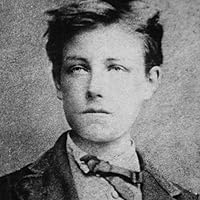
Arthur Rimbaud
Arthur Rimbaud
Author · 37 books

Hallucinatory work of French poet Jean Nicolas Arthur Rimbaud strongly influenced the surrealists. With known transgressive themes, he influenced modern literature and arts, prefiguring. He started writing at a very young age and excelled as a student but abandoned his formal education in his teenage years to run away to Paris amidst the Franco-Prussian war. During his late adolescence and early adulthood, he produced the bulk of his literary output. After assembling his last major work, Illuminations , Rimbaud completely stopped writing literature at age 20 years in 1874. A hectic, violent romantic relationship, which lasted nearly two years at times, with fellow poet Paul Verlaine engaged Rimbaud, a libertine, restless soul. After his retirement as a writer, he traveled extensively on three continents as a merchant and explorer until his death from cancer. As a poet, Rimbaud is well known for his contributions to symbolism and, among other works, for A Season in Hell , a precursor to modernist literature.

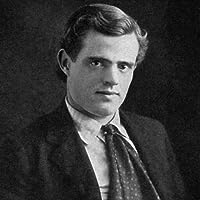
Jack London
Jack London
Author · 270 books

John Griffith Chaney (1876-1916), better known as Jack London, was an American novelist, journalist, and social activist. A pioneer of commercial fiction and American magazines, he was one of the first American authors to become an international celebrity and earn a large fortune from writing. He was also an innovator in the genre that would later become known as science fiction. His most famous works include The Call of the Wild and White Fang, both set in the Klondike Gold Rush, as well as the short stories, "To Build a Fire", "An Odyssey of the North", and "Love of Life". He also wrote about the South Pacific in stories such as "The Pearls of Parlay", and "The Heathen". London was part of the radical literary group, "The Crowd," in San Francisco and a passionate advocate of unionization, workers' rights, and socialism. He wrote several works dealing with these topics, such as his dystopian novel, The Iron Heel, his non-fiction exposé The People of the Abyss, War of the Classes, and Before Adam. London died November 22, 1916, in a sleeping porch in a cottage on his ranch. London's ashes were buried on his property, not far from the Wolf House. The grave is marked by a mossy boulder. The buildings and property were later preserved as Jack London State Historic Park, in Glen Ellen, California.

548 Market St PMB 65688, San Francisco California 94104-5401 USA
© 2026 Paratext Inc. All rights reserved