


Part of Series
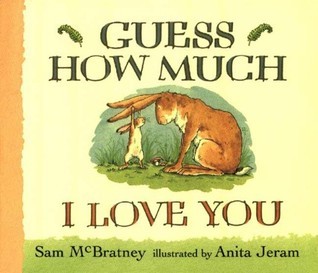
What better way for the youngest children to learn about opposites? Follow Little Nutbrown Hare as he explores the concept in the much-loved world of Guess How Much I Love You. A fourth board book joins its companion stories, Shapes, Colors, and Counting. Look up to see birds flying high, while earthworms and insects crawl down low. The summer sun is hot—perfect time for a nap!—while the winter snow is cold, a good time to snuggle together. Nutbrown hares start out little, but one day they will grow big. Whether it’s shared during playtime in the day or as a sweet bedtime book at night, this gentle invitation to join Little Nutbrown Hare in his discovery of opposites will delight the youngest of readers.
Author

The 1943 born Northern Ireland native started writing children's books when he was a teacher in his thirties, with the aim of helping out students who had trouble reading. But he continued writing for a more-personal reason: "the act of imagining simply makes me feel good," he says. The fifty-seventh book of Sam McBratney's career, and his first book with Candlewick Press, was the much-loved GUESS HOW MUCH I LOVE YOU, which has sold an astonishing 15 million copies worldwide, and is available in 37 languages. "This is not the sort of thing you expect when most of your books have been remaindered," the author admits. "But, as the frog trapped in the milk discovered, if you keep going, sometimes you find yourself walking on cream cheese." Where does Sam McBratney get his inspiration? "I told my children stories when they were young," he says, "so when I write I try to think of what they would have liked." But there may be another source guiding his writing as well. The author's father—who worked as a type compositor with the BELFAST TELEGRAPH, and whose favorite books were westerns—is the person Sam McBratney credits for giving him his love of the English language. "Most of my picture books—GUESS HOW MUCH I LOVE YOU, THE DARK AT THE TOP OF THE STAIRS, JUST ONE!, and JUST YOU AND ME—explore the relationship between a big one and a wee one," the author notes. "The big one is not called the father in the stories, but that's what he is. Although my dad died before I became a writer, the father in my stories has a voice and a presence that he would have recognized and understood." In addition to authoring many books for children, Sam McBratney wrote radio plays for adults and a prize-winning collection of short stories. He received a degree in history and political science from Trinity College, Dublin, and worked for many years as a teacher.