Margins
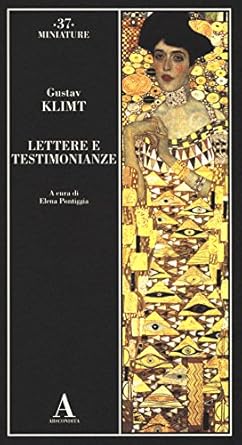
Gustav Klimt. Lettere e testimonianze book cover
Gustav Klimt. Lettere e testimonianze
2005
First Published
3.91
Average Rating
95
Number of Pages
Fondatore della Secessione Viennese, protagonista della pittura della Vienna imperiale agli inizi del Novecento, nell'epoca cioè in cui L'Austria fu definita "il laboratorio dell'Apocalisse", Gustav Klimt (1862-1918) è stato uno dei maestri dell'arte europea del ventesimo secolo. Il volume riunisce organicamente le sue lettere più significative, molte delle quali ritrovate solo di recente. Delinea così un suggestivo ritratto psicologico dell'artista: prima turbato dalla relazione clandestina con Alma Mahler, allora minorenne; poi legato a Marie Zimmermann (una modella da cui ebbe due figli) e alla stilista Emilie Flöge, la donna che frequentò tutta la vita, con cui intrattenne un carteggio fittissimo e inspiegabilmente distaccato.

Avg Rating
3.91
Number of Ratings
23
5 STARS
30%
4 STARS
39%
3 STARS
22%
2 STARS
9%
1 STARS
0%
goodreads

Author

Gustav Klimt
Gustav Klimt
Author · 7 books

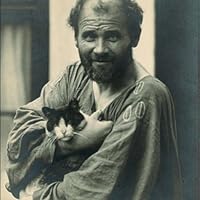
Gustav Klimt was born in Baumgarten, near Vienna, the second of seven children—three boys and four girls. All three sons displayed artistic talent early on. His father, Ernst Klimt, formerly from Bohemia, was a gold engraver. Ernst married Anna Klimt (née Finster), whose unrealized ambition was to be a musical performer. Klimt lived in poverty for most of his childhood, as work was scarce and economic advancement was difficult for immigrants. In 1876, Klimt was awarded a scholarship to the Vienna School of Arts and Crafts (Kunstgewerbeschule), where he studied until 1883, and received training as an architectural painter. He revered the foremost history painter of the time, Hans Makart. Klimt readily accepted the principles of a conservative training; his early work may be classified as academic. In 1877 his brother Ernst, who, like his father, would become an engraver, also enrolled in the school. The two brothers and their friend Franz Matsch began working together; by 1880 they had received numerous commissions as a team they called the "Company of Artists", and helped their teacher in painting murals in the Kunsthistorisches Museum in Vienna. Klimt began his professional career painting interior murals and ceilings in large public buildings on the Ringstraße including a successful series of "Allegories and Emblems". In 1888, Klimt received the Golden order of Merit from Emperor Franz Josef I of Austria for his contributions to murals painted in the Burgtheater in Vienna. He also became an honorary member of the University of Munich and the University of Vienna. In 1892 both Klimt's father and brother Ernst died, and he had to assume financial responsibility for his father's and brother's families. The tragedies affected his artistic vision as well, and soon he would veer toward a new personal style. In the early 1890s, Klimt met Emilie Flöge, who, notwithstanding the artist's relationships with other women, was to be his companion until the end of his life. Whether his relationship with Flöge was sexual or not is debated, but during that period Klimt fathered at least 14 children. —Wikipedia

548 Market St PMB 65688, San Francisco California 94104-5401 USA
© 2026 Paratext Inc. All rights reserved