


Margins
1993
First Published
3.37
Average Rating
126
Number of Pages

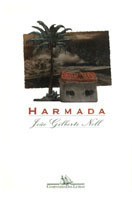
Like an Edenic Adam birthed from the clay, our narrator rises to his feet from the muck—reborn, or something like that. Unbeknownst to him, he’s on a desperate search for Harmada, the capital city of an unnamed nation and the land of his former glory. Told using Noll’s characteristic fragmented logic and spirited prose, Harmada traces the life of this nameless man on a voyage that takes him from aimless out- cast to revered director of avant-garde theater, from asylum patient to father to God, conjuring along the way essential questions about the power of art and storytelling, the vanity of glory, and the meaning of freedom. A mythic tale of art and displacement nimbly translated from Portuguese by Edgar Garbelotto, Harmada serves as yet another reminder of João Gilberto Noll’s sublime literary power: generous in its mystery; earthbound in its essential urges; and entirely unpredictable.
Avg Rating
3.37
Number of Ratings
149
5 STARS
13%
4 STARS
34%
3 STARS
34%
2 STARS
15%
1 STARS
4%
goodreads

Author

Joao Gilberto Noll
Joao Gilberto Noll
Author · 12 books

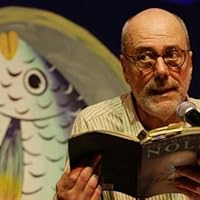
João Gilberto Noll was a Brazilian writer born in Porto Alegre, in the southern Brazilian state of Rio Grande do Sul. His early years were spent studying at the Catholic Colégio São Pedro. In 1967 he began university coursework in literature at the UFRGS-Federal University of Rio Grande do Sul, but in 1969 he interrupted his studies to pursue a career as a journalist in Rio de Janeiro, working for the newspapers Folha da Manhã and Última Hora. In 1970 Noll spent a year in São Paulo working as a copyeditor at the publishing house Editora Nacional, but a year later he moved back to Rio and resumed both his work in journalism at Última Hora, writing on literature, theater and music, and his university studies in literature, first at the Faculdade Notre Dame and then at the PUC-Rio, where he received his degree in 1979. Noll published his first short story as part of a 1970 Porto Alegre anthology entitled Roda de Fogo, but his more formal literary debut came in 1980 when his first book of short stories O cego e a dançarina (English title: The blind man and the dancer) was released, for which he received three literary prizes. One of Noll's short stories from O cego e a dançarina, Alguma coisa urgentemente (Something urgent), was the basis for the film Nunca fomos tão felizes (English title: We've Never Been So Happy) in 1983, directed by Murilo Salles and starring the actor Claudio Marzo. Noll received early international attention as a participant in the Writer's Program at the University of Iowa in 1982, and when his work appeared in an anthology of new Brazilian writers published in Germany in 1983. After a short visit to the University of California, Berkeley in 1996, he was invited to teach Brazilian literature there in 1997. He was an invited scholar for a Rockefeller Foundation seminar in Bellagio, Italy, was the recipient of a Guggenheim Fellowship in 2002, and spent a two-month writing residency at the Centre for the Study of Brazilian Culture & Society at King's College London in 2004. All of these experiences were to shape the subject matter of later works. His first collection of stories was followed by the novels A fúria do corpo (1981), Bandoleiros (1985) and Rastros do Verão (1986). Two of his subsequent and perhaps best-known works, the novels Hotel Atlantico (1989) and Harmada (1993), later came out in a 1997 English edition, translated by David Treece and published by Boulevard Books in London. Another novel, entitled O quieto animal da esquina, appeared in 1991. From 1998 to 2001 Noll published a twice-weekly series of short stories in the major São Paulo daily Folha de São Paulo, and in 2004 he began to publish longer stories every two weeks in the daily Correio Braziliense published in the federal capital Brasília.

548 Market St PMB 65688, San Francisco California 94104-5401 USA
© 2026 Paratext Inc. All rights reserved